Thursday, January 16, 2020

Louis Vuitton Just Acquired The World’s Second Largest Diamond

Calling all Uncut Gems fans: Louis Vuitton is now the proud owner of the world’s second-largest rough diamond of all time. First discovered in a Botswana mine (a country is known for its responsible mining), the diamond is roughly the size of a tennis ball. It will be cut, polished, and transformed into a new collection of jewelry, according to Bloomberg.

Said to be worth millions, Grazia reported that the Sewelo diamond is 1,758 carats. Cullinan, the largest diamond ever found, measures 3,106.75 carats. Unearthed in South Africa in 1905, the Cullinan was cut into polished gems including two that are now set in the crown jewels of Britain. “To put these numbers in perspective, Victoria Beckham’s pear-cut engagement ring is (a mere) 17 carats; Kim Kardashian’s is marginally bigger [at] 20,” Grazia explained.

The diamond purchase marks LV’s official foray into high-end jewelry (though past LV campaigns have featured actors Sophie Turner and Michelle Williams in the brand’s “accessible fine” jewelry). And according to Bloomberg, LV also recently tapped a new head jewelry designer: Francesca Amfitheatrof, formerly of Tiffany & Co. The jewelry brand itself was also just acquired by Louis Vuitton’s parent company, LVMH, in November 2019. 

Michael Burke, the chief executive of Louis Vuitton, told The New York Times, “Nobody expects us to put such an emphasis on high jewelry. I think it will spice things up a bit. Wake up the industry.” In conversation with the Financial Times, Burke also said that the fine jewelry market is “the biggest potential we have right now.”

“It’s a big, unusual stone, which makes it right up our alley,” Burke told The New York Times. “We are experimenting with a different way of bringing a stone to market.” According to the outlet, the brand will not cut the stone until it has a buyer. Unlike Tiffany, which has preserved its 128.54-carat namesake stone, Louis Vuitton does not plan to hold onto the stone as a “showpiece.”

Still, it’s worth noting that the stone is coated in carbon—something Ulrika D’Haenens-Johansson, a senior research scientist at the Gemological Institute of America, told The New York Times makes the diamond material inside a “mystery.” While some say the purchase is risky, only time will tell how Louis Vuitton makes use of the stone that’s captured everyone’s imagination.

Like what you see? How about some more R29 goodness, right here?

Everything You Need To Know About Natural Diamonds

Tiffany & Co Introduces Diamond Transparency

Our Guide To Your First Big Ring Purchase

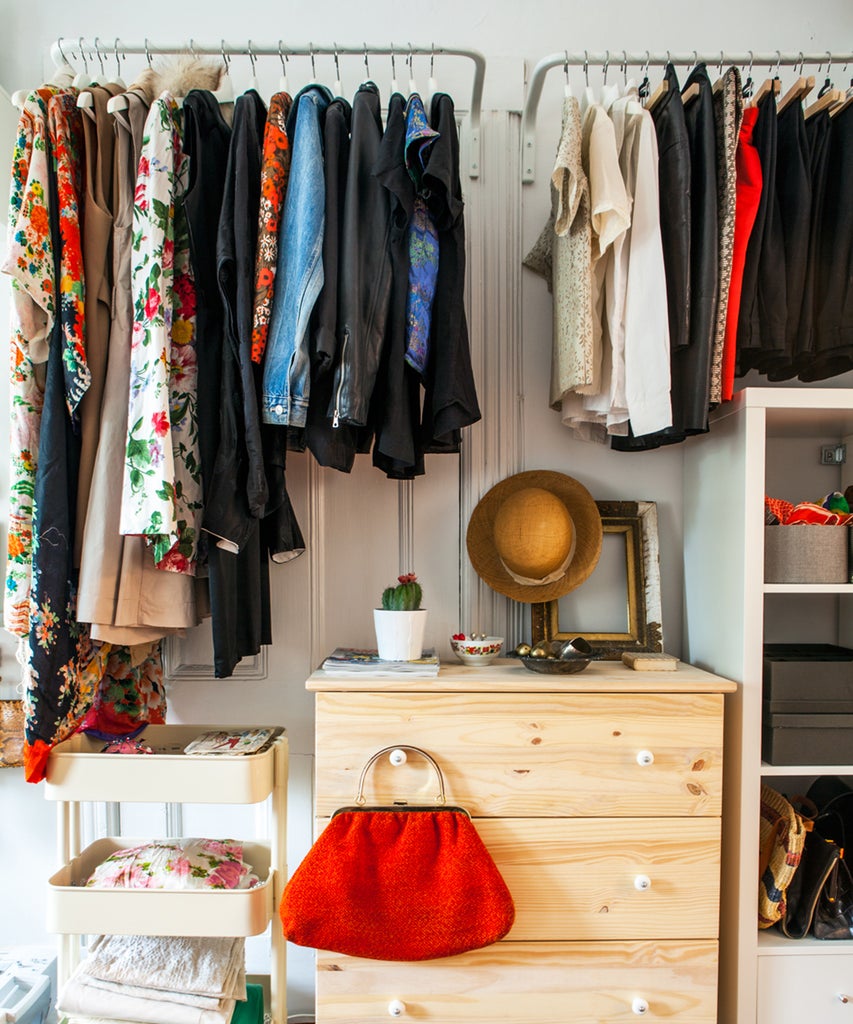
You Can Now Calculate The Environmental Impact Of Your Own Closet

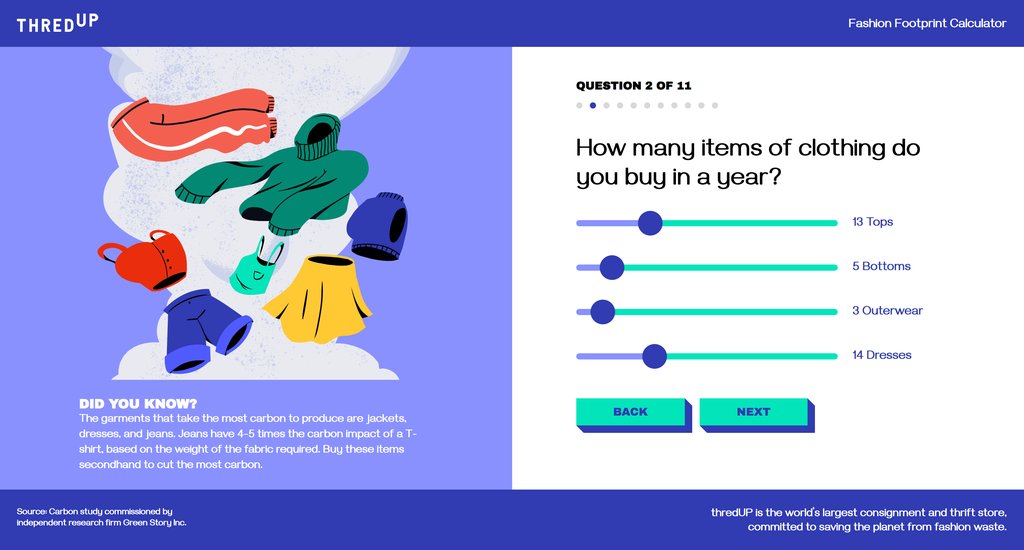
If you’re feeling overwhelmed by the climate crisis, and unsure how to make a real impact, we have some good news. Yesterday, Emma Watson announced a new partnership with thredUP, an online consignment and thrift store that is officially doing more than reselling clothes: It now has a tool that calculates just how much your fashion habits impact the environment, based on what’s in your closet. 

Watson shared the news in an Instagram post, saying, “Our closets impact the planet and climate more than you might realize, which is why I am proud to partner with @thredUP to launch their new Fashion Footprint Calculator (link in bio!) They created an easy to use tool, and I’m so excited to help people discover the carbon impact of their wardrobes, and steps you can take to lighten your fashion footprint.”

View this post on Instagram

#ad Our closets impact the planet and climate more than you might realize, which is why I am proud to partner with @thredUP to launch their new Fashion Footprint Calculator (link in bio!) They created an easy to use tool, and I’m so excited to help people discover the carbon impact of their wardrobes, and steps you can take to lighten your fashion footprint. They’ll tell you what your fashion footprint is equivalent to a number of flights, exactly how many pounds of CO2 it produces and how you fare compared to an average consumer. Small changes, such as thrifting instead of buying new, supporting sustainable brands, and air-drying your clothes, can make a HUGE difference. My friends at @goodonyou_app are also included in the directory at the end of the quiz, where you can get more info on the impact of your fashion choices. Also, if you don’t know @thredUP, they are one of my favourite online thrift stores. They make it incredibly easy to find any brand and style secondhand at up to 90% off est. retail, from high street brands to some of my favourite designers. I love their mission to inspire us to think secondhand first and create a more circular fashion future. (P.S. they are just shipping to U.S. and Canada currently, but the Calculator is available to everyone!) Find out your fashion footprint by clicking the link in my bio, or heading to thredup.com/quiz to make a difference for the planet! #fashionfootprint ❤️🌸👗

A post shared by Emma Watson (@emmawatson) on Jan 15, 2020 at 9:04am PST

ThredUP’s new Fashion Footprint Calculator asks users a series of questions about the way they shop, including how they buy clothes (and whether they buy sustainable brands); how they clean their clothes (both laundry and dry cleaning); if they rent their clothing; and how often they return stuff. The tool then calculates the annual carbon footprint of the user’s closet. It also shares the best ways to reduce that footprint, with explanations about how these actions make a direct impact. There’s even an “Eco-directory” that promotes sustainable brands, and “green” shopping discounts.

According to thredUP, who has partnered with eco-friendly companies including Rent The Runway and Grove Collaborative, the average consumer contributes approximately 1620 pounds of CO2 per year. By launching this helpful function, the company hopes to educate and empower shoppers to work towards reducing their environmental impact. After all, knowledge is power.

“While it’s universally known that fashion pollution is a problem, we were surprised to find that most consumers don’t think their individual clothing choices matter. The reality is, to change course, both brands and consumers need to take action and make positive changes,” Erin Wallace, thredUP’s VP of Integrated Marketing, said in a Medium post explaining the new tool. “We know most consumers want to do better, but aren’t sure how. thredUP’s Fashion Footprint Calculator aims to show how each one of us can play a role in reducing the carbon footprint of our individual closets to collectively create a more sustainable fashion future. The more we understand the impact of our fashion choices, the easier it is to make smart decisions.”

Regarding the company’s efforts, Watson shared on Instagram, “I love their mission to inspire us to think secondhand first and create a more circular fashion future.” The calculator is just one of the company’s many initiatives to educate its consumers. Every year since 2013 the company has released annual reports about the resale market and how it’s shifting; this year thredUP discovered that the secondhand market will reach $51B in five years, while the resale market has grown 21 times faster than the retail apparel market over the last three years. While shopping secondhand is infinitely better than buying new clothes, the most sustainable thing you can do is rewear the stuff you already own.

Like what you see? How about some more R29 goodness, right here?

Is Resale The Future of Sustainable Fashion?

Vestiaire Collective Celebrates 10 Years

Burberry Embraces Resale Market

What are the best and worst times of the year to look for a job?

Looking for a job is not an easy task. Among the many factors impacting your search, timing too plays an important role.

4 exercises for a healthy brain

Aerobic exercise is another form of exercise that is considered excellent for improving brain health