Friday, May 7, 2021

Why Stylists Believe Virtual Red Carpets Changed Things For The Better

When faced with a virtual award season, which began with the 2020 Emmys in September and concluded with the Critics’ Choice Awards in March, fashion stylists pivoted, adjusting their methods for the new pandemic-friendly format, and broadcasting their hard work on social media. As a result of their strategic modifications, this award season’s red carpet was as glamorous as it was memorable. The 2021 Oscars, the first major award show to take place in person in a year, marked the return to IRL red carpets. But the stylists that made this season a success believe the move to virtual changed red carpets for the better.

Micah McDonald and Wayman Bannerman, the styling partnership behind Regina King’s red carpet looks this season, say that they actually preferred digital red carpets. The duo — who just landed third on Hollywood Reporter’s 2021 Most Powerful Stylists list, after Zendaya’s Image Architect Law Roach and Beyoncé’s stylist Zerina Akers — used the switch to virtual red carpets to make statement after statement.

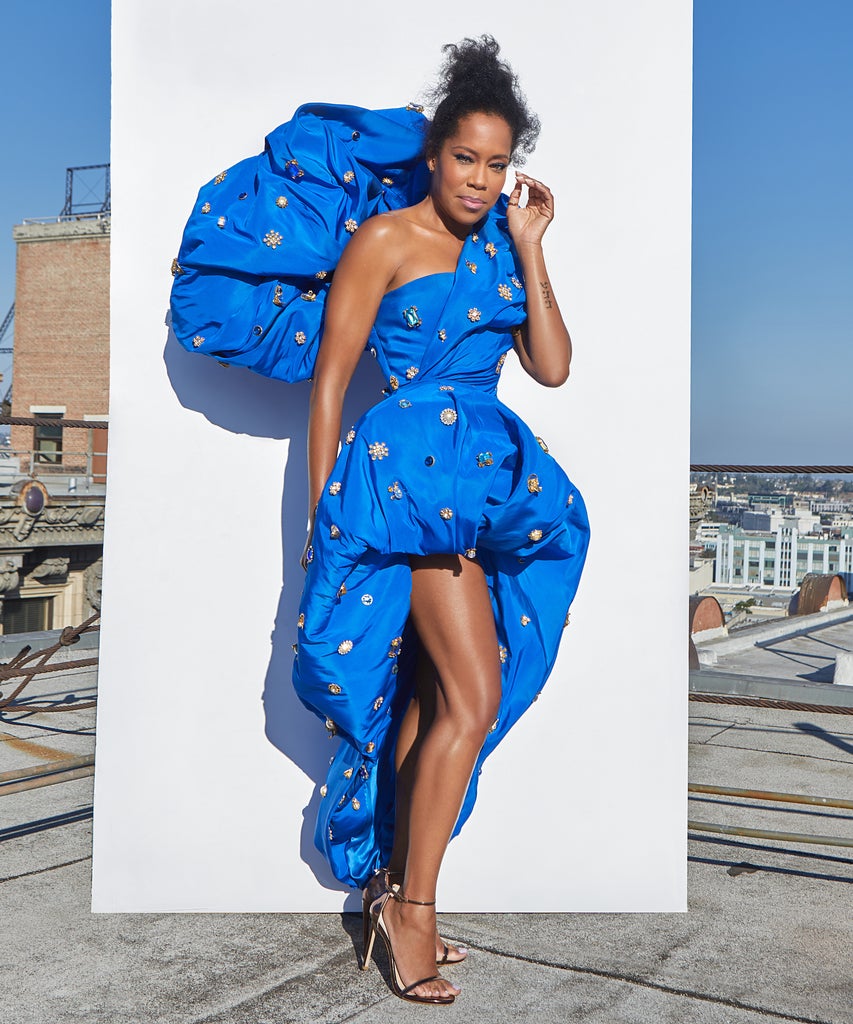
For example, for the Emmys, they dressed the Watchmen actress in a blue Schiaparelli Haute Couture gown. To showcase the sculptural look, they teamed up with photographer James Anthony to create a virtual reality backdrop for her pre-show photoshoot. The result was better than any award season step-and repeat — a video showing King dancing against a moving drawing of two Black women that was meant to evoke feelings of sisterhood. “Going digital allowed us to tell a story,” McDonald says. Later in the night, King honored Breonna Taylor when she changed into a T-shirt that read, “Say Her Name.”

In the absence of red carpets, stylists were able to craft their own photo and video shoots to showcase the fashion, rather than rely on photographers assigned to shoot the events. According to McDonald, that allowed them to work with photographers and other creatives in a way that wouldn’t have been possible pre-pandemic: “We finally could collaborate with people of color that we love and admire like the photographers [and other creatives] that were all Black and of African descent.” The move to Instagram and other digital platforms also allowed McDonald and Bannerman to offer fellowship opportunities to young talent this year.

Stylist Jason Bolden, whose work with actress Cynthia Erivo this season landed her on every best-dressed list of the year, agrees that the digital format had a lot of advantages. “It allowed us to bring back that really cool part about red carpet interviews that people used to love,” he says. Whereas years ago interviewers used to ask celebrities in detail why they chose their looks, now, few have enough airtime to go beyond the standard, “Who are you wearing?” — and sometimes, they don’t even ask that. By showcasing looks on Instagram, Bolden could share every detail of a particular ensemble, from a specific jewelry moment to a distinct beauty reference, all in the form of a caption. 

“Now, I get away with things that might not be [otherwise] photographed,” says Bolden. When, at the 2020 SAG Awards, he styled a Roberto Coin necklace backward on Erivo, so as to have it lay on her back, the moment was mostly overlooked, with every camera aimed at the front of her orange-and-pink Schiaparelli dress. “Now, with something like that, I can actually show you 360 degrees of a look and give you the full moment that you would have otherwise missed,” he says. Case in point: The stylist put Erivo in sky-high platform heels for the 2021 Golden Globes. “[The digital format] has really allowed us to be more creative with what we do for the red carpet,” Bannerman adds.

The virtual aspect also pushed Bannerman and McDonald to be more environmentally conscious when planning a look for an event. “We’re being more strategic about what we call in,” Bannerman says. “We’re no longer pulling items that we don’t necessarily need. The goal was to avoid being excessive in anything that we did,” he says.

Of course, the strangest award season on record wasn’t without its hiccups. “It was frustrating [at times,]” says Bolden. “In many cases, we were having to try and get everything done in one [fell] swoop: picking the dress, altering it, making a decision on jewelry, etc.” Before the pandemic, there could be multiple fittings and dress changes involved in a single show’s look. This season, the entire process was tightened to minimize social interaction. “Not being able to truly see people and actually fit them in person was challenging,” he adds. He also admits to having missed the lavish nature of the red carpets, as did his clients: “They miss the fantasy, the glamour, the layering on loads of diamonds — I think they miss all of that,” Bolden says. “Award shows are their time to shine.”

That said, going back to the old way of doing things isn’t an interest of Bolden’s, or Bannerman and McDonald’s for that matter. “What we plan to do [in the future] is a healthy mix of both,” says McDonald. In this hybrid version, stylists would tell the story of their client’s look on social media — hosting their own photoshoots and capturing every possible angle — before sending them off to the IRL red carpet. “What that does is allow us to first, display our narrative, while still celebrating the tried-and-true narrative of the red carpet.” According to Bolden, it also allows the public to get to know the talent — people like hairdressers, makeup artists, and stylists, who previously existed behind the scenes. After all, they are the ones who made this year’s red carpet so unforgettable. 

Like what you see? How about some more R29 goodness, right here?

Every Winning Fashion Moment From The 2021 Oscars

The Golden Globes Were Full Of Fashion Moments

Every Look From The SAG Awards Was A Win

Thursday, May 6, 2021

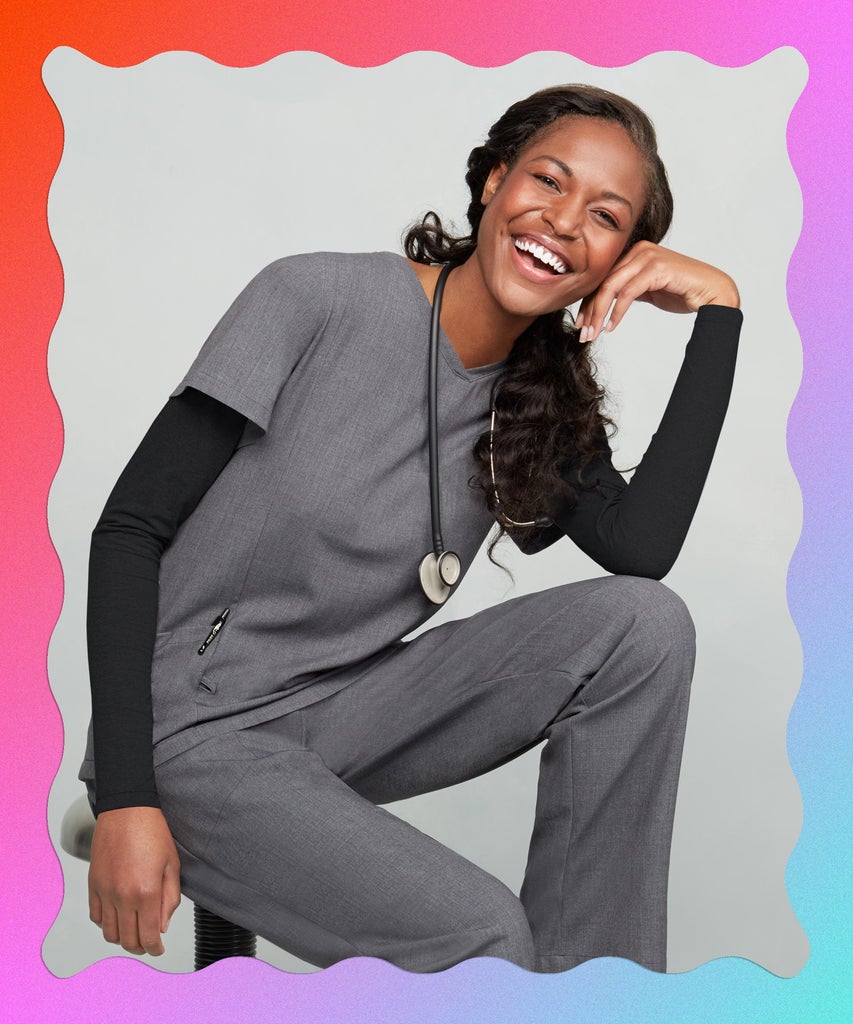
We’re Calling On YOU To Nominate A Deserving Nurse In Your Life

Each year, from May 6 to May 12, National Nurses Week recognizes the tireless commitment of nursing professionals 365 days a year. It’s a time for individuals, employers, healthcare workers, and community leaders to acknowledge the vast contributions and positive impact of America’s registered nurses. 

That’s why this Nurses Week, from May 6 to May 27, we’re calling on our readers to nominate a nurse in their life for the chance to be featured in an upcoming R29 photo shoot celebrating nurses. What’s more, you’ll both win a $250 gift card to CuddlDuds.com. 

Enter here for the chance to win by nominating a deserving nurse in your life today.

Like what you see? How about some more R29 goodness, right here?

Ashley Graham’s Latest Look Is A Lesson In Gym-To-Lunch Styling

After a year of exercising at home, we’re faced with a dilemma we haven’t dealt with in some time: what to wear post-workout when you don’t have time to pop by the house for a wardrobe change. Luckily, supermodel Ashley Graham just debuted the perfect gym-to-lunch look for us to mimic after our next in-person sweat session. On Wednesday, Graham was spotted in downtown Santa Monica wearing a pastel yellow anorak from the Aimé Leon Dore x New Balance collaboration, Knix bike shorts, and Nike sneakers. Elevating the otherwise sporty look, she added a quilted Bottega Veneta Cassette bag, Alighieri gold hoops, and cat-eye sunglasses. 

Later that day, she posted a slideshow featuring the ‘fit throughout the day on her Instagram, captioning it: “ALLERGY SZN,” though you wouldn’t know it from the photos. 

Graham is known for this type of casual-chic street style. Last month, the model — who recently walked alongside Naomi Campbell, Bella Hadid, and Paloma Elsesser in Michael Kors’ 40th-anniversary runway show — posted a similar high-low outfit for her 12.6 million Instagram followers. The look was more lounge-forward and consisted of a similar pair of bike shorts, a brown pullover, and heeled sandals. Again, she made the look appear brunch-ready with the addition of her Cassette bag. 

Clearly, Graham has a solution for every one of our post-quarantine outfit quandaries. With that, shop the look below.

At Refinery29, we’re here to help you navigate this overwhelming world of stuff. All of our market picks are independently selected and curated by the editorial team. If you buy something we link to on our site, Refinery29 may earn commission.

Like what you see? How about some more R29 goodness, right here?

Michael Kors’ Latest Show Featured Ashley Graham

Ashley Graham's Bike Shorts-Heels Are Comfy & Chic

Ashley Graham’s Inclusive Bridal Collab Is Here

Beyond The Red Carpet, What’s Hollywood Doing About Fashion Sustainability On Set?

When we talk about sustainability in Hollywood fashion, we usually only focus on the red carpet. But there’s an overlooked piece of the industry that can be even more wasteful: costuming. According to Sinéad Kidao, who’s worked in the costume department of film projects like Small Axe and Little Women, the amount of energy that goes into outfitting actors on a single project can be massive. She told fashion sustainability agency Eco-Age that “on any given project [costume designers] buy or make more clothes than the average person will own in a lifetime,” a fact that was confirmed by the various industry professionals I interviewed for this story. 

If Hollywood produces over 700 films every year, and the average person will own more than 3600 clothing items in their lifetime, then the movie industry will send over 2.5 million garments into fashion limbo after production is wrapped. In an industry dominated by best practices, union regulations, and strict protocols, there is a surprising lack of universal standards around costuming to ensure that these sustainable practices are applied to every Hollywood production set. 

It’s important to note that movies backed by large production companies usually rely on costume warehouses that hold pieces from past sets that can be reused. Phoenix Mellow, a costume designer for projects like Sylvie’s Love and Black Panther, highlighted the sustainability opportunities within this resource: “[They’re] great because you can reuse pieces for different needs and anybody can go in there to get a great head-to-toe costume for any era,” she said. However, if the production is not backed by a large production company or is not set in L.A. or N.Y.C., it can be difficult to have access to these warehouses. Even when costume designers can pull from costume rental houses, sometimes the options cab be limited which leads many to source clothing from vintage and contemporary stores, pull samples from brands or collaborate with them on designs, or create costumes from scratch.

For many productions set in the present-day, costume departments often rely on Amazon or fast fashion stores to outfit extras because the clothing is inexpensive and arrives quickly. According to Bobbi Luther, a producer who has worked in Hollywood for 20 years, fast fashion is considered invaluable: “[It’s an] asset to a costume designer because of fast casting.” Extras sometimes go to costume fittings just a few days before production begins. Moreover, costume departments often buy in bulk because they may not know the exact sizing for characters on set. They return items that don’t fit, but it’s been reported that these items are sometimes never restocked, and are thrown away or burned instead. 

Mellow suggests that if more costume warehouses, which typically only carry older styles, held ‘90s to current clothing, fast fashion shopping would be reduced. “If you think about that, 30 years of clothes are sitting at the Goodwills and other places. I would love to see costume houses start collecting these brands from the ‘90s on for us to reuse,” she said. Beyond that, establishing costume warehouses in more cities like Atlanta, New Orleans, and Seattle would go a long way in offering local sustainable options for costume departments.

Once on set, cleaning garments can quickly add up. Due to union laws, clothing has to be cleaned at least weekly — sometimes more often. Earth Angel, a full-service green production partner that helps create eco-friendly sets, recommends using “Energy Star washing appliances and cold water” to reduce energy use. Some productions even carry washing logs to calculate their water consumption. The more special garments have to be dry-cleaned rather than washed, which releases harmful PCE solvents into the environment. Recommendations for alternatives include PERC-free dry cleaning and wet cleaning.  

Then comes the aftermath: Where do costumes go after production ends? Any of the custom pieces that big production companies own will end up going back to their costume houses so they can be checked out and borrowed again for other projects. Some clothing ends up in dead storage in case there is another season/another movie. Organizations such as Earth Angel work to donate the remaining items to local organizations and recycle any scraps. “We implement textile recycling programs for all the productions we work with. Always the first priority is donating any reusable clothing items, anything that can have a second life,” founder and CEO of Earth Angel Emellie O’Brien stated. 

In the absence of sustainability standards, companies like Earth Angel are working with productions to create greener sets on a case-by-case basis. O’Brien highlighted how sustainability efforts have to be just as easy and obtainable as other methods. “[Sustainable options] have to be part of the infrastructure. It has to be just as easy as picking up the phone and calling that one vendor that they used to call all of the time. And it will show up tomorrow. It’s got to be like that,” she said. 

For sustainability practices to be standard in the industry, there needs to be more oversight and requirements from top industry professionals. Luther proposed that a solution could come from local film commissions. “[If] I get a call on a Friday that somebody wants to hire me to do a job and it’s in the middle of the country in Oklahoma, I don’t know what’s there. I don’t know what kind of practices are there. If it starts from the local level with film commissions creating infrastructure for out of towners to know how they can participate and make their community greener, that would be an ideal solution for out of town productions to start at the local level.”

Like what you see? How about some more R29 goodness, right here?

Sustainable Fashion Should Look Like My Basement

How Far Away Are We From Downloading Our Clothes?

Why Are Brands Claiming: “We Are Not Sustainable?”