Wednesday, January 19, 2022

Why André Leon Talley’s Personal Style Was Revolutionary

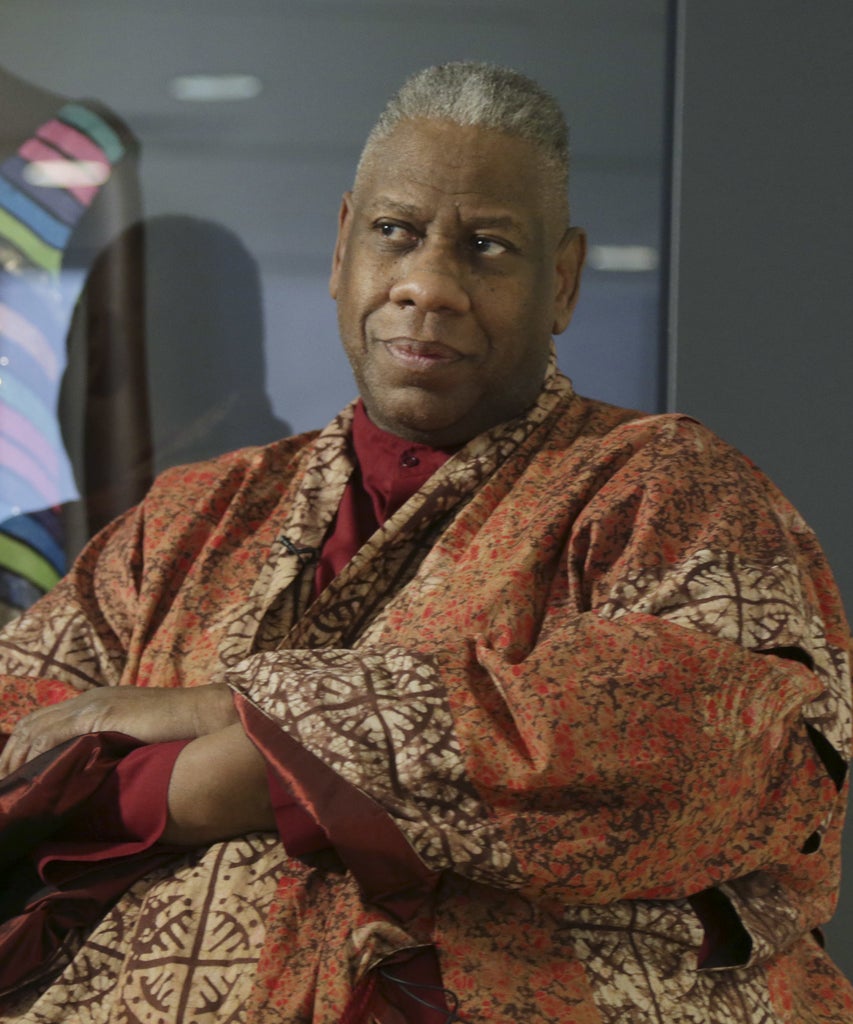
Mandatory Credit: Photo by Seth Wenig/AP/Shutterstock (12766399a) André Leon Talley, a former editor at large for Vogue magazine, speaks to a reporter at the opening of the “Black Fashion Designers” exhibit at the Fashion Institute of Technology in New York, . Talley, the towering former creative director and editor at large of Vogue magazine, has died. He was 73. Talley’s literary agent confirmed Talley’s death to USA Today late Tuesday, Jan. 18, 2022 Obit Andre Leon Talley, New York, United States – 06 Dec 2016

Not all heroes wear capes. But André Leon Talley did. His signature look, one he adopted early in his life while growing up in Jim Crow-era North Carolina, was reflective of the glamour the former Vogue editor-at-large, who died on Tuesday, saw in his everyday life. Granted, later on, his days were anything but mundane, jet-setting from New York to Paris with the world’s most elite designers, models, editors, and socialites for publications like Women’s Wear Daily, Ebony, and Vogue. But even in his final years, sitting on the porch of his house in White Plains, New York, Talley wore his cape to proclaim just how powerful fashion can be when used as a tool for self-expression.

“​​No one saw the world in a more elegant and glamorous way than you did,” designer and friend Diane von Fürstenberg wrote in a tribute to Talley on Instagram. 

It can’t be underestimated the impact that Talley had by breaking barriers as a fashion journalist, who was often was the only Black man seated in the front row of runway shows and appearing on magazine mastheads. Along the way, Talley opened doors for others, both through his journalism, by uplifting emerging talent — designer Rick Owens shared on Instagram that he got his start after the late editor called him “out of the blue” to meet Anna Wintour after seeing his designs in the window of Henri Bendel in 2000 — and through his work as a member of the Board of Trustees at the Savannah College of Art and Design. 

For those who weren’t part of the fashion industry though, he was proof that personal style is the best currency. “You have to be yourself; they will accept you if they see who you are is authentic,” he told Garage. Even though Talley had worn capes throughout his youth, he said it first caused a stir in the industry after Karl Lagerfeld lent him a dressing gown to cover a last-minute dinner for Women’s Wear Daily. “Here comes a Black man representing Women’s Wear Daily in a black dressing gown for a black-tie dinner… I had the upper hand” he said in the video for Garage Magazine, referring to the incident as a “scandal.” 

Work aside, Talley had little care for trends. Instead, he embraced the ways elegance and beauty could be attained through very little resources, a lesson he credited to his grandmother, Bennie Frances Davis, who raised him. “We had nothing but we had everything because we had love,” Talley said in an address at Oxford Union in 2013. “We didn’t talk about style. For me, she was style.”

Talley believed in the power fashion had, particularly in his own life. “Clothes were my armor of warfare,” he said in an interview for his 2020 memoir The Chiffon Trenches. “That’s how I got through life. I had to represent. I couldn’t fail. Failure was not an option.” In turn, he inspired others to be unapologetically themselves. “André Leon Talley made it possible for so many Black queer boys and men to express ourselves out loud. No reservations,” wrote Preston Mitchum, director of advocacy at the non-profit organization The Trevor Project, in a tribute on Twitter. 

But we will also cherish him for reminding the world that fashion is a means of creating our own fantasies of what life can be, no matter where you come from or what you look like. The best way we can dissuade a “famine of beauty,” as he famously said in the 2009 documentary The September Issue, after his passing is by wearing whatever makes us feel like the best version of ourselves.

 Today, though, we honor him by wearing a cape.

Like what you see? How about some more R29 goodness, right here?

Fashion Legend André Leon Talley Dead At 73

Style Icon & Trailblazer André Leon Talley Dead At 73

Just days into the new year, the fashion industry is mourning the loss of André Leon Talley. The world famous editor, creative director, journalist, and fashion authority died on Tuesday, January 18, at a White Plains hospital. He was 73 years old.

Though he was known for living and working among industry elites throughout his professional career, Talley’s roots trace back to Jim Crow-era North Carolina, where he was raised by his grandmother. While living through the harsh realities of the widespread culture of anti-Blackness and government-enforced poverty, Talley was able to prioritize his education; he went on to graduate with bachelor’s and master’s degrees in French literature in the 1970s. 

After graduating, Talley made a pivot to fashion, and an unpaid internship at the Metropolitan Museum of Art opened the door to other major opportunities in fashion journalism. Through his work at Interview Magazine, Women’s Wear Daily, The New York Times, W Magazine, and American Vogue, Talley quickly became a respected voice in the industry. In addition to his impressive bylines, Talley’s other notable jobs included serving as a judge on America’s Top Model, styling celebrities (including former First Lady Michelle Obama and supermodel Naomi Campbell), working as a consultant for will.I.am, and being heavily involved in his local church and as a board member for the Savannah College of Art and Design. 


Talley’s very existence as a six-foot-six gay Black man from the South in itself was a challenge to the Eurocentric, very white norms of a space that had famously (and still does, in many respects) boxed people like him out. He wasn’t supposed to fit into that world, but he did — and he made it his own.

ineye komonibo

News of Talley’s passing broke late Tuesday evening and was later confirmed by his circle of close personal friends. Ford Foundation president and longtime pal Darren Walker wrote poignant words about Talley on Instagram, praising the late maverick’s “a deep academic understanding of fashion and design.” Designer Diane von Furstenberg also penned a moving tribute to her friend in which she recalled the joys of their almost 50 years as friends. All across social media, fans and followers are mourning the loss of Talley, who played a major role in modern culture’s understanding and discussion of fashion. 

“​​Andre Leon Talley was unapologetic about embracing his identity,” tweeted one fan. “In an industry that champions standards which he did not fit, he refused to go unnoticed and the world is better for it. We have lost a trailblazer, an icon and an overall remarkable human.”

From the successful career that spans decades to the loving testimonials of his friends, co-workers, and the countless people that he inspired, it’s obvious that what made Talley special wasn’t just the fact that he had a demonstrably superior eye for fashion. Talley’s very existence as a six-foot-six gay Black man from the South in itself was a challenge to the Eurocentric, very white norms of a space that had famously (and still does, in many respects) boxed people like him out. He wasn’t supposed to fit into that world, but he did — and he made it his own. 

Like what you see? How about some more R29 goodness, right here?

Virgil Abloh & Chadwick Boseman Didn’t Owe Us

Black Panther Star Chadwick Boseman Dead At 43

Tyra Banks Answers For Problematic "ANTM" Behavior

Tuesday, January 18, 2022

This Buzzy Lingerie Brand Just Launched More Inclusive Band Sizes

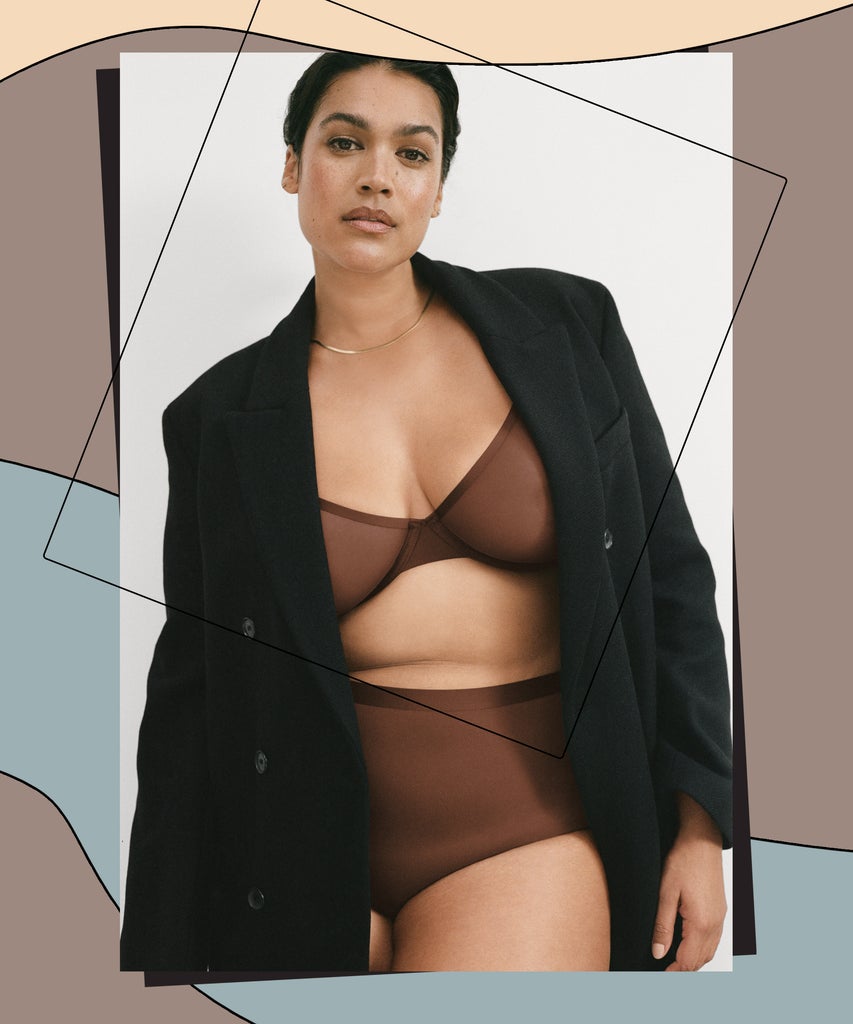
Odds are you’ve probably heard of Cuup, a start-up bra brand that’s risen to the peaks of Instagram notoriety in recent years for their unlined brassieres that promise to fit larger cup sizes just as well as smaller ones. Whether the rise to fame has to do with the brand’s simple-yet-sexy vibe or the custom grading system (designed to more accurately replicate the natural contours of a body), there’s no mistaking that Cuup has built an impressive cult following. Among the praise and cheer for the brand, a whisper of criticism has been building up for some time, based on the limited band sizes in the gauzy inventory. Well, if you are one of the plus-size folks that have been dying to get your hands on a Cuup bra, it’s your lucky day: The brand has now officially extended their band-sizing past 38 to include bra sizes with bands in the 40 – 44 range.

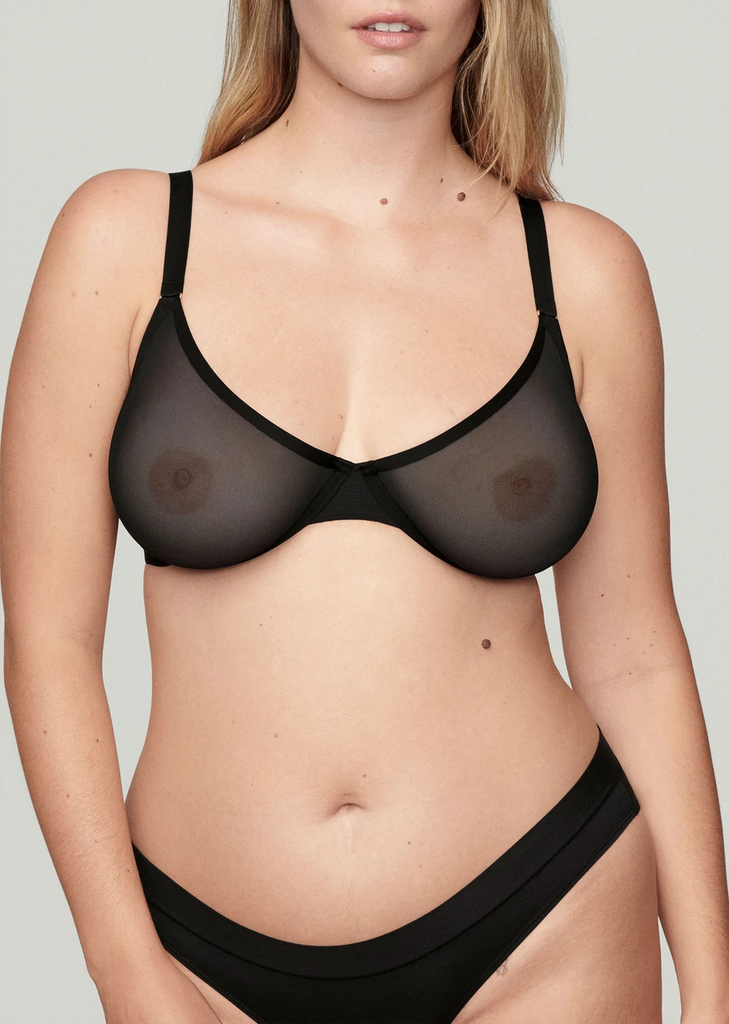
Cuup “The Plunge” Bra, $68

It’s taken a while to get here (two years to be exact), but the design team at Cuup chose not to skimp out on good, intentional design. “Empowered and inspired by this customer, we dove into studying [their] needs. Through in-person fittings and feedback sessions, we developed a design formula that is modern in its unique alchemy of bridging style, fit, support, and functional design”, explains Pascale Guéraçague, CUUP Chief Design Officer. In an environment where many brands are lazily jumping onto the trendiness of size inclusivity and quickly shelling out poorly designed garments (and wondering why the plus-size community doesn’t accept the meager bones thrown their way), this approach is refreshing. Guéraçague further explains that launch “required advanced material development, and was imperative to work with real women to successfully and authentically serve [extended-sized] customer.”

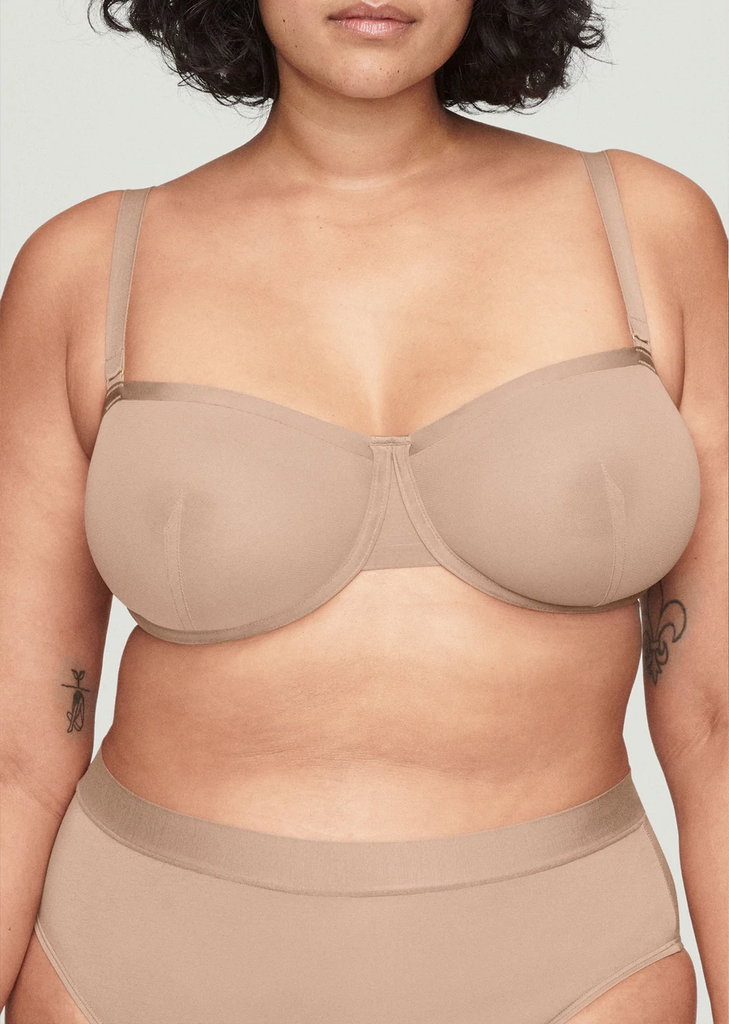
Cuup “The Balconette” Bra, $68

The new, improved and more inclusively sized collection of bras includes a host of crowd-favorite silhouettes, all of which retail for $68. The Plunge is a mesh bra with a deep “v” cut that’s great for wearing underneath most necklines. The Balconette is Cuup’s take on sexier bra shape — but thanks to the brand’s signature no-frills design, it’s still practical for everyday wear. The Scoop boasts a deeper, “c”-shaped curve, and is made with an opaque, buttery material. The Demi is like your classic t-shirt bra — but it’s built with breathable “spacer” fabric in lieu of the suffocating foam often found in casual lingerie.

Click here to shop the buzzy brand’s foray into more inclusive sizing here.

At Refinery29, we’re here to help you navigate this overwhelming world of stuff. All of our market picks are independently selected and curated by the editorial team. If you buy something we link to on our site, Refinery29 may earn commission.

Like what you see? How about some more R29 goodness, right here?

Supportive Plus-Size Sports Bras That Won't Chafe

What’s The Future Of The Bra?

The Tik Tok Famous Binder Alternative Works!

Monday, January 17, 2022

For Activists, The Garment Worker Protection Act Is Just The Beginning

For the past 30 years, Maria has worked in Los Angeles as a seamstress, steamer, and trimmer. Back in the ‘90s, she made $20 per week, a salary she used to support herself and her three kids who lived in Mexico. 

“The world was collapsing for me,” Maria, who wished to keep her last name private, tells Refinery29 in Spanish. “[The United States] was supposed to be the land of opportunity.” Her salary wasn’t enough to cover her basic needs in Los Angeles, let alone succeed as a breadwinner for her family. 

But as of January 2022, she is covered under the Garment Worker Protection Act, also known as SB62, a bill she helped lobby for since 2020. “It’s a great victory for us garment workers,” says Maria. 

The Garment Worker Protection Act — signed into law last September by California Governor Gavin Newsom — is an anti-wage theft and brand accountability bill that makes the state the first in the country to require hourly wages for garment workers. It also bans piecework, a practice that allowed manufacturers to pay workers per garment, resulting in a salary of less than $6 per hour, according to Marissa Nuncio, director of the Garment Workers Center (GWC), a 20-year-old organization that helps low-wage garment workers in California. 

Furthermore, the law establishes a new accountability precedent for brands and manufacturers that will penalize wage theft and other illegal pay practices. Led by the GWC, state senator Maria Elena Durazo, and organizations like Remake — which works to shift the fashion industry away from practices that are harmful to workers and the environment — the bill was backed by 158 retailers and designers, including Reformation, Eileen Fisher, and Mara Hoffman. 

“You couldn’t really eliminate the piecework system if the biggest actors weren’t taking responsibility,” says Nuncio. “So together we thought it was a really strong bill.”

Today, Los Angeles is the biggest garment hub in the United States, servicing some of the world’s largest fast-fashion retailers. For decades, the industry has profited from a loophole that allows fashion companies to circumvent their responsibility in wage theft claims by subcontracting manufacturers. This way, fashion companies are able to argue they are not “garment manufacturers,” forgoing accountability for wages of workers making their products. SB62 expands the definitions of garment manufacturing to include anyone who is “dyeing, altering a garment’s design, and affixing a label to a garment.”

For the 45,000 garment workers in Los Angeles, this law is a chance at a better future. According to Maria, it’s about dignity. 

“Wage theft is a very dramatic reality for us and people don’t know about this,” says Maria, who has been unable to afford basic necessities like housing and food in the past. “I think that this new law will allow us to live more calmly.” In the past few years, Maria got a taste of what life as an hourly worker could be like when she found a job that paid her a wage by the hour instead of per garment. Now, her salary is around $500 per week, a $200 jump from when she was being paid per garment. “It’s a big difference,” she says. 

Nuncio says SB62 follows in the footsteps of other legal agreements passed around the world, most notably including the Accord on Fire and Building Safety in Bangladesh between brands and trade unions to guarantee safe working conditions for workers in the country’s textile industry. Passing SB62, she claims, is just the beginning. 

“There is momentum and real organizing happening in the global anti-sweatshop movement toward brand accountability,” she says. “We are seeing more successful campaigns toward this end.” And while passing SB62 is a big win, Nuncio says the work is far from over. The GWC is now starting the next phase of its advocacy, which will focus on education and fiscalization. “We are moving from a policy campaign to an education campaign for workers and businesses,” she says. 

First on the agenda: training workers on their new rights. The team started meeting in October 2021 to put together a step-by-step plan that will educate garment workers on how to exercise their right to an hourly wage, as well as file claims of wage theft. They are also working on an education campaign for businesses to make sure manufacturers and brands are obliging by the state’s new law. 

“We want to really share this win in the spirit of solidarity and the spirit of mutual learning,” says Nuncio. The GWC also plans to expand its Wage Justice Clinic, hiring a new staffer in January to help workers file wage theft claims, as well as assist in the SB62 education campaign. There’s also $5 million on the table that was granted to the GWC through a budget process for legal services, education, and outreach that Nuncio says will be a prominent part of the organization’s focus this year. 

“We also are going to really be talking with our legal allies about how we strengthen the support network out there for workers who want to bring wage claims forward,” she says. “And how do we use it best to get those funds out into the community.”

Nuncio adds that the GWC is now keen on replicating the success of SB62 elsewhere: “We have to create this transnational movement for it,” she says. 

Her eyes are set on New York. While Los Angeles is U.S.’s biggest garment manufacturing city, New York’s Garment District is home to over 5,000 garment workers as of 2018. The hourly minimum wage in New York ranges from $11.80 to $15, depending on where in the state the company is located. Many garment workers are still impacted by wage theft. “It’s really interesting to see that in two of the major garment centers in the U.S., wage theft is prominent,” says Nuncio. 

New York’s SWEAT bill is intended to take care of this. Unlike SB62, the SWEAT bill extends beyond garment workers in New York State. But similarly to SB62, it’d make companies liable for unpaid wages.

According to a representative from National Mobilization Against Sweatshops (NMASS), a 20-year-old organization focused on ending workers’ rights violations, businesses get away with not paying around $1 billion to garment workers every year in New York State. Furthermore, companies are able to forgo paying workers back even when the court rules in the workers’ favor. Right now, companies are able to move or hide assets, making it hard for workers to collect their payments even when a resolution is passed. The SWEAT bill would force companies to freeze their assets until the resolution of a case, ensuring workers will be able to collect their money. 

That’s why New York organizers and legislators are looking to pass the SWEAT bill this year. 

First proposed in 2019, the bill was vetoed by former New York Governor Andrew Cuomo in January 2020. Now, with the appointment of Governor Kathy Hochul, SWEAT sponsor Senator Jessica Ramos is hoping to get the bill passed when the senate is back in session in January. 

“[SWEAT] is a bill that has been languishing in the state senate for a long time,” says Ramos. “We are ready to start the cycle all over again.” Hochul already established herself as a supporter of New York’s fashion industry during New York Fashion Week last September, announcing a state partnership that would open the Robert F. Wagner Jr. Park in downtown Manhattan and Moynihan Train Hall in Midtown to designers participating in NYFW — for free. (Most designers pay between $20,000-$50,000 to rent a fashion show venue, according to Vogue Business.)

For Ramos, it all comes back to the workers. “What we are trying to do is make it easier for these workers to obtain their lost wages,” says Ramos, who is the chair of the New York State Senate’s committee on labor. “We seek to empower workers in any industry with the tools to get their money back.” 

Like what you see? How about some more R29 goodness, right here?

Can You Shop Plus-Size Sustainably?

Will The Pandemic End Fast Fashion?

Is Mushroom Leather The Future Of Eco-Fashion?