Monday, February 28, 2022

Are Lab-Grown Diamonds The Gemstone Of The Future?

For more than 50 years, diamonds have been the ultimate symbol of love and the go-to gemstone for engagement rings. From songs proclaiming them “a girl’s best friend” to ad campaigns highlighting their eternal power, diamonds are firmly embedded in our culture. But as the lab-grown diamond industry continues to rise in popularity and produce cheaper and more sustainable alternatives to mined diamonds, is the gemstone really forever?

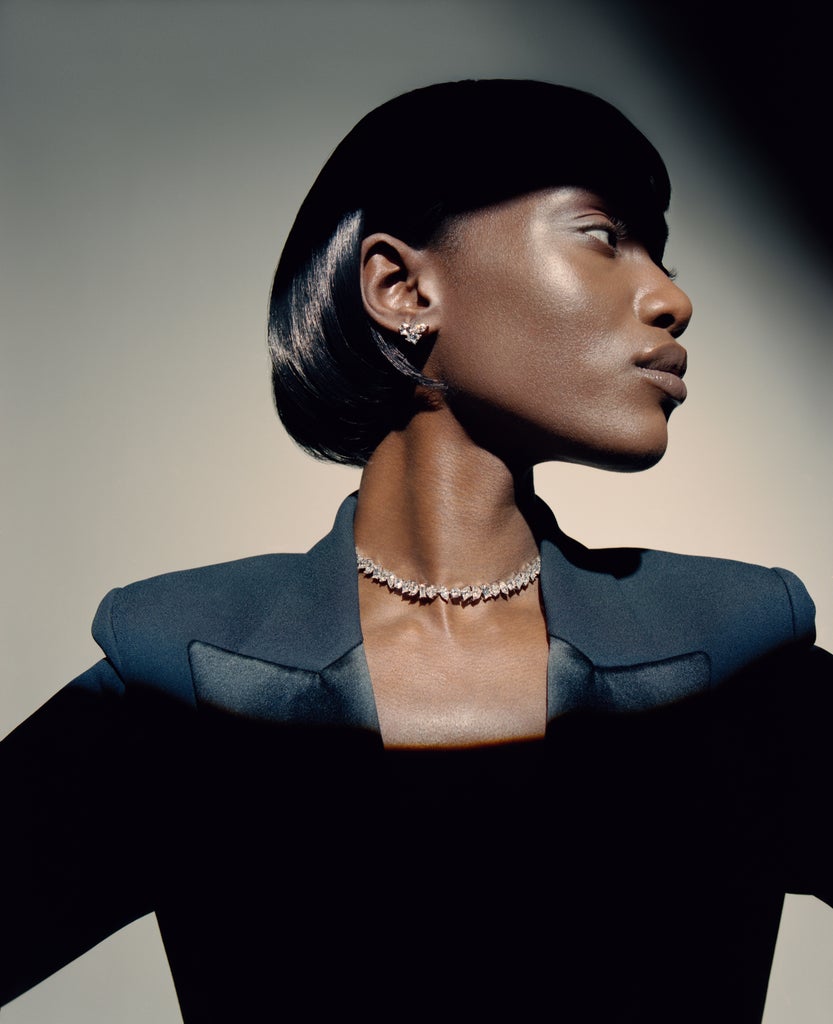
First things first: What is a lab-grown diamond? “A lab-grown diamond is optically, chemically, and physically identical to a natural diamond,” explains Melissa Cirvillaro, chief marketing officer of Lightbox, a subsidiary of De Beers Group that creates lab-grown diamonds, via email. “It is grown in a laboratory over a period of weeks rather than mined from the earth.” The process involves a diamond seed — a thin wafer of existing gemstone — as well as raw carbon and energy, which are then put under conditions that mimic the natural environment where a traditional diamond flourishes. Over the past few years, it’s becoming a popular choice among consumers.

According to Vogue Business, six to seven million carats of lab-grown diamonds were produced in 2020. While mined diamond production still outpaces the lab-grown industry — in comparison, over 110 million carats of diamonds were mined in 2020 — this sector is growing: According to Aether, a lab-grown diamond jewelry brand, the market has grown from 1% to 5% in the past three years alone. Since then, not only have new lab-grown brands launched, but heritage and mainstream brands like De Beers Group and Pandora have adopted lab-grown options into their offering as well.
Why are people foregoing diamonds? 

While the earliest descriptions of diamonds were found in a Sanskrit manuscript dated to 320-296 BCE, the reason many people today own diamonds is thanks to modern-day marketing. Thanks to the legendary “A Diamond Is Forever” campaign launched in 1948, the De Beers company — one of the world’s biggest diamond miners, cutters, and sellers — successfully convinced the world that the only proper way to get engaged was with a diamond ring. This gave birth to the engagement ring industry as we know it today: From 1939 to 1979, wholesale diamond sales climbed in the country from $23 million to $2.1 billion. 

Yet, as consumers have become more aware of the environmental and social impact of their fashion and shopping choices, the question of ethics surrounding diamonds has also been raised. Some argue that this industry has a severe environmental, economic, and social impact on communities where natural diamonds are mined, fueling armed conflicts. Two decades since governments worldwide signed the Kimberley Process, a certification created in 2003 with a mission to reduce the mining and exporting of “blood diamonds,” human rights violations are still being documented in countries where diamond mining occurs. Yet, many still argue that the economic and social benefits are bigger than it seems: the Natural Diamond Council says that over 80% of the net economic benefits of diamond production are retained within their originating countries.

Are lab-grown diamonds more sustainable? 

There are also concerns when it comes to the environmental consequences of mining diamonds. While mined, diamonds require over 120 gallons of water for each carat, according to The Diamond Foundry, a company that produces synthetic diamonds, some lab-grown diamond companies use electricity and fossil fuels for production.

But many lab-grown-diamond companies are trying to extract energy and carbon from resources they claim are more sustainable. Marketed as the first-ever diamond made from air, Aether uses technology that captures carbon dioxide from the atmosphere to produce its diamonds. “We’re effectively reducing the carbon footprints of our customers and offsetting their impact,” the company’s CEO, Ryan Shearman, tells Refinery29. Aside from turning air into diamonds, Shearman says the company’s facilities and production also rely on clean energy from solar and wind power. Aether is also foregoing the use of other lab-grown diamonds for their seeds (ie. those thin diamond wafers) obtaining them instead from their own products, which they claim are “carbon negative.” 

“Our goal is to be able to not just act as a source of diamond jewelry and have a positive impact for our customers, but also from a business-to-business standpoint to be able to offer diamond seeds out there in the marketplace,” Shearman says. 

Los Angeles-based VRAI is also attempting to reduce the environmental impact of mined diamonds and its own lab-grown production. “We’ve been really focused on showing the beauty and the opportunity that lab-grown diamonds have by showcasing that you can have a luxury product that doesn’t compromise your ethics,” says Mona Akhavi, CEO of VRAI. 

The brand, which is owned by The Diamond Foundry, uses hydropower from the Columbia River in Washington to extract the energy needed to grow their diamonds. (While hydropower can help offset the carbon footprint, the practice has received criticism from environmentalist groups, who have called out the construction of large dams for their harm to wild rivers and fish populations.) 

While many lab-grown-diamond companies claim to be more sustainable than mined diamonds, there is no clear consensus on just how much energy lab-grown diamonds require: A 2011 report by the University of Virginia found that making lab-grown diamonds can use an estimated 20 kilowatt-hours per carat, while numbers provided to the trade publication JCK from “a veteran  [diamond] grower” show that a single-stone high-pressure, high-temperature press — one of two types of machines used to grow diamonds — requires 175 to 225 kilowatt hours per rough carat (a similar amount of energy to what the average American household uses to power a home for seven days).

Are mined diamonds over? 

Beyond ethics and sustainability, multiple reports conclude that diamonds have lost relevance with millennials and Gen Z who are less interested in engagement and marriage than generations before them. As society moves away from the idea of the nuclear family as its bedrock, so do the symbols that used to hold it together. In turn, diamond companies are adapting to fit changing social tides, turning to lab-grown diamonds for cheaper and more sustainable offerings. For proof, see Lightbox, which was founded by De Beers Group in 2018.

Then, there is the generational economic factor — millennials own just 5% of the wealth in the United States — which is makes the cheaper prices of lab-grown diamonds appealing to the demographic. For example, the cheapest available diamond stud earrings at De Beers are sold for $1,150 for a .14 carat diamond, while Lightbox offers a similar pair for $250 including a .25 carat diamond. 

But while lab-grown diamonds are more economical, many argue that they won’t retain their value as much as mined diamonds, which are becoming more rare: Global supply of mined diamonds peaked in 2006 with 176 million carats mined, a level that, according to Bloomberg, will never be reached again. “Natural diamonds are a finite natural resource: the earth is not making any more. So, this rarity makes them a long-term store of value,” Sally Morrison, public relations director at Lightbox, wrote via email. Experts envisioned that, in 2021, there would be a 15 million carat deficit in the supply of mined diamonds, which could lead to a demand in lab-grown diamonds. 

“Fewer and fewer mined diamonds will be available that are coming out of the ground, that means that the gap there can only be filled by lab-grown,” says Shearman. 

Are mined diamonds forever? Maybe not. But thanks to the lab-grown, they will remain eternal.

Like what you see? How about some more R29 goodness, right here?

Beyoncé Channeled Audrey Hepburn In Tiffany's Ads

Are Lab-Grown Diamonds The Same As Natural Stones?

The Best Celebrity Engagement Rings Of 2020

Friday, February 25, 2022

J.Crew’s End-Of-Season Outerwear Sale Is An Up-To-69%-Off Cozy Paradise

With the start of slightly warmer weather and a new month, we just can't stop thinking about all those end-of-winter sales. Of course, our closets could always need more chic-and-cozy coats, stylish boots, and super soft cashmere sweaters. If you've been looking to stock up, now's the time. J.Crew is currently offering up to 69% off select End-Of-Season outerwear styles and an extra 30% off already discounted items. An R29 reader favorite, J.Crew's sales are one of the best ways to stock up on its peppy, preppy basics for way, way less.

Using the promo code SHOPSALE, you can get a steep discount on your on-sale purchase for a super limited time only. We're letting you know about this super sale now so you can catch the best drops and snatch them up before they're all gone. But because we know how hard weeding through all those sales can be, we've curated our top choices from this layering-heaven of a sale.

At Refinery29, we’re here to help you navigate this overwhelming world of stuff. All of our market picks are independently selected and curated by the editorial team. All product details reflect the price and availability at the time of publication. If you buy something we link to on our site, Refinery29 may earn commission.


J. Crew Cocoon coat, $, available at J. Crew


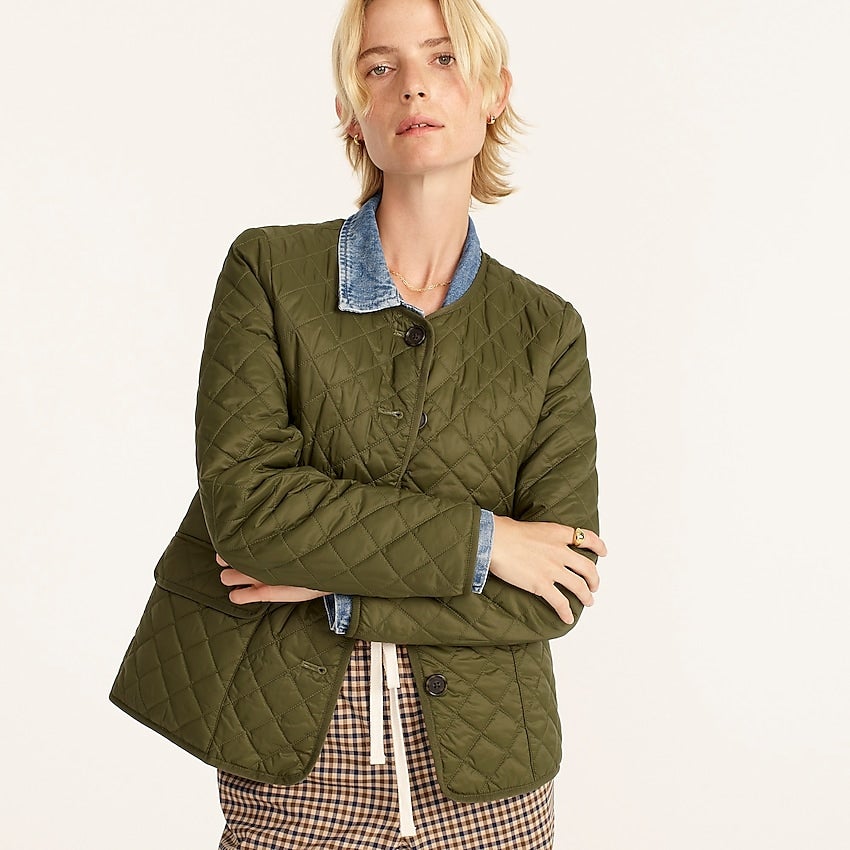
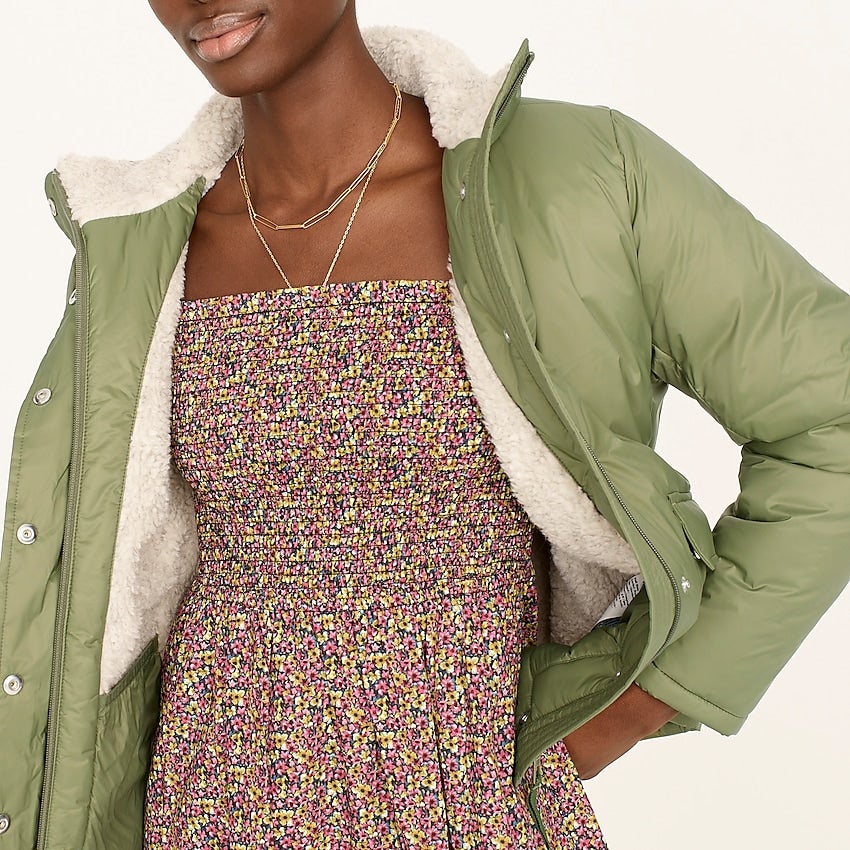
J. Crew Quilted puffer lady jacket with PrimaLoft, $, available at J. Crew


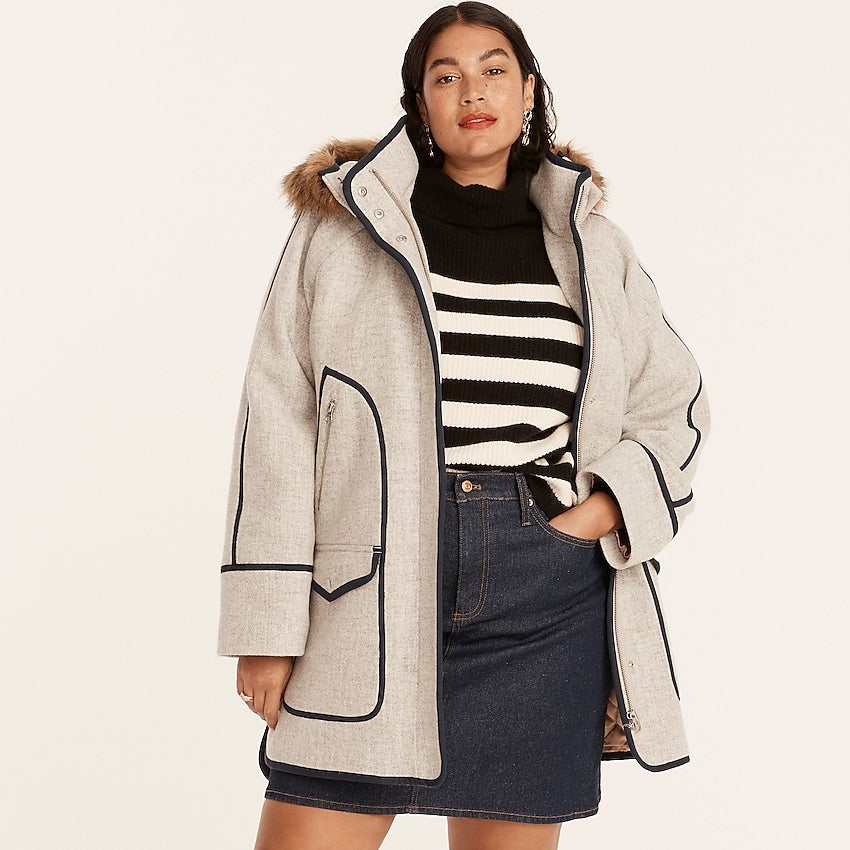
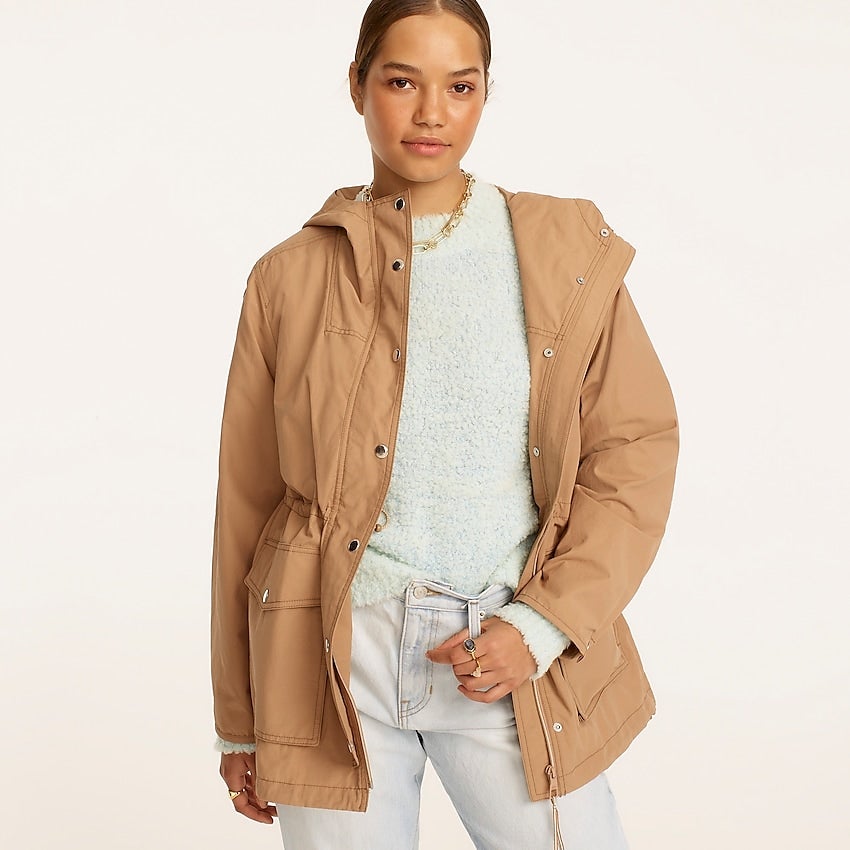
J. Crew Summit parka in Italian stadium-cloth wool, $, available at J. Crew


J. Crew Chateau parka in Italian stadium-cloth wool, $, available at J. Crew


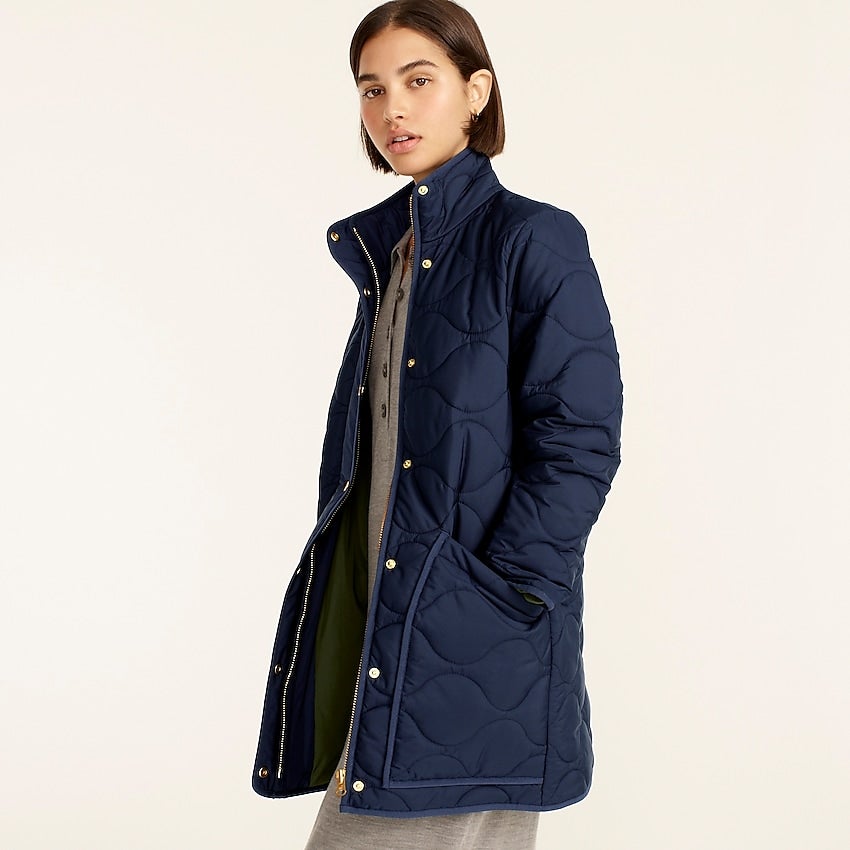
J. Crew Quilted cocoon puffer with PrimaLoft, $, available at J. Crew


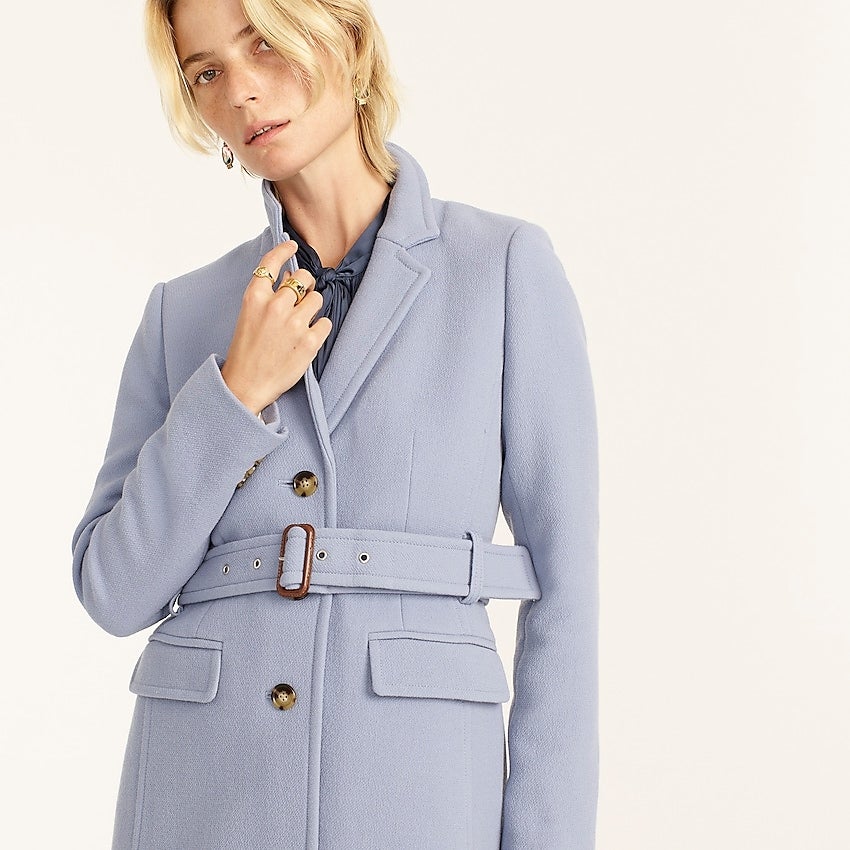
J. Crew Belted lady day topcoat in Italian double-cloth wool, $, available at J. Crew


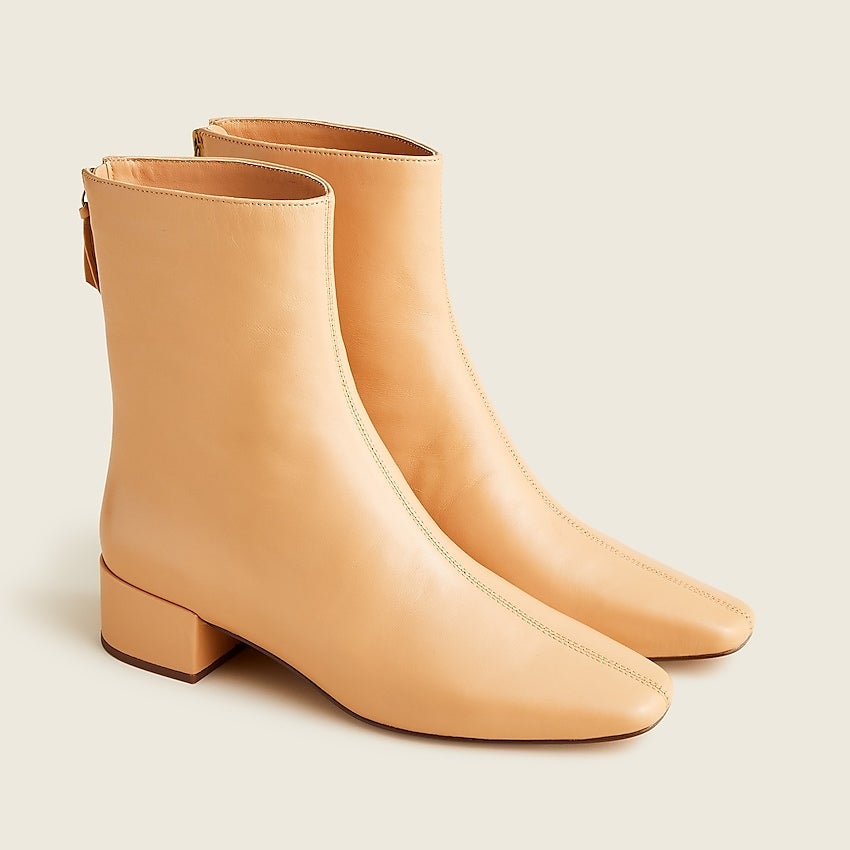
J. Crew Roxie center-seam ankle boots in leather, $, available at J. Crew


J. Crew Relaxed perfect lightweight jacket, $, available at J. Crew


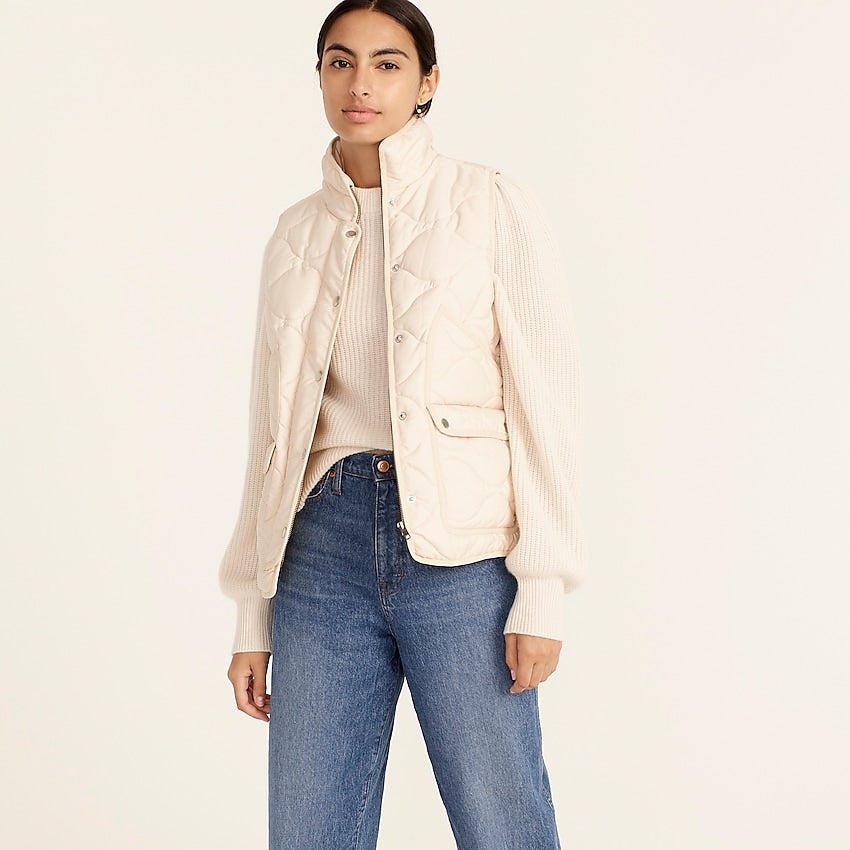
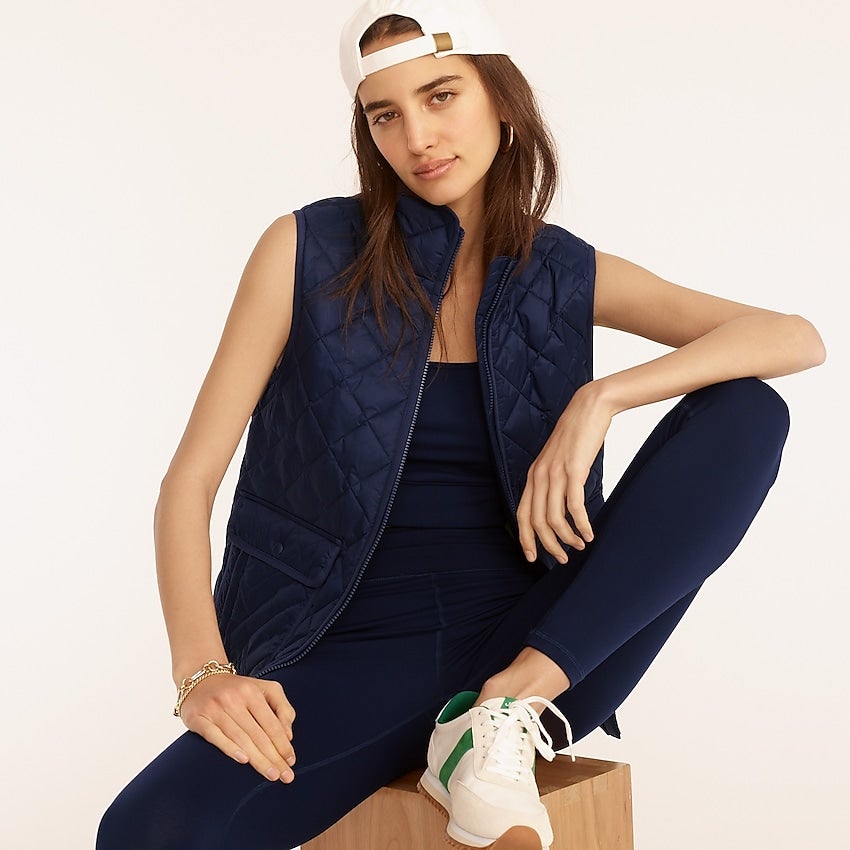
J. Crew Quilted vest with PrimaLoft, $, available at J. Crew


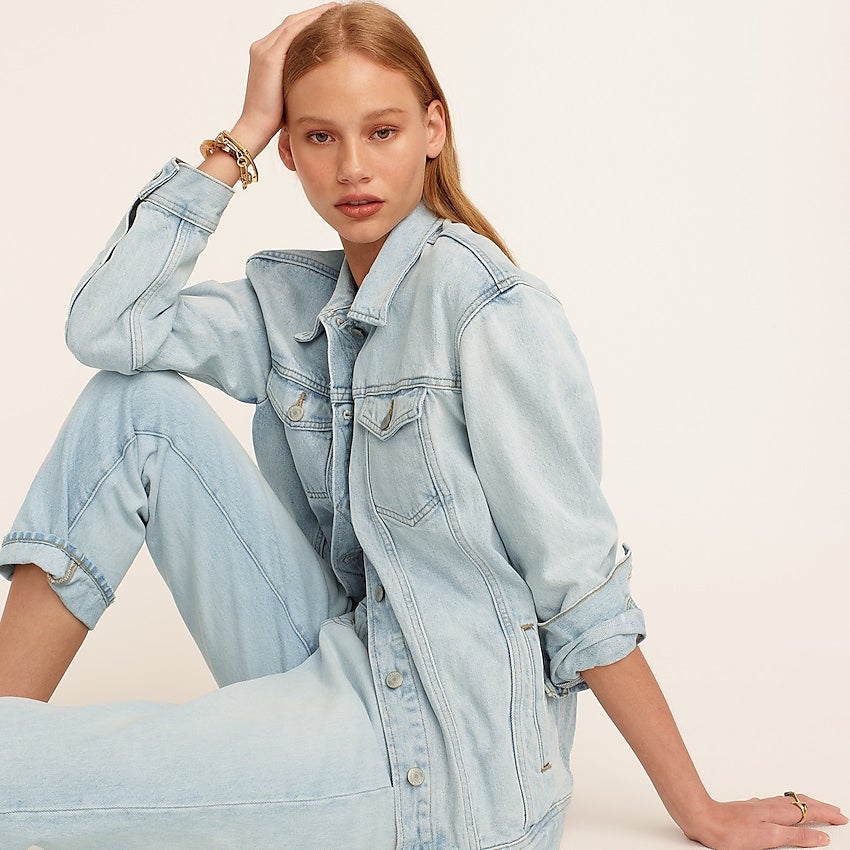
J. Crew Relaxed denim jacket in waterside wash, $, available at J. Crew


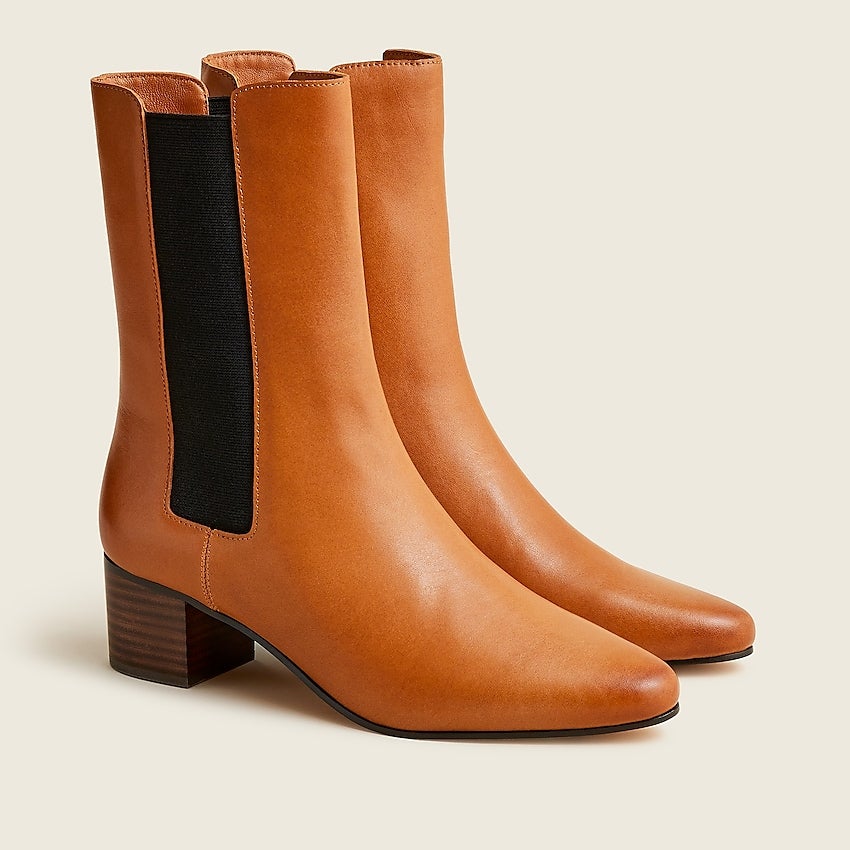
J. Crew Leather high-shaft stacked-heel boots, $, available at J. Crew


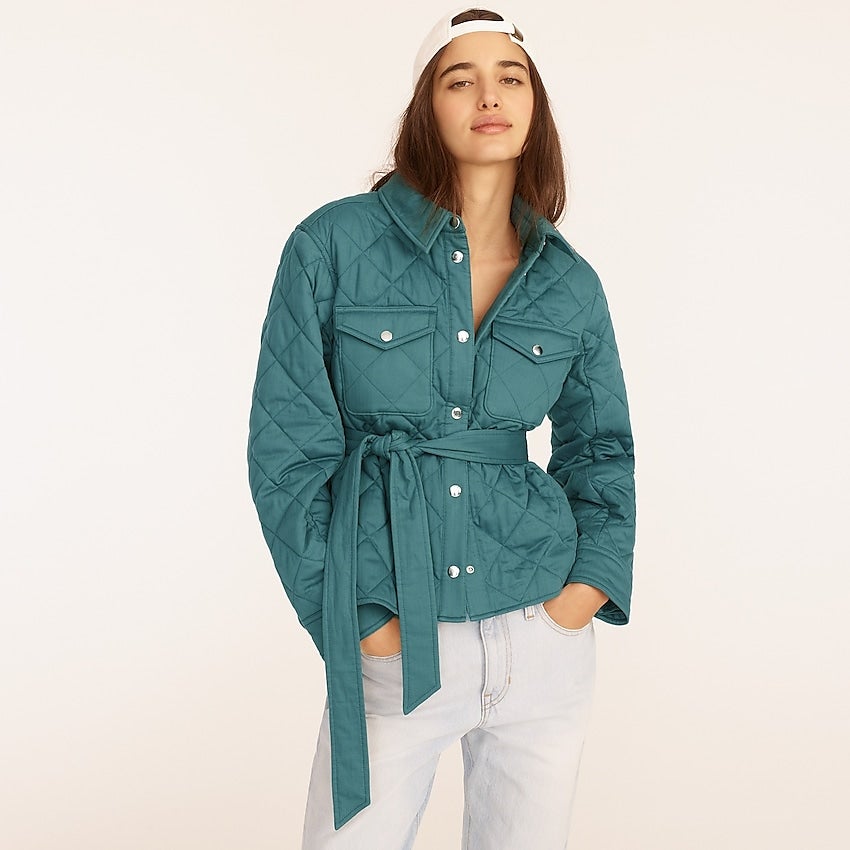
J. Crew Quilted shirt-jacket with PrimaLoft, $, available at J. Crew


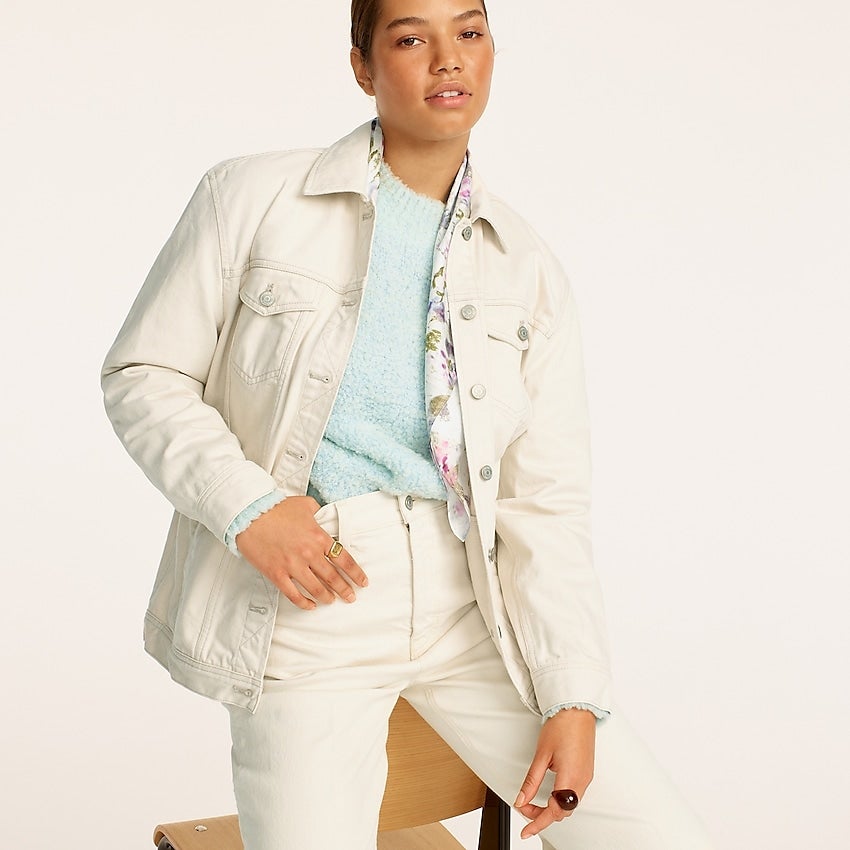
J. Crew Relaxed denim jacket in ecru, $, available at J. Crew


J. Crew Sherpa-lined puffer jacket with Primaloft, $, available at J. Crew


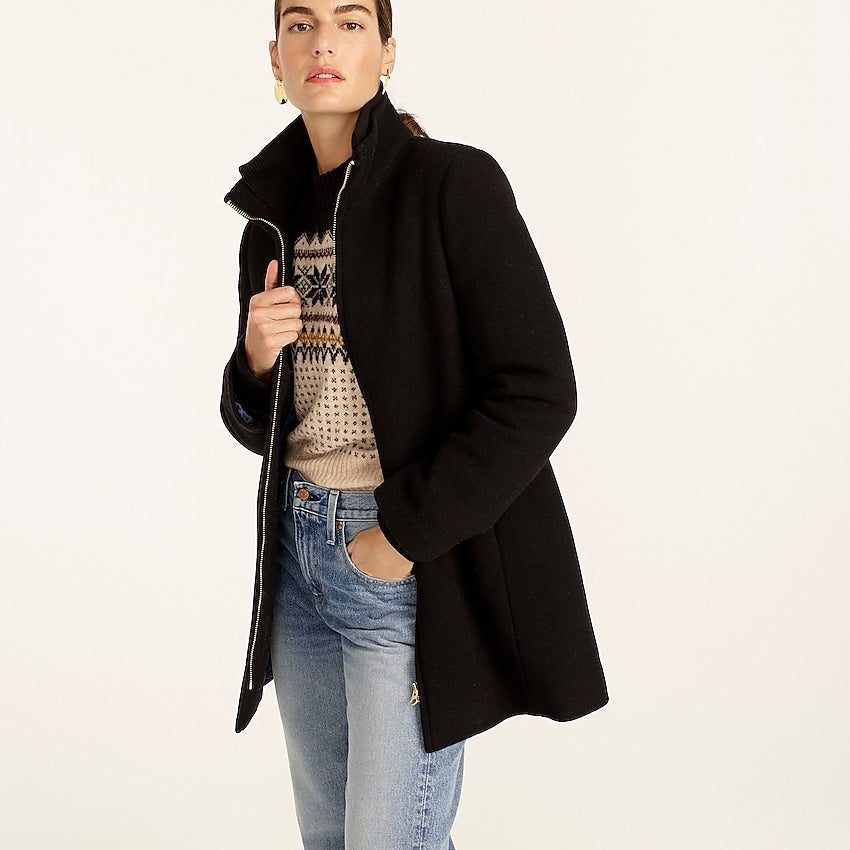
J. Crew Classic lady day coat in Italian double-cloth wool, $, available at J. Crew


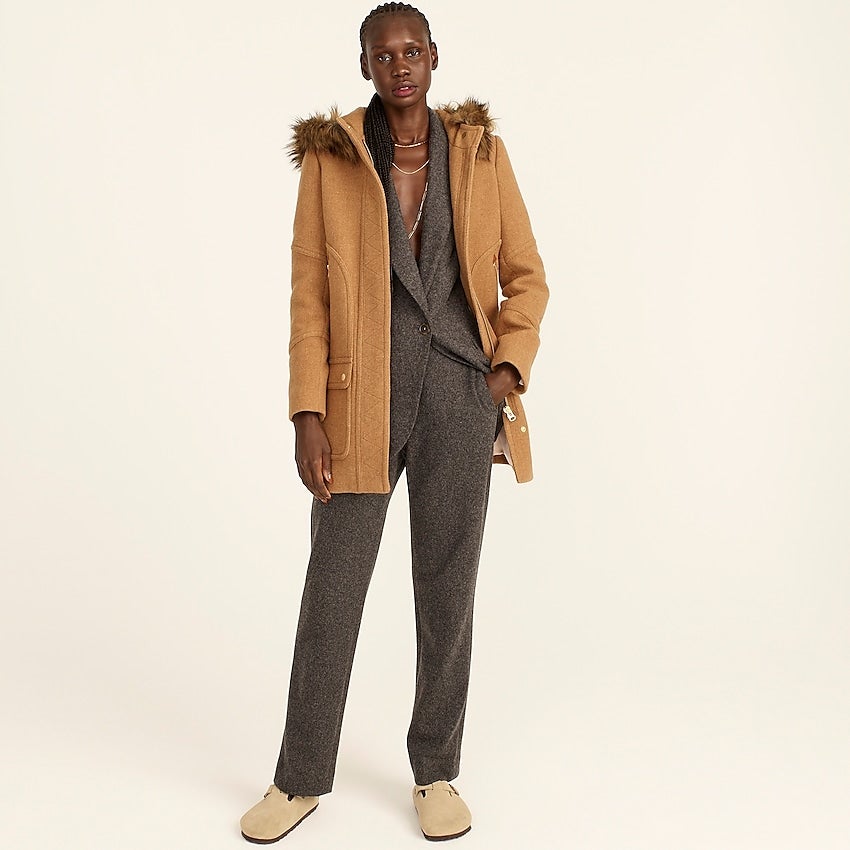
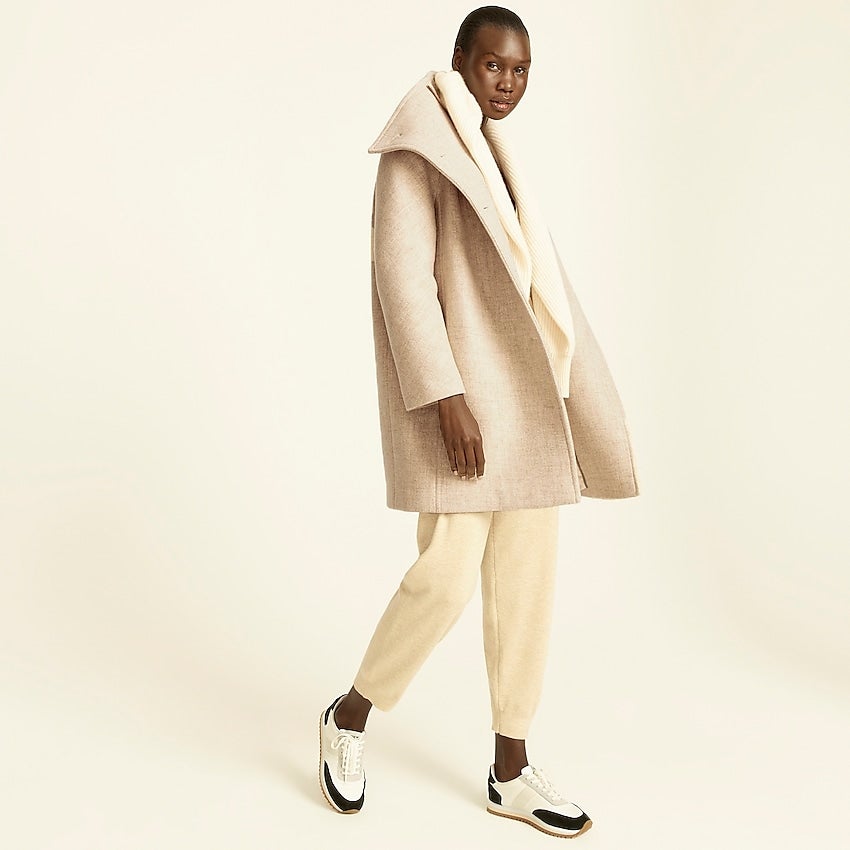
J. Crew Villa coat in Italian stadium-cloth wool, $, available at J. Crew


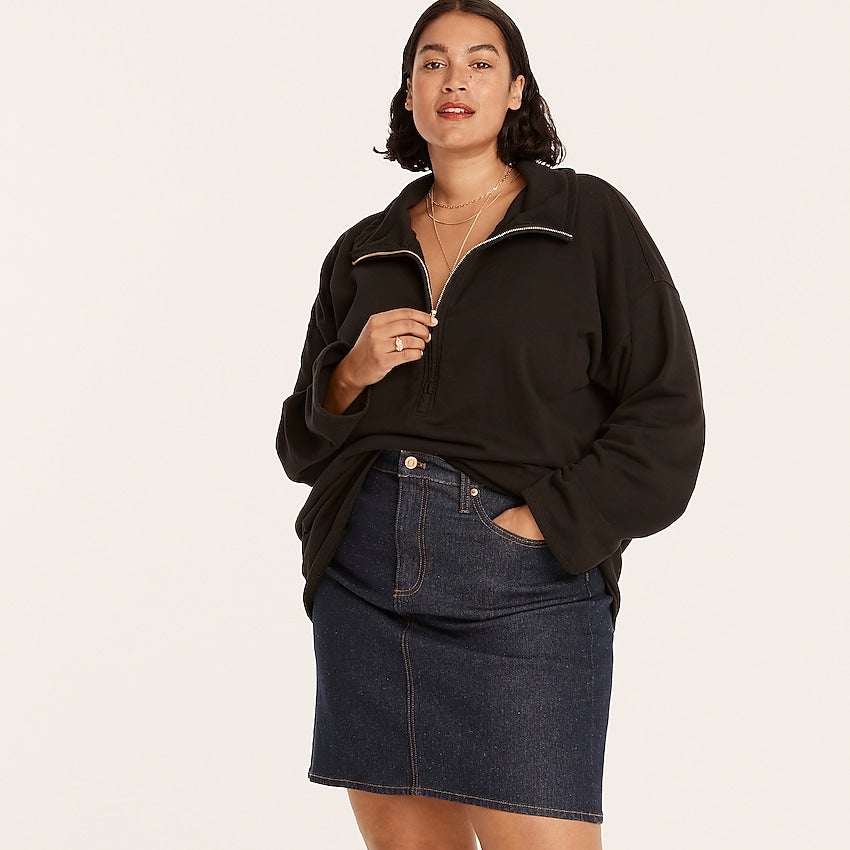
J. Crew University terry long half-zip tunic, $, available at J. Crew


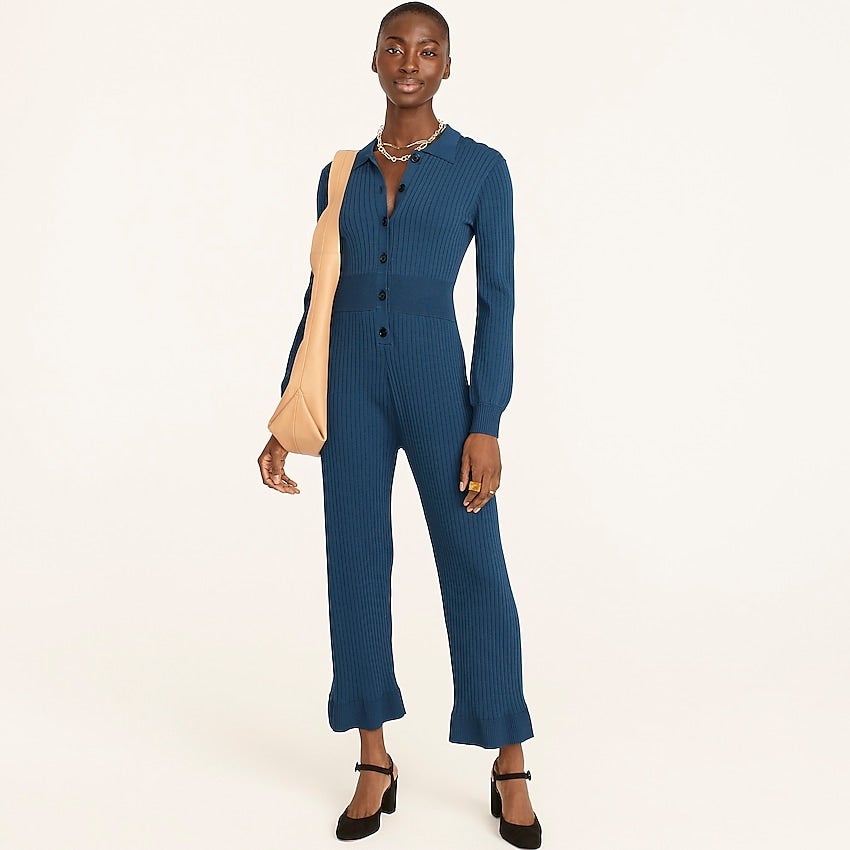
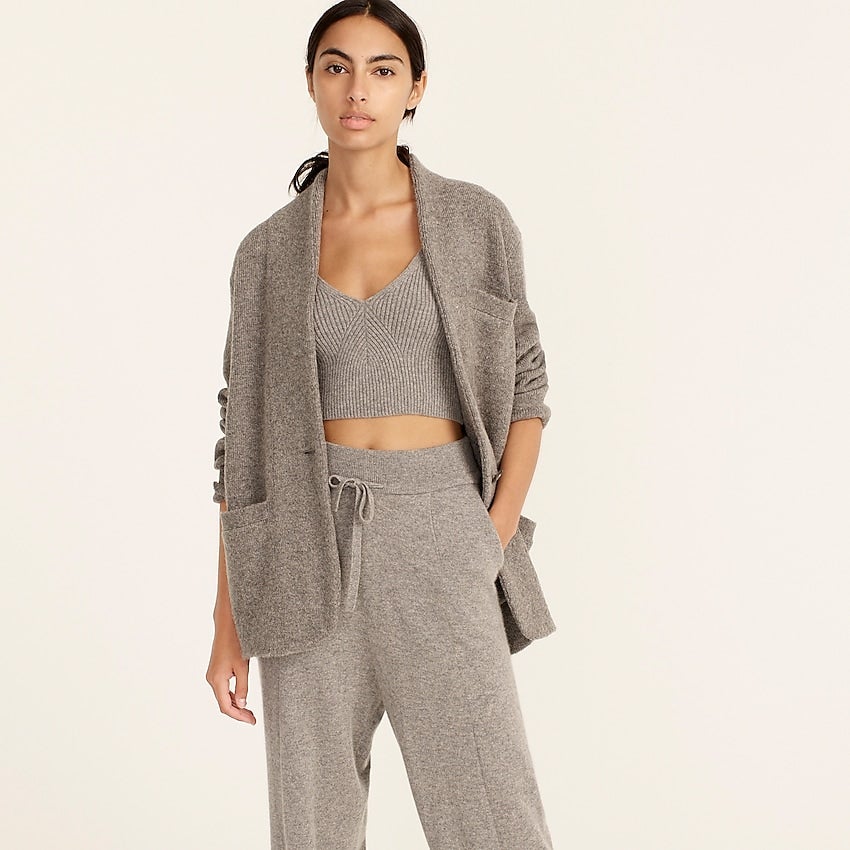
J. Crew Ribbed cropped jumpsuit, $, available at J. Crew


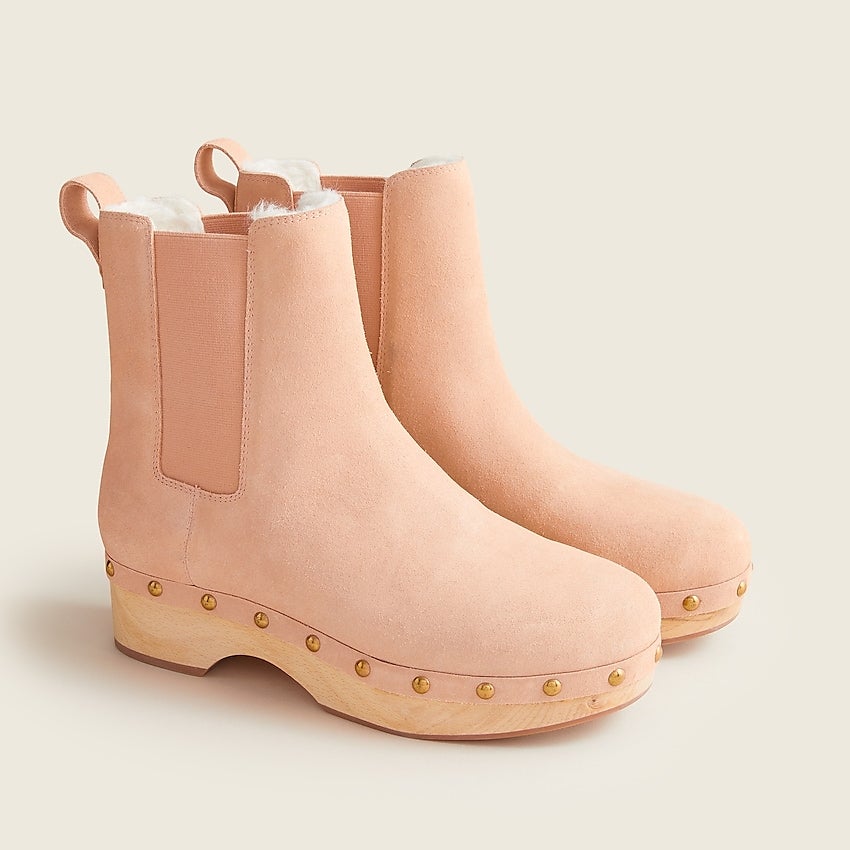
J. Crew Faux-fur lined clog boots in suede, $, available at J. Crew


J. Crew Lodge coat in Italian stadium-cloth wool, $, available at J. Crew


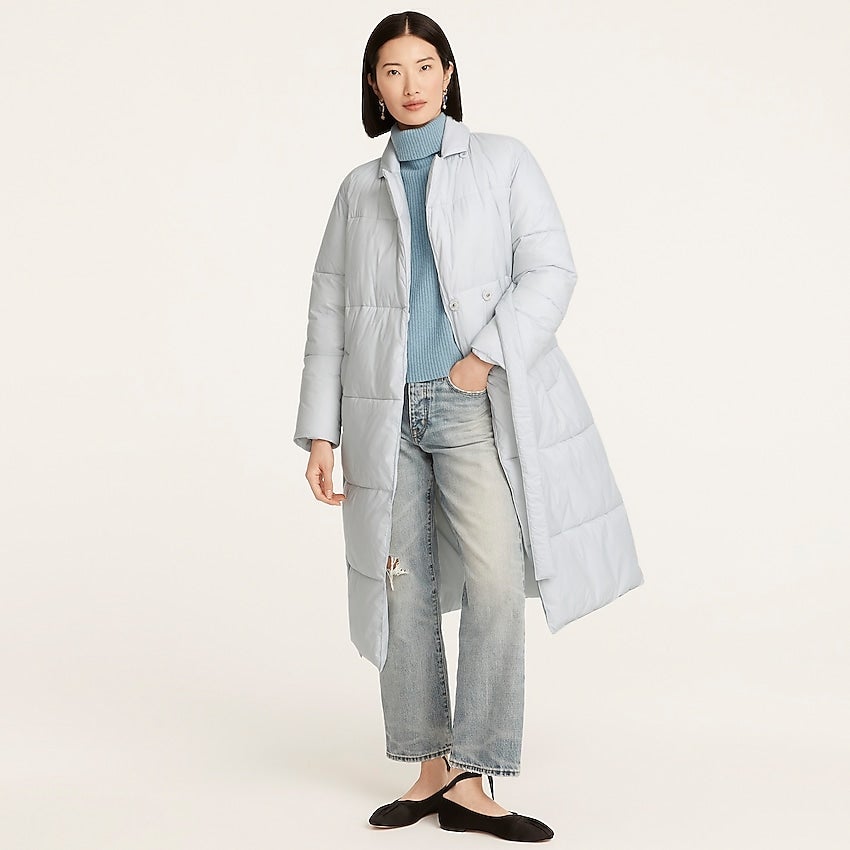
J. Crew Puffer wrap coat with PrimaLoft, $, available at J. Crew


J. Crew Quilted liner vest with PrimaLoft, $, available at J. Crew


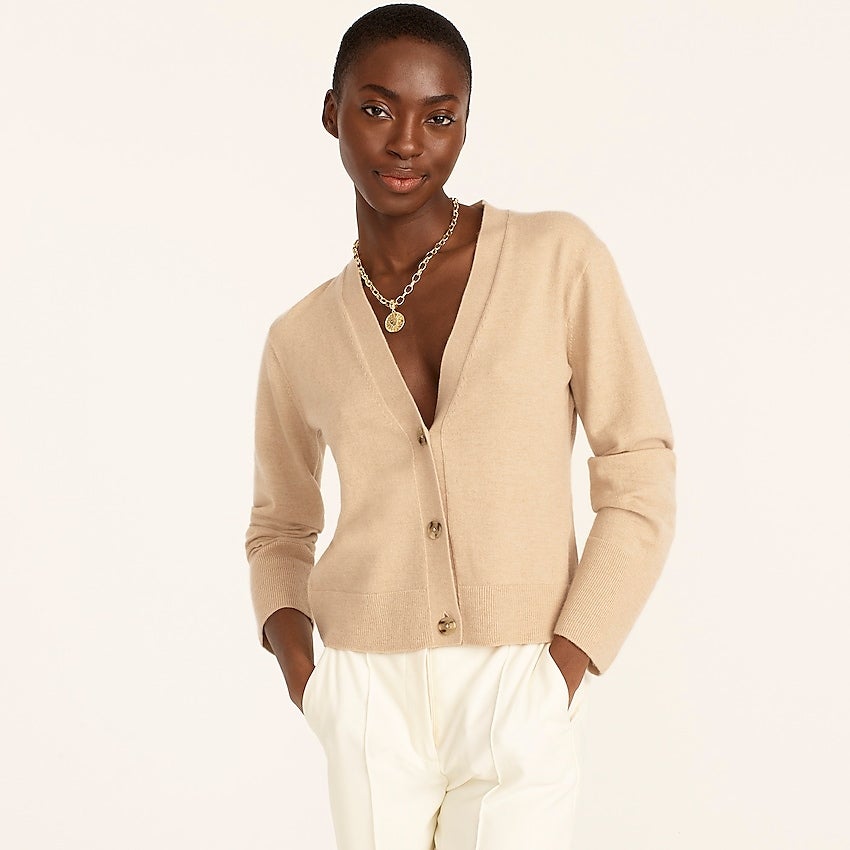
J. Crew Featherweight cashmere cinched-waist cardigan, $, available at J. Crew


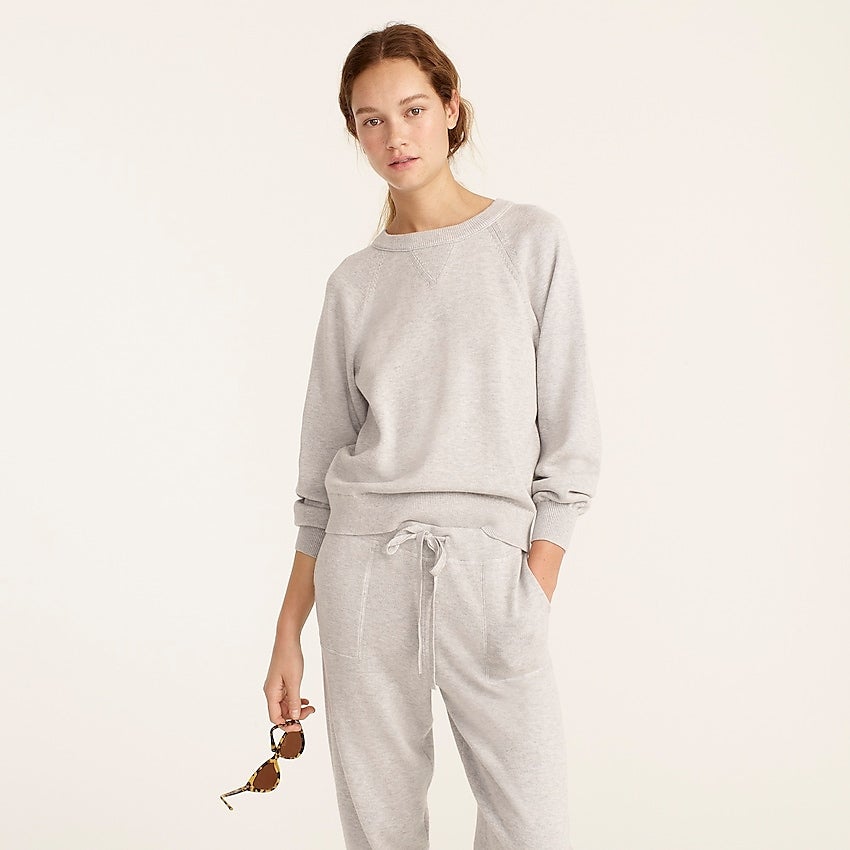
J. Crew Cotton-cashmere pullover sweatshirt, $, available at J. Crew


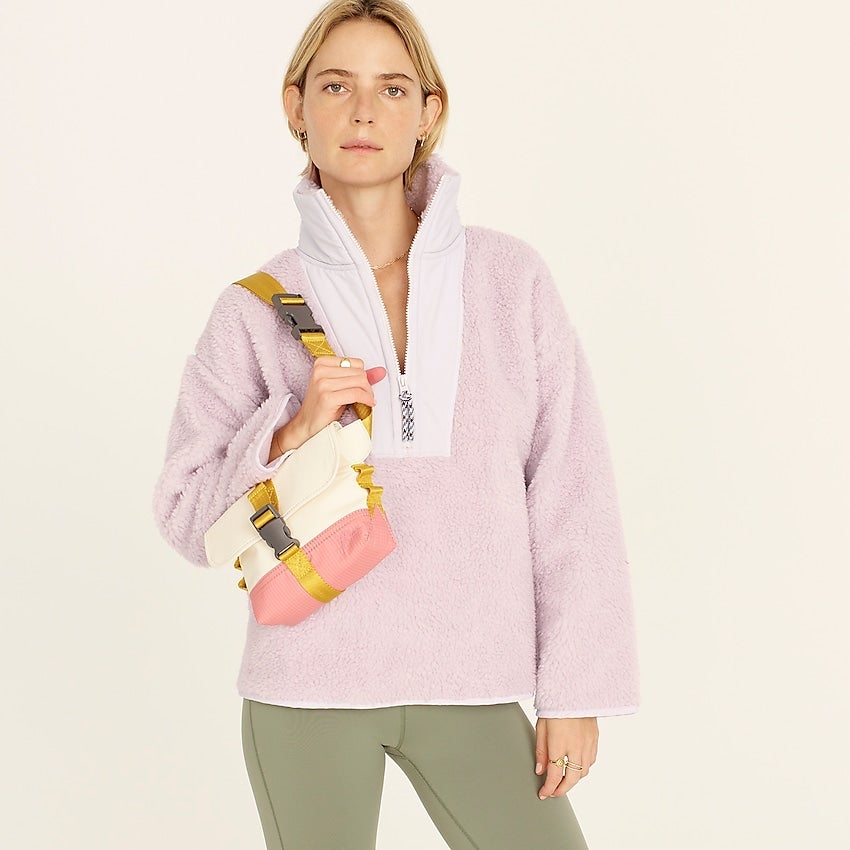
J. Crew Teddy sherpa half-zip sweatshirt, $, available at J. Crew


J. Crew Knit ribbed sweater-dress in mixed stripe, $, available at J. Crew


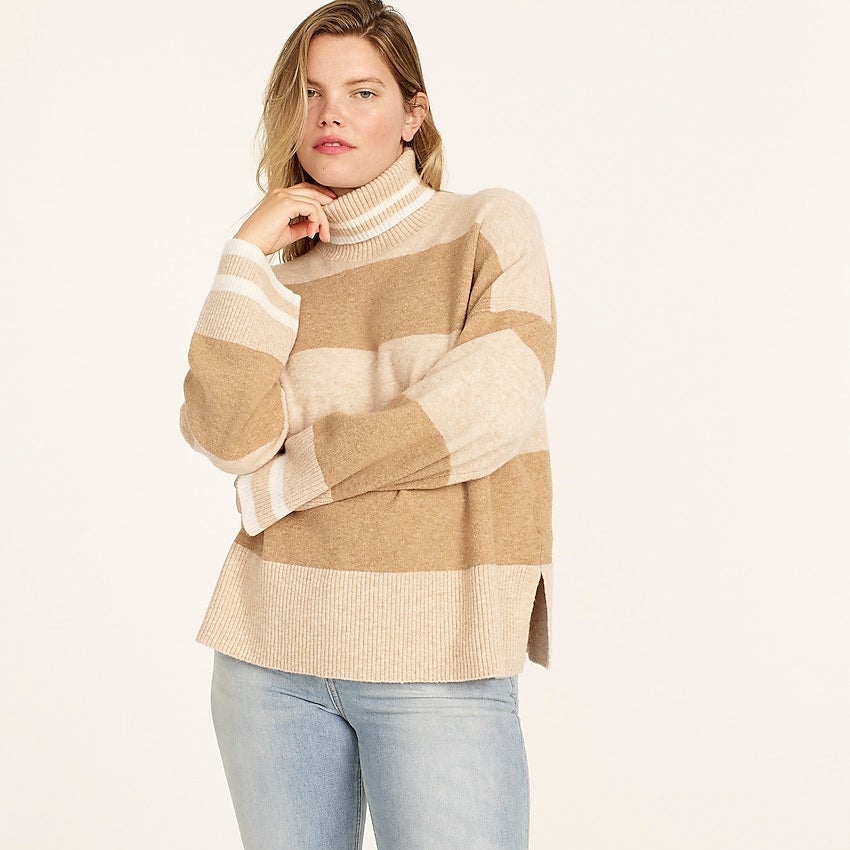
J. Crew Striped turtleneck sweater in Supersoft yarn, $, available at J. Crew


J. Crew Cocoon sweater-blazer, $, available at J. Crew


J. Crew Gwen canvas lace-up lug-sole boot, $, available at J. Crew

Like what you see? How about some more R29 goodness, right here?

The Only Cloud Bag Worth Buying Is Back In Stock

Anthropologie's Bedding & Throws Are Up To 30% Off

30 Free People Spring Style Gems On Sale Right Now

How’s It Really? I Wore Catsuits For A Week

Welcome to Refinery29’s So, How Is It Really? where we take a look at all of the topics that have the internet talking. In studying them up close, we answer the question of what it’s really like to try out a trend like a catsuit, a viral product, or an unexpected TikTok hack.

The catsuit is one of 2022’s style protagonists. Since last year, it rapidly went from being an ‘80s fitness staple to a fashion-forward garment, worn by celebrities like Kim Kardashian and Dua Lipa and championed by designer brands like Balenciaga and Mugler. 

While I’ve previously never thought I would wear a piece that would make me look like an extra in one of Jane Fonda’s workout videos, I became intrigued by the trend after seeing the Balenciaga catsuits that Kim Kardashian wore during her Saturday Night Life press tour in 2021. They looked chic and luxurious, embossed in velvet, rather than the shiny Spandex of the Flashdance era. But most of all, they looked easy to throw on and leave on the house in a, well, flash.

So, I set out to try the trend out for a week. 

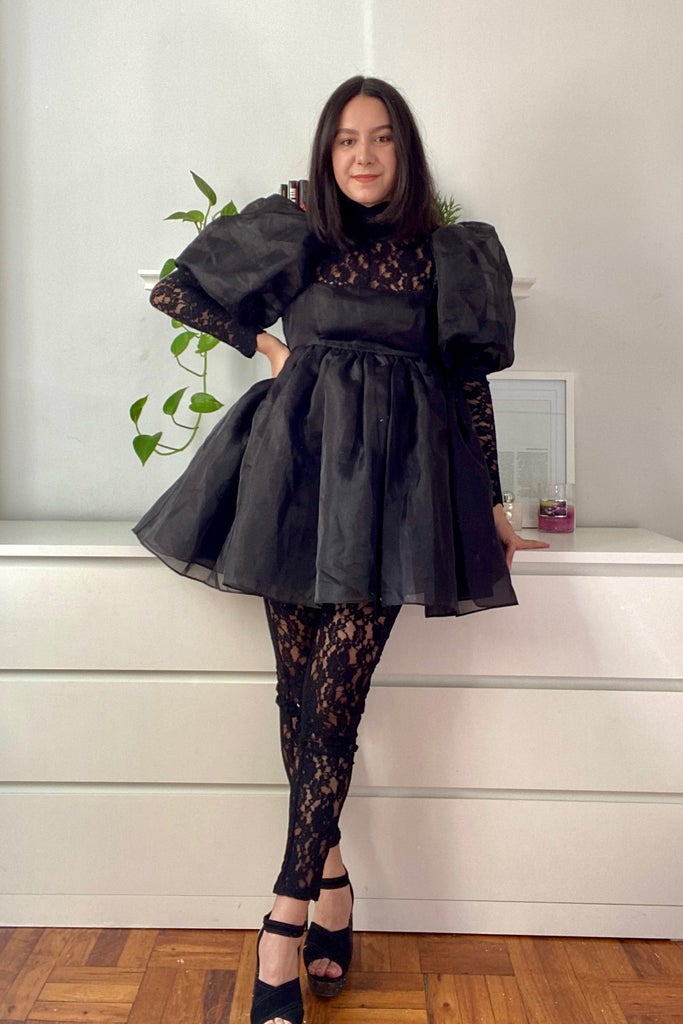
The first catsuit I got my hands on was a black lace number from Sarah Regensburger. I decided to test it out at New York Fashion Week this month. What better time to try a statement piece than when everyone else in New York is trying to grab the attention of street-style photographers with equally over-the-top looks? After seeing Kourtney Kardashian in a similar black lace bodysuit, I knew It was now or never. But while the eldest Kardashian sister wore hers with just a trench coat — baring her undies through the thin veil of the bodysuit’s lace — I didn’t have the courage to do the same, especially considering my roommate’s concerned face when I walked out of my room to show her the look. “Do you have to wear it?” she asked. 

Instead, I figured I could wear the catsuit as a base layer under a Selkie puff-sleeve dress that I have continuously described as “my gothic cupcake look.” I accessorized the outfit with a pair of Miu Miu glitter platforms and a Saint Laurent bag. I figured the muted, all-black color scheme would distract from the catsuit’s nakedness and the extravagance of the dress. 

Waiting in line for the Tia Adeola show, I received more compliments than I have for all my looks in the last two years combined and (gasp with me, please!) was actually stopped by a street style photographer. I was amazed at how confident and comfortable I felt with this catsuit, sporting its delicate texture as body adornment. But the next phase of my experiment would be a bit more complicated. 

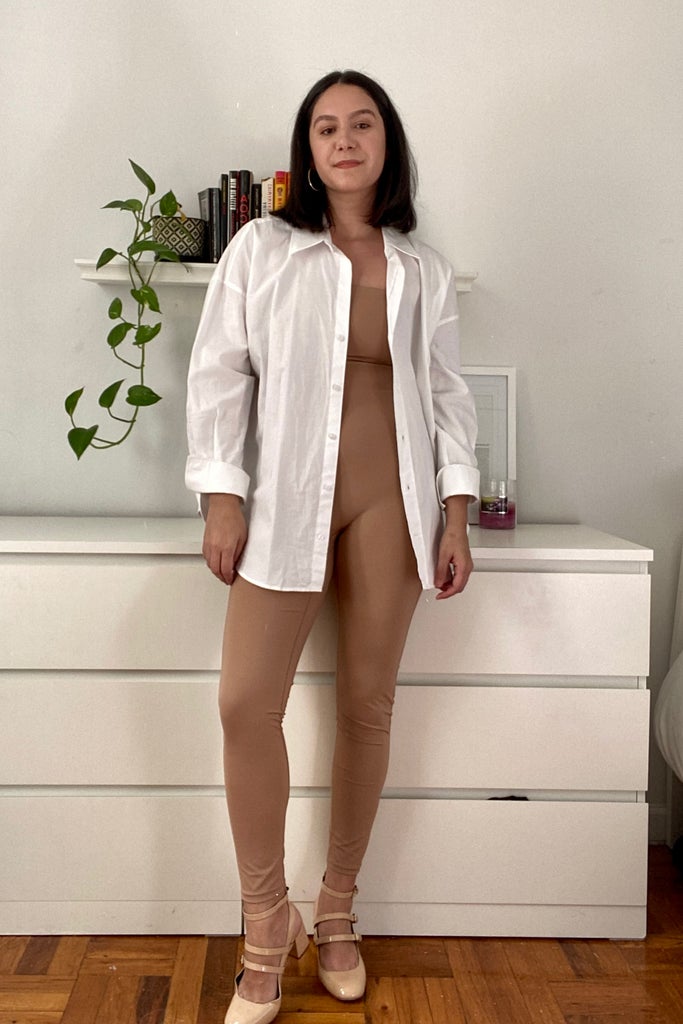
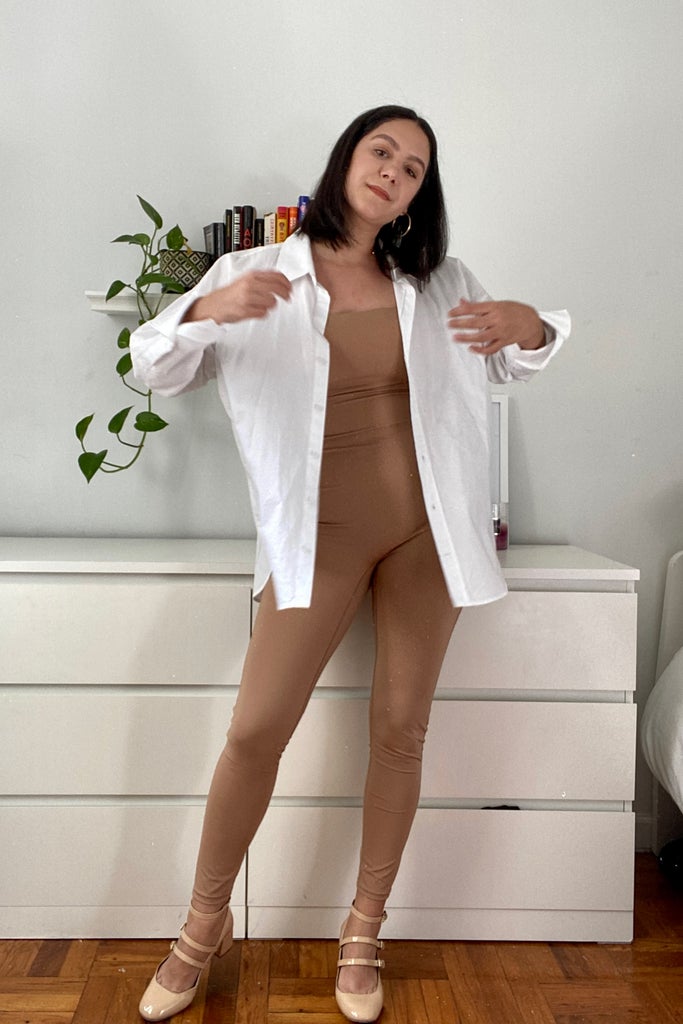
Knowing the Kardashians have been responsible for the catsuit’s recent popularity, I needed to go to the source: Kim Kardashian’s brand, Skims. I skimmed through the vast selection of catsuits and bodysuits available on the website, choosing a strapless onesie to channel the Y2K era. I felt positive about it when I first opened the bag: the fabric was comfortable and it featured some interesting corseting details on the sides. While it looked good in the mirror, wearing it out was a different story. 

Walking through my Manhattan neighborhood, I could sense people staring at me. I looked at my reflection and realized that the nude hue matched my skin so well that I looked… naked underneath the white shit. To add to that, the top kept rolling down and I’d have to keep pushing it up to prevent me from actually ending up naked on the street. All in all, the look didn’t work for me. While I felt confident enough to wear a sheer catsuit during New York’s prime fashion season, wearing a naked-like jumpsuit on a normal day warranted too many looks from strangers for my taste.

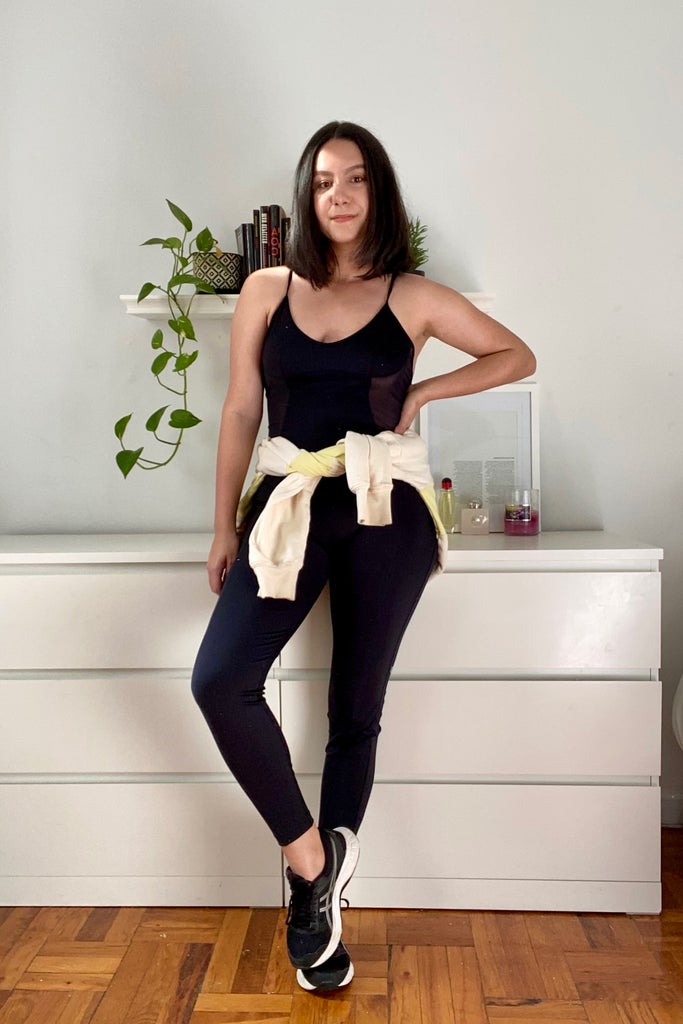
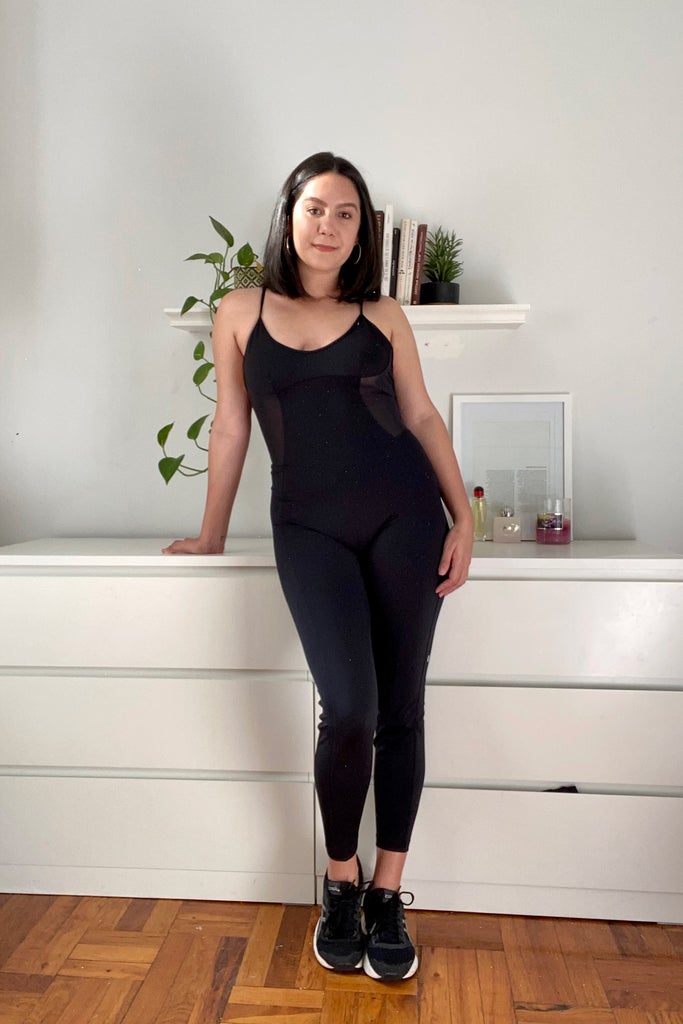
I had one last frontier to conquer with a catsuit on: the gym. For this challenge, I wore a black catsuit from Bandier that featured mesh paneling on the sides. I thought that I wouldn’t feel comfortable wearing a catsuit on a treadmill, but I was wrong. Honestly, if I could wear this catsuit for the rest of my life to work out, I would: The fabric is so soft it feels like you’re wearing nothing. I even forgot about the sheer nakedness on the sides and the fact that it was very probable I was sporting a camel toe to the gym. 

While my week in catsuits may have not been a total success, I walked away with a newfound understanding for women who prefer the bodycon onesie lifestyle. On the one hand, it’s a nightmare to sport in public spaces, where going to the bathroom means you’d have to take off all your clothes (similarly to jumpsuits and rompers) to do the deed. On the other, it’s a grab-and-go kind of garment that can be easily accessorized — from sneakers to puff-sleeve dresses — and versatile enough to persuade even the most conservative of dressers (me!) to give a trend a chance (just make sure you empty your bladder before heading out). And isn’t that what fashion is all about?

See you out there, cat people. I’ll be in my Bandier. Maybe even outside of the gym.

At Refinery29, we’re here to help you navigate this overwhelming world of stuff. All of our market picks are independently selected and curated by the editorial team. If you buy something we link to on our site, Refinery29 may earn commission.

Like what you see? How about some more R29 goodness, right here?

The Evolution Of The 2021 Cut-Out Fashion Trend

Why Some Millennials Are Embracing The Y2K Trends

Why Are We Dressing Like Storybook Characters?

Designers Are Holding Fashion Shows In The Metaverse. Will It Take Off?

For the past decade, the fashion industry has spewed a lot of talk about democratization. With the age of social media and the arrival of bloggers-turned-influencers, there was no other way for the industry to stay relevant than to open up its doors. But the geographical, cultural, and economic barriers were still there. Now, fashion is embracing a whole new world that could shake up the status quo once again — the metaverse. 

“There is a huge community of people and platforms that really care about fashion [in the metaverse],” says Mishi McDuff, the founder of Blueberry, a digital wearables company that has sold over 20 million units of virtual clothing. “I just don’t see why [designers] wouldn’t want to offer these collections to everyone from anywhere in the world.”

The conversations around the metaverse and fashion are multi-layered. On one end, there is the sustainability factor: brands can reduce their waste by producing clothing digitally. (While that’s good on the surface level, it’s worth noting that digital clothing created in the form of non-fungible tokens, or NFTs, can actually have a substantial carbon footprint: a single NFT carbon footprint can equal to two months of electricity usage for a single resident, for example.) Then, there’s the matter of building a bigger fanbase, one that’s pushed brands like Balenciaga and Gucci to capitalize on digitally-native communities to promote and sell their collections. As mentioned above, there is also an effort to democratize the industry even further, beyond the fashion capitals and invite-only fashion week events. 

“Maybe someone isn’t able to attend New York Fashion Week, but they are able to come see the show in Second Life,” says McDuff, referring to the digital hub for virtual experiences and communities, where some fashion shows are currently being held.

For an industry that’s been slow to embrace progress — including technology; some brands are still doing show check-ins with pen and paper — it’s a big undertaking. Yet it hasn’t stopped some from trying, particularly during the showcase of fall ’22 collections happening right. To see whether the future is virtual shows, I tried to attend one during this New York Fashion Week. Spoiler: I failed.

The first show that announced a virtual experience was Jonathan Simkhai, which promised a digitalized version of its IRL collection through an invite-only virtual event. When the day came — having ignored the fine print from the invite, which instructed me to download an app on my laptop and log in 15 minutes before the show — I attempted to access The Second Life from my iPhone while in-between fashion week events. Of course, I wasn’t able to, only being able to enjoy the clothes from the photos released afterward. It seemed strange to me why a designer would stage a show that could only be accessed via computer in the middle of fashion week, when editors are running frantically around town unable to carry a laptop with them. 

It turns out, virtual shows may not be for us, but rather for people who are already part of the virtual community. According to McDuff, these are avatar editors and influencers, many of whom are outside of the traditional fashion industry: “They do make-believe in Second Life all the time.” 

This kind of dichotomy between reality and virtual fiction is what inspired designer Jonathan Simkhai to go to the metaverse in the first place. “I’m fascinated by the idea that one could be anyone they choose to be in this space, ultimately celebrating different backgrounds, body types, and beauty,” Simkhai wrote via email. “I don’t believe digital will surpass the physical experience, but the optionality introduces a new era for our industry.” (In addition to the Second Life-based show, Simkhai displayed his fall 2022 collection via in-person appointments in New York City during fashion week.)

From Simkhai’s perspective, the metaverse fashion scene and IRL shows should coexist seamlessly. “To me, it’s more about accessibility and community building,” he says. “Activating in the metaverse allows us to reach a customer who maybe isn’t familiar with the brand, but allows them to create a digital identity using the clothes.” So much so that when editors were invited to attend Simkhai’s virtual show, they were asked to send in photos with which the Blueberry and Second Life team would create avatars that would sit in at the virtual show wearing the brand’s clothes. “This was the opportunity to look forward and into the future, analyzing how that could dictate current experiences,” he says. 

Other brands like Imitation of Christ and Maisie Wilen also capitalized on the metaverse and digital wearables this season. “This is the age of disruption and to end this endless dystopia — we have all been displaced and our communities have gotten smaller or been destroyed due to a global pandemic — we are rebuilding and reassessing,” said Imitation of Christ’s founder Tara Subkoff, who partnered with artist Adam Teninbaum to transform physical garments into digital wearables for the show, in a press release. “To be able to create a new community that can travel anywhere and is always there for people is a dream come true for me.” 

The collection reflected Subkoff’s dystopian mentality: Avatars walked through fire-lit forests wearing metallic hoodies, leggings, cut-out tops, and ballgowns that looked like they were made with the last remaining foil on Earth after the great collapse. The message is not a departure from the brand’s longstanding commentary on consumerism and climate change: Last September, Subkoff presented a collection that included scribbles that read “the more you consume, the less you live” over jackets, dresses, and pants. 

This movement is happening outside of New York, too: On Thursday, Plein Sport unveiled a digital collection in partnership with the digital platform and marketplace Decentraland during Milan Fashion Week.

These activations mark the beginning for fashion’s Web 3.0 migration. Following the success of Balenciaga and Gucci in showing their collections and selling digital wearables in the metaverse, Decentraland is hosting its first Metaverse Fashion Week from March 24 to 27. For McDuff, events like these are an opportunity to disrupt the fashion system — from its production cycle to accessibility — and also provide the virtual humans with well-designed clothes: “Fashion needs to be on digital platforms… the same reason we need it in real life is the same reason we need it in digital worlds.”

While I may have not been able to attend a metaverse fashion show just yet, I’m crossing my fingers for a front-row seat soon. Now I just have to figure out: What will my avatar wear?

Like what you see? How about some more R29 goodness, right here?

Why Gamers Are The Cool Kids In Fashion Right Now

OPI x Xbox Is The Nail Polish Collab For The Gamer

Are Digital Clothes More Sustainable?