Friday, January 3, 2025

Goyard Is The 200-Year-Old It Bag Brand You’ve Never Heard Of

.disclaimer{width:90%;margin-bottom:1rem}.disclaimer__lines{width:100%;margin:0 auto;border-bottom:1px solid #999;padding:0;max-width:150px}.disclaimer__copy{width:100%;max-width:355px;font-family:Brown Regular,sans-serif;font-size:.9rem;font-weight:300;line-height:1.3em;color:#333;padding:0 0 .4rem;margin:1rem auto;text-align:center}
All linked products are independently selected by our editors. If you purchase any of these products, we may earn a commission.

Back when I was in college in the 2010s, there was a de facto uniform for girls who wanted to signify wealth in their style of dress: a Cartier Love bracelet, a Gucci Horsebit loafer, and a bag I wasn’t familiar with. Despite growing up a fashion-obsessed teen, I didn’t recognize the brand behind that all-over printed tote — though I suspected a subsequent hefty price tag, given the context. I fell down quite the online rabbit hole in my attempts to find the origin of (and assign value to) this elusive accessory. Therein lies the magic of Goyard.

If you’re not yet familiar with the storied French leather goods house, you’re not alone: Its handbags, which retail for thousands of dollars and can’t be purchased online, are characterized by a lack of visible logos. (Instead, it favors a subtle but recognizable print.) Its know-how dates back to 1792, when Pierre-François Martin would manufacture trunks, boxes, and cases for the ultra wealthy, with clients ranging from the Romanovs to the Rockefellers. When François Goyard took over, he changed the name from Maison Martin to Maison Goyard in 1853.

Little has changed since, as the brand has become known for its timeless designs, rarely releasing new styles and highlighting its special “goyardine” canvas made of a secret combination of linen and cotton, which is then screen-printed to achieve the signature embossed pattern. And while Goyard has a website, it’s only to inform you of the product offering, not the prices. A tote bag starts around $1,600 — if you want a brand-new one, you must stand in line to enter one of its few physical locations in major cities like New York, Paris, and Tokyo to get it.

In the wake of trends that have grown into movements, like “quiet luxury” and “stealth wealth,” this exclusive buy-in is more desirable than ever. Christine Ellis — founder and CEO of Christine Ellis Associates, a luxury retail consultancy based in Milan — says it’s helped the established brand become even more relevant: “The luxury customer — I’m talking a real luxury customer who historically bought Hermès, Chanel, all these very high-end, exclusive brands — wants a bag that nobody else has.” 

“If you look at the pillars of luxury,” notes freelance fashion writer and consultant Philippe Pourhashemi, “they’re exclusivity, quality, and rarity. Something cannot be luxurious if it’s not rare.”

Goyard has always done well on the luxury resale platform Rebag, but, in 2024, it crept into the top 10 best-selling brands for the first time, sitting next to massive heritage brands like Louis Vuitton and Gucci. On average, its bags retain 104% of their value on the secondhand platform. With this, Goyard has reached a “unicorn status,” in which brands retain over 85% of their value on the secondhand market — a qualification shared only by Hermès, Chanel, and Louis Vuitton.

“Its products are practical,” says Rebag CMO Elizabeth Layne, who purchased the St. Louis tote when her children were babies. It started as her diaper bag, before transitioning to an everyday carryall: “It’s a workhorse bag.” 

As luxury becomes more accessible thanks to social media and e-commerce — especially resale — owning a luxury bag is now a much more common experience. How, then, does one differentiate themselves in a crowded marketplace? 

Like Hermès and Chanel, Goyard is privately owned: Jean-Michel Signoles acquired the company in 1998, and brought it back from ruin with an exclusivity-based business model. In 2009, he told the New York Times he “coveted this company for 20 years,” and spent years persuading them to sell. Signoles rarely does interviews, nor does he court press — neither does the brand, which spends very little, if anything, on advertising. (Its social media presence is relatively contained: It has just over a million followers on Instagram, whereas Hermès and Chanel boast 15 million and 60 million, respectively.) And because it’s not part of a luxury conglomerate, like Gucci or Louis Vuitton, it doesn’t have to publish its financials or justify creative decisions to a board or CEO juggling numerous other companies.

In the wake of massive price increases across the luxury industry, Goyard has left its largely untouched. In 2022, Louis Vuitton’s Neverfull retailed for $1,690; today, it goes for $2,030 — more than Goyard’s Saint Louis Tote, but less than its Anjou, for comparison. Ellis notes this is both a sign that Goyard’s business is doing well and a strategic ploy: the price increases alienate the middle-class consumer. Goyard’s quality-to-price value proposition is relatively strong, while other luxury brands have recently experienced criticism for declines in quality despite upticks in price.

“Consumers are much more aware of intrinsic value,” notes Pourhashemi. “There’s something about Goyard that, despite its success, still feels confidential. Today, that’s priceless, because a lot of consumers are suffering from luxury fatigue. They’re just tired of seeing the same old brands all the time.”

Still, these exclusivity tactics inevitably lead to a burgeoning resale market, as exhibited on Rebag. Though its Goyard client often skews older, styles like the Plumet clutch wallet — a style inspired by the pouches that come inside larger totes, introduced in 2018 — have resonated with not only a secondhand consumer but a younger generation as well. We’ve seen this on TikTok, where #goyard has 58.8K total posts and saw over a 90% increase in posts in the first 11 months of 2024, compared to 2023. (#luxury has 7.8M total posts, and saw almost a 30% increase between the first 10 months of 2024 when compared to the same time period in 2023.) Most mentions of the Plumet on the platform have been in 2024; on Rebag, it has experienced a 21% increase in value from 2023 to 2024, and boasts a 139% retention rate.

Despite these practical reasons for purchasing a Goyard bag, Pourhashemi doesn’t think something like resale value matters much to Goyard’s true target audience.

“Within the realm of luxury, you’re dealing more with longing, desire, emotions, passion,” he argues. “It’s something that you want to acquire because it represents something.”

Goyard wants to lure you into its stores to see, touch, and fall in love with the product — and perhaps contract a hand-painted monogram while you’re there.

“It does a very good job at delivering a personal service,” Pourhashemi says. “Luxury should be personal.” 

Like what you see? How about some more R29 goodness, right here?

Why Louis Vuitton’s Neverfull Is Still So Popular

How Polène Made Its Handbags Go Viral

18 Ways to Style Bag Charms (With Bags To Match)

Thursday, January 2, 2025

Abercrombie & Fitch’s Sale Will Give A Fresh Start To Your Wardrobe

.disclaimer{width:90%;margin-bottom:1rem}.disclaimer__lines{width:100%;margin:0 auto;border-bottom:1px solid #999;padding:0;max-width:150px}.disclaimer__copy{width:100%;max-width:355px;font-family:Brown Regular,sans-serif;font-size:.9rem;font-weight:300;line-height:1.3em;color:#333;padding:0 0 .4rem;margin:1rem auto;text-align:center}
All linked products are independently selected by our editors. If you purchase any of these products, we may earn a commission.

If the new year has you craving a fresh start (and wanting to spend your holiday money) to your wardrobe, check out Abercrombie & Fitch’s Tryout Event. The brand’s current sale offers 30% off all of its YPB (Your Personal Best) active styles and 20% off almost everything else on the site.

If you’re ready to get back into the gym or Pilates studio, start up your hot girl walks or marathon training, or step onto the tennis court, Abercrombie & Fitch has all your activewear wardrobe needs covered. The YPB styles on sale include a range of leggings and sweatpants, as well as workout tanks and hoodies. And if you’re looking to refresh your entire wardrobe, the brand has deals on its bestselling jeans, winter jackets, wedding guest dresses, and much more. 

What’s more, you can stack an extra 15% off your already-discounted purchase with code AFYBF at checkout from now through January 6. So get to shopping and take on the new year in style. 

Abercrombie & Fitch Hoodies & Sweatpants

Whether you’re looking for matching sweatsuit sets to lounge around in or break a sweat in this winter and beyond, there are many cozy separates to peruse, from full-zip hoodies and wide-leg sweatpants to trendy polo sweatshirts and slinky joggers. The only hard thing will be deciding which colorways to cart up, and whether you want a bold monochromatic look or a casual mismatched ‘fit in 2025.

Abercrombie & Fitch Leggings

If you love slipping into leggings for your walks and yoga classes, check out Abercrombie & Fitch’s activewear styles. Shop pieces in bestselling fabrics like the smooth and supportive SculptLUX in 7/8-long and flared styles. You can also find a new lightweight and non-restrictive StudioFLEX fabric in several legging silhouettes. Each YPB style is additionally available in Curve Love sizes.

Abercrombie & Fitch Tanks & Sports Bras

Effortlessly match your workout top to your leggings with tons of fitted tanks and camis that are available in the same colorways and SculptLUX and StudioFLEX materials. Each of these tops features built-in bras for extra support while you exercise, but you can also pick up an adorable sweetheart-neckline sports bra to layer underneath, too. 

Abercrombie & Fitch Dresses & Shorts

Yes, tenniscore will continue to be big in 2025. So whether you avidly play the sport or are eager to try it for the first time, step on the court in a workout dress that’ll put you in the right mindset. (They include built-in shorts for extra coverage and comfort so you don’t have to worry about anything other than your game.) Abercrombie also has new biker and running shorts if dresses aren’t your activewear of choice.

Shop the full Abercrombie & Fitch The Tryout Event sale

Like what you see? How about some more R29 goodness, right here?

Leggings So Soft, You Could Live In Them

The Nordstrom Half-Yearly Sale Is Here

Best Matching Sweatsuit Sets For This Fall

Monday, December 30, 2024

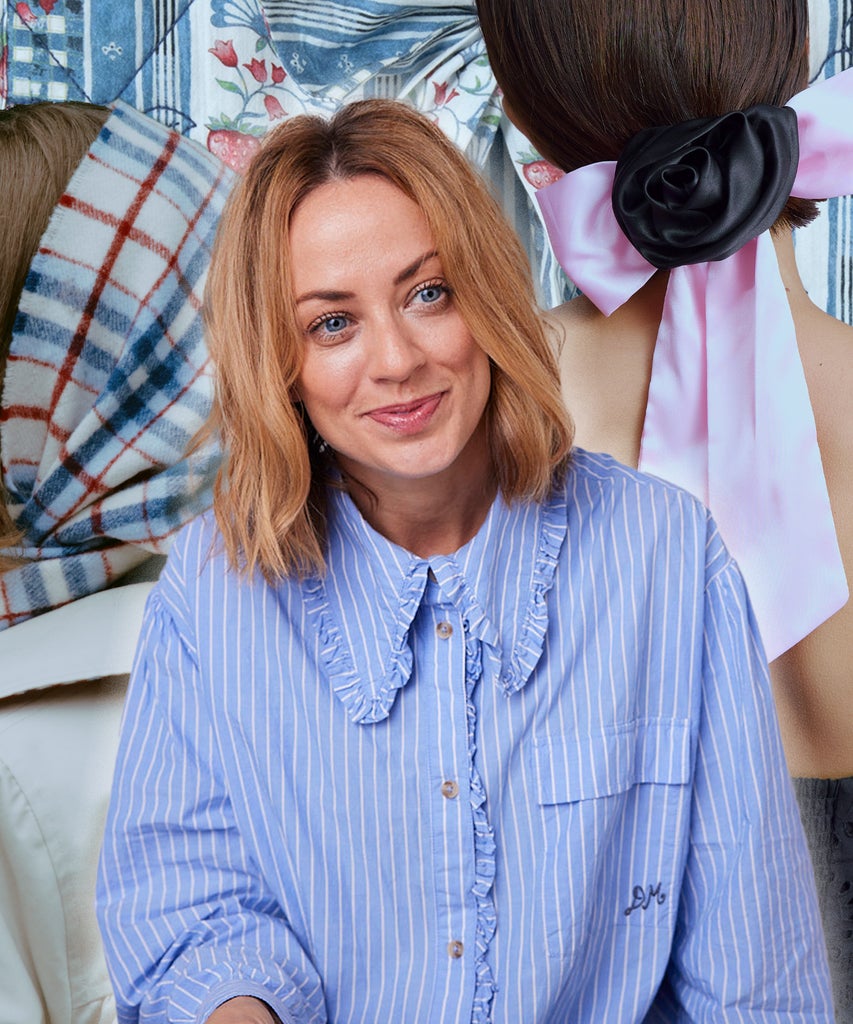
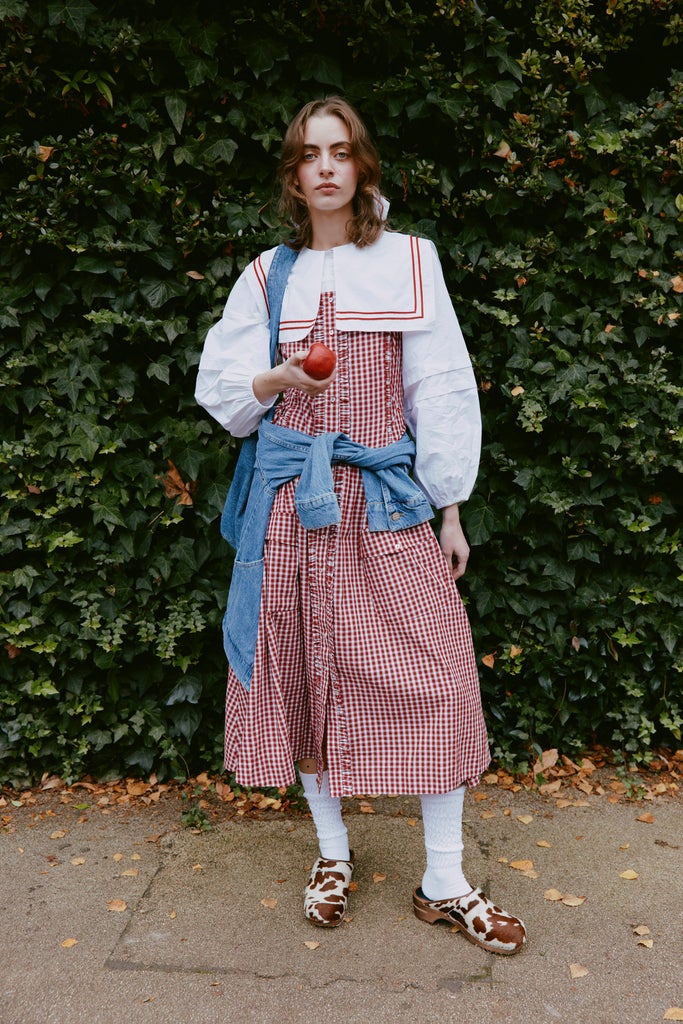
How Damson Madder Took Over The World With Frilly Collars And Leopard Vests

.disclaimer{width:90%;margin-bottom:1rem}.disclaimer__lines{width:100%;margin:0 auto;border-bottom:1px solid #999;padding:0;max-width:150px}.disclaimer__copy{width:100%;max-width:355px;font-family:Brown Regular,sans-serif;font-size:.9rem;font-weight:300;line-height:1.3em;color:#333;padding:0 0 .4rem;margin:1rem auto;text-align:center}
All linked products are independently selected by our editors. If you purchase any of these products, we may earn a commission.

New York City-based Chiru Mondo Murage Weinstein was, ironically, losing sleep over Damson Madder’s pajama drops. Ever since an Instagram ad introduced her to the British fashion label, she found herself setting alarms during the middle of the night in order to secure a pair. “I didn’t have anything that looked like that,” she remembers. (She eventually emailed to plead for more U.S.-friendly launch times. To the delight of Weinstein and her fellow Stateside fans, Damson Madder obliged.) 

You’ve likely come across its famed nightwear, too. Weinstein, 30, calls the assortment of frilly eye masks, bow-adorned button-downs, and boxer shorts the “gateway drug” to her new favorite brand, whose distinctive pieces are increasingly visible in the wild since the company set its sights on U.S. expansion this year. 

“I loved the idea of the limited quantities, and the fact that I had to wait and score them,” she says. “The drops would sell out Supreme-level fast — like, within minutes.”

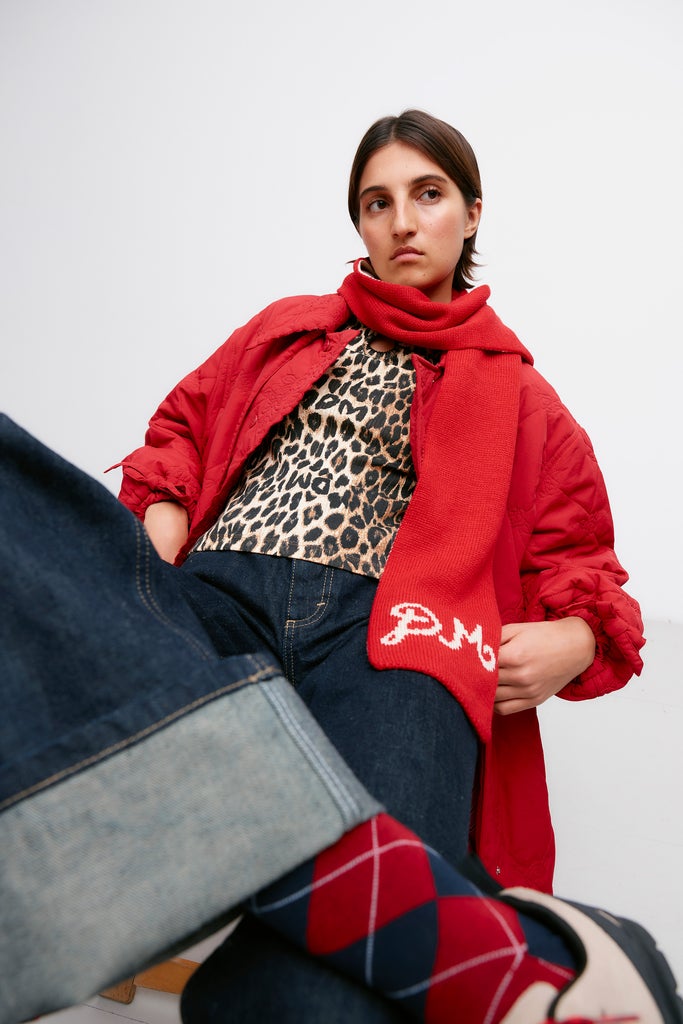
Since joining the fan club, Weinstein, who works in tech and commutes to an office in downtown Manhattan, now spots people wearing Damson Madder all the time — the leopard Tilly gilet, which helped put the brand on the map across the pond, in particular. Like all of Damson Madder’s pieces, the vest is made from 100% organic cotton and recycled materials. And, with its bow closures, quilted fabric, and bold animal print, its conversation-starting design goes further than what shoppers had begun to settle for.     

Before starting Damson Madder, Emma Hill worked in fashion buying within the U.K. high-street category. For years, she got accustomed to making sure garments were as cost-effective as possible: no big pockets, no oversize collars, no interesting buttons. “I found that stressful because I wanted to have a dress or blouse with extra things that are exciting,” she recalls. “I wanted people to look and say, ‘Oh my God, where did you get that lovely piece?’ I felt like that wasn’t happening anymore. I was disappointed by the quality of the product and the lack of responsibility taken.”

That urge to create special, unique clothes — where shoppers could know where and from what they’re made —  led to Damson Madder. Timing was tricky, though: After spending 18 months on the debut collection, Hill revealed it to the world in April 2020, just as a pandemic-stricken U.K. went into lockdown. “There were absolutely no eyes on it at all,” she says. 

As stay-at-home measures continued, the brand got some nice press in traditional media thanks to its focus on slow fashion. Towards the end of the year, sales picked up, and Hill breathed easy again — but more challenges came when the brand’s factories in Turkey went into lockdown the following year. “I would say the first three years were really, really hard,” she says.

Weathering the storm has propelled the label to new heights, thanks largely to a bubbling interest from the U.S. Having noticed that the aforementioned leopard vest was going viral every time a handful of maximalist-leaning influencers posted it on Instagram (organically!), Damson Madder experimented with paid ads targeting shoppers in that market, to further capture curiosity. In March 2024, content creator Sofia M. Coelho posed in her Tilly to the tune of 45,000 likes, a moment the brand calls “really helpful” for both sales and interest. The following month, Hill started to seriously consider opening a pop-up store in New York.

For an environmentally-conscious brand, doing things slowly is the modus operandi, particularly when trying to break into a new market. “That was one of the main reasons we decided to do a pop-up — we were having conversations with some wholesale partners, And they wanted to book fairly big business. I was unsure because we’d never done anything like that before,” she recalls. “The pop-up allowed us to dip a toe in the water, trial a few things, and see what the appetite was like.”

At that point, Damson Madder had only done one pop-up — on its home turf, in London, in February 2024. The team planned for this one, its first one overseas, to coincide with New York Fashion Week in September (a convenient time to make the most of the energy in the city and to get in front of buyers, editors, and content creators hunting for a new discovery.) With her heart set on Soho, where the retail spaces tend to be on the larger side, Hill laughs that its test ground ended up being four times the size of the inaugural London one.

Social media proved paramount in evangelizing the brand once again, working with influencers whose personal style aligns with the brand’s joyful ethos especially. Hill name-checks Anna Barger, a sunny girl-next-door type with 416,000 followers: “She had been a fan of the brand for a while. It was really nice of her to come and her post was really helpful.”

Barger was one of many notable faces who attended a fun-filled cocktail party to usher in the pop-up ahead of its four-day run. On the night, some 200 people got better acquainted with Hill, her team, and the product, including Ella Emhoff (with her dog, Jerry) and Ilana Glazer.

Sales and visibility in the U.S. increased thanks to the pop-up, and, at present, over 25% of total e-commerce sales are still coming from that market. The brand was also able to connect with retailers like Nordstrom and Saks, after buyers came to check out the buzz during the New York run. (Damson Madder has been working with Lisa Says Gah as a retail partner since 2023, and will continue to.) Hill has also been approached by several intriguing collaboration proposals, some of which she’s considering, for 2025.

The foray into U.S. brick-and-mortar gave the team real-time intel about who Damson Madder’s audience is and what that shopper wants. “I think everyone thought we were much bigger than we were,” Hill says. (“My core team came out and were working at the pop-up — my head of marketing was at the check out!”) Almost five years in, there tends to be a defined “Damson Madder girl” in the U.K. — “but in New York, we saw all these different types of people, all styling the product in a very different way. It was the best feeling.”

Damson Madder has seemingly struck gold with its approach, but in today’s ultra-saturated brand landscape, it wouldn’t be possible without a strong vision and defined direction. For its U.S. hard launch, Hill enlisted the help of MODEWORLD, the NYC-based PR agency known for emboldening then-early-stage labels including Eckhaus Latta, Maryam Nassir Zadeh, Sandy Liang, Collina Strada, and Maisie Willen. (It currently counts Agmes, Bevza, and Marina Moscone as clients.) Of course, a co-sign from a cool celebrity always helps too: While there’s no guarantee that an A-lister will post a gifted piece, let alone tag the brand, Emma Roberts and Barbie Ferreira recently did. 

In tandem with managing the growth, behind the scenes Hill is committed to constantly improving the offering, which expanded into homeware and lifestyle in October. “Our biggest thing is that we don’t want to over produce,” she says. “We constantly evaluate, move things around, change the shapes, or designs so that something doesn’t go into production that isn’t right. We stick to four key launches a year and we drop those in smaller batches each month.”

That isn’t lost on the fans either, who tend to turn into repeat customers. “The point of view is very clear,” Weinstein says, adding that she has now purchased everything offered in leopard print. “I love being able to find a vest, and I can get it in other colors because I love the fit. It does a really, really good job with patterns, too. I don’t find that same care or attention with a lot of U.S. brands right now.” 

Sarah Killeen, an associate vice president at a healthcare marketing agency in Manhattan, was also bit by the Damson Madder bug this year thanks to a sponsored Instagram post. “The distinctiveness of the clothes feels like an antidote to a lot of the homogenous high street fashion out there at the moment,” she says. “I love the uniqueness, the bold patterns, the interesting details, the unusual silhouettes, and the refreshing color schemes. And the small, thoughtful details, like embroidered logos.”

To date, Killeen has snapped up the Dion leopard pants, denim cargos, the white Kendall shirt, and an oversized shirt jacket. “Both the quality and fit completely surpassed my expectations, which has rarely happened for me with online purchases in recent years,” she raves. “I was drawn to the Dion’s pattern initially, but wasn’t expecting the fit to feel so flattering.” 

Hill says she felt compelled to start Damson Madder because she couldn’t afford luxury clothing, and what she found in the sustainability category lacked originality and flair. Fast-forward to now, and her label has bridged the gap between all three. Killeen agrees: “In terms of quality and durability, these feel like investment pieces I will have for years… even though I would have expected to pay a much higher price point for that feeling!”

Like what you see? How about some more R29 goodness, right here?

How Polène Made Its Handbags Go Viral

How Aligne Made Its Timeless Pieces Go Viral

Why Everyone's Obsessed With Coach's Brooklyn Bag

Was 2024 The Year Of The Personal Style Crisis?

At the beginning of the year, fashion was swinging from extremes: “Mob wives” embraced big fur coats and maximalist accessories, while “quiet luxury” made the case for neutrals and rich but plain basics. It set the tone for what would be a discordant, sometimes even contradictory time for trends  — leopard print became a neutral (again), girly-girls prevailed, partywear went “brat” — while fast fashion only got faster to meet demand. The noise left many of us confused about what we actually wanted to wear, and personal style got harder to pin down. 

Some may have brushed it off as a standard style rut, but this felt different. A common, underlying predicament was aesthetic burnout: feeling exhausted amid a relentless trend cycle and overconsumption narratives, partnered with the pressure to post it all online. At one point, even the content on our feeds began to reflect this self-expression panic, as evidenced by all the fashion challenges, drastic closet cleanouts, and “how to find your personal style” videos flooding TikTok, as well as the emergence of AI solutions, including closet organization apps, personal shoppers, and virtual dressing rooms. 

Even celebrities were going through it. In British Vogue’s September Issue, Kylie Jenner said she was “finally finding [her] fashion feet,” after having two children in her early twenties and needing to figure out her style again. (This year, she’s been seen in various draped silhouettes, archival couture gowns, and simple black ‘fits.) Emma Chamberlain, who has been posting shopping hauls for almost a decade, shared in a Youtube video that she got rid of 95% of her wardrobe. “Part of the reason why I ended up with such a ridiculous amount of clothing was because I wanted to keep up with the internet,” she said. “There was so much in my closet that I couldn’t even grasp what I owned. Ironically, what would end up happening is I would just wear the same thing every day.”

I, too, felt disillusioned with my personal style this year. I realised how, as a fashion editor, I’d curated a wardrobe based on the trends I reported on, filled with items brands sent me, rather than what actually felt like me. I had far too many statement items and not enough basics, so my outfits looked and felt indecisive. 

This month, I asked my Instagram community whether anyone else shared similar struggles. Almost forty people replied, from new mothers admitting to crying in fitting rooms because nothing seemed to fit, to people feeling sartorially adrift amid the recent loss of a loved one.  

“2024 has been a bleak year for the world, and while I’ve always been good at powering through and dusting myself off, something about this year didn’t allow that to happen,” Lucy Harbron, 26, told me. “I had a few months where I couldn’t engage with style beyond comfort, then suddenly I felt like the trends all moved on without me.” 

Cate Bell, 29, who’s in her second trimester of pregnancy, pointed out how such life changes can lead to a style limbo: “I don’t even know how to describe my style now. Obviously, being pregnant, this isn’t the biggest thing going on in my head, but it’s difficult because your life is about to change beyond recognition, and losing your sense of style is disorienting.” 

Charlotte Madolell, 29, said that, “with the aesthetic jump on TikTok this year — clean girl, quiet luxury, mob wife — I felt like I had so many conflicting messages and started to buy pieces based on that. When it came to getting dressed, I would have a meltdown and associate it with the negative emotions I was feeling about myself.”

@morenikeajayi Less social media = more authentic style #personalstyle #stylecommentary #personalstyleadvice #fashioncommentary ♬ original sound – Morenike Ajayi

“Algorithms are great because you can be fed things that you’re interested in, but then you end up in this kind of echo chamber,” fashion creator Morenike Ajayi tells Refinery29. On TikTok, she often talks about social media’s impact on style, encouraging people to step back from their screens, hone in on their personal taste, and wear clothes they already own. “We’re in this place where people are constantly looking for trends to get dressed, whereas this should really be driven by your own internal compass.”

Following that compass might require a tried-and-true closet clean-out. The first step, though, is figuring out how you want to feel IRL, rather than how you want to look online.

Kay Barron, Net-A-Porter’s fashion director and author of How to Wear Everything, suggests evaluating the clothes and accessories you wear for specific occasions. “Work is good because we spend so much of our time there and we have to make a bit more of an effort. Figure out why there are certain things you always go for that make you feel good, like color, shape and fit,” she tells Refinery29. “Also, look at the people in your friendship group and the ones whose style that you really admire. It’s not about celebrities or people on Instagram — sometimes, you just need to look much closer to home.”

Look at the people in your friendship group and the ones whose style that you really admire. It’s not about celebrities or people on Instagram — sometimes you just need to look much closer to home.

Kay Barron

Even amid the most commiserating replies to my Instagram questions, there were a handful of people who ecstatically shared that this was the year they discovered their style. 

“​​2024 was the year I embraced a smaller, decluttered wardrobe and became more experimental,” Minori Iwahashi, 26, told me. “My style has always been a mix of tomboy, sporty, and girly, never been confined to one aesthetic or color. But I will admit that l’d buy into trends. This year, I expanded my style by incorporating layering and rotating a few bags that are cute but also functional.”

Rylé Tuvierra, a fashion creator and trans activist, told me she embraced more feminine silhouettes with pops of color, which coincided with her own personal shifts: “This past year brought a significant transition, not only in how I see myself, but also in how I curate my wardrobe. My style evolved into something more intentional and is a reflection of my confidence.” 

Others spoke about successfully removing themselves from social media to make way for their own preferences. “I’m blissfully unaware of the micro trends that pervade TikTok by not being on that platform at all,” Constance Beswick, 27, said. “Taking a step back is a relief. I know what works for me and I know what to invest in.” 

I’ve gone through major style changes in the past myself — chopping off my hair caused a significant one — but, this year, I donated more clothes than ever, and focused on intentionally adding pieces that I knew I could wear every week. Entering 2025 offers an opportunity to approach our wardrobes with even more intention. By turning a critical eye to what we already own and embracing the pieces we truly love, we can redefine what it means to dress authentically in an ever-changing landscape.

Like what you see? How about some more R29 goodness, right here?

These Are The Biggest Denim Trends For 2025

In 2024, Fashion Went Pop Again

The Year Fashion Finally Fell In Love With Sports