Wednesday, October 6, 2021

What It’s Like To Cover Fashion Week But Never Feel Really Included

To showcase the strides made around size inclusivity at fashion week, conversations routinely revolve around the number of plus-size models on the runways. See: the most recent Fashion Spot report that states that 48 plus-size models walked during New York Fashion Week Spring 2022, a huge uptick from Fall 2021 where only six were featured. But for plus-size folk working behind the scenes, from fashion editors and photographer covering the shows to makeup artists prepping the models prior to the runways, they have yet to experience the effects of said progress.

“As much as representation is shifting, it’s hard to be in those spaces and be aware of what the [typical body] ideal still is,” says Tyler McCall, editor-in-chief of Fashionista.com. “Fashion week has a little bit of a detrimental impact on how I think of myself and how I feel about my body.” 

For these people, fashion week is an obligation rather than a choice. There’s little room to take major stances on topics like body diversity when your job requires reporting across the board or getting paid to photograph runways. That means attending shows that feature inclusivity as well as those that do not. And for plus-size people in these positions, it can become difficult to separate the work from the emotion.

“It’s super disheartening because I know that this brand that I’m covering and writing about isn’t catering to me,” says Kayla Boyd, a shopping editor at BuzzFeed. “You’re in this weird position where you’re trying to judge the shows and judge the runway [collection], but you also have this thought in the back of your mind that these clothes are not made for me or people like me or people larger than me.” 

Even prior to the shows taking place, there are reminders that our bodies require us to take up more space, both figuratively and literally. Fashion week benches packed closely with attendees fail to accommodate larger figures. The cramped and overfilled elevators at popular venues suggest that fat bodies are not the norm at fashion week. And gifted or loaned clothing options for the events are abysmal when you wear above a size large. 

Fashion week has a little bit of a detrimental impact on how I think of myself and how I feel about my body.

Tyler McCall, Fashionista eDITOR-iN-CHIEF

McCall has made it a practice to arrive at shows early — even when they regularly begin half an hour late — to allow others to fill in beside her on the benches, rather than having to squeeze in amidst straight-size peers. “And I am aware that as a 14/16, I still have it better than other [larger] plus people do,” she says. (Statistically, the average American woman wears between a size 16 and 18.)

In 2019, model Hunter McGrady turned down over 30 fashion week jobs or shows. Inspired by her public stance against the industry’s exclusivity problem, I stopped attending non-inclusive runways as a fashion writer. I figured: If my lived experience is of no value to a designer, then my presence is unnecessary. Many editors feel similarly overlooked by designers.

“Especially with American designers, it almost feels like they’re making a point of it to not include plus-sizes,” McCall says. In particular, she views it as a “step backwards” when brands feature plus-size models one season to show none the following: “It feels intentional. The brand has proven it’s possible, and they’re just not doing it because either, best-care scenario, it doesn’t matter to them. Or, worst-case scenario, it’s distasteful to them; they’re fatphobic.” 

For those who struggle with body image-related issues, fashion week can be an incredibly triggering time. The models — who are typically between a size 0 and 4 — are a constant reminder that your body, if it doesn’t fit into those sizes, is unwelcome. “It’s interesting to have your presence sort of requested, but not actually catered to as a customer,” says photographer Anastasia Garcia. “It tends to feel incredibly performative. Many designers want to be perceived as being inclusive, but they’re not actually interested in doing the work to cater to fat bodies.” 

It’s super disheartening… that this brand that I’m covering and writing about isn’t catering to me.”

Kayla Boyd, BuzzFeed SHOPPING EDITOR

Then there are the plus-size hair stylists, wardrobe assistants, and countless backstage professionals who feel equally out-of-place in the fashion space. “I’m there to do my job and make other people look and feel beautiful,” says makeup artist Renee Sanganoo. “And it would be great if I saw people who look like me so I could feel as comfortable as I’m making my clients.” Sanganoo says that being the only plus-size person backstage has become so common that she rarely notices it anymore.

Plus-size photographers have a particularly fascinating role to play in fashion, capturing the beauty and elegance of an industry that intentionally keeps out anyone who doesn’t fit its archaic standards. “You’re a part of the world in the fact that you’re there to document it and observe it, and in a way, celebrate it through images, but you kind of know you’re not part of it,” says photographer Hunter Abrams. “As a photographer, I feel like an outsider, but even more so because of my body type.” 

While working on assignments, photographers typically are meant to blend in behind the camera, with many choosing (or being asked) to wear inconspicuous clothing, like black suits or simple dresses. For plus-size people, sometimes the suggested dress code is not an option. At this year’s Met Gala, while shooting for Vogue, Abrams’ Willie Norris for Outlier dress stole the spotlight in the background of many celebrity images. “It’s kind of hard to fit in and wear the uniform when the uniform doesn’t come in your size,” they say.

It’s interesting to have your presence sort of requested, but not actually catered to as a customer.

Anastasia Garcia, Photographer

Not all is bleak, however. The aforementioned progress on the runways — this season, model Precious Lee dominated Fashion Month, from New York to Paris, winning the Daily Front Row’s Breakthrough Model award — and similar moments of visibility are the community-driven celebrations the plus-size fashion insiders need to keep going with their jobs. 

“Despite all of his shortcomings and inherent stress that all of us are under during the week, I think that there is something really beautiful about finding your [community] at NYFW,” says Kristin Corpuz, a freelance editor and social media manager. “When you find your people who are supportive, the people who have the same values as you do, and people who are willing to be allies for minorities, I think that makes a huge difference in your experience.” 

Inclusive communities like that can always be found at shows like Chromat and Christian Siriano who, season after season, prove the power of true diversity. “Everybody gets to come to the table and be exactly who they are, and it’s just very emotional,” says Jordan Bogigian, who has worked alongside designer Becca McCharen-Tran to bring the Chromat show to life for two years now. “When you are introduced to the fashion space with a brand like Chromat, you can forget that not everybody is so overly inclusive and so wonderful. It was such a great introduction [to what the future of fashion could look like].” For their part, many plus-size photographers — including Garcia, Abrams, and Lydia Hudgens — are making a point to specifically capture fat beauty whenever possible. Imagery that is reflective of the very people this industry has long rejected.

Fashion week may never prioritize true inclusivity in the way many of us crave. But that won’t stop those behind-the-scenes from pushing to create room for acknowledgment of our lived experiences. 

“Ten years ago when I first started, these realities [of inclusivity at fashion week] weren’t even fathomable, so it’s wonderful to see,” Garcia says. “You can’t imagine yourself in a situation or in a role until you’ve seen someone else do it. And so when you see a runway show, or you see a fashion photograph celebrating somebody of a larger size, it gives people permission to love themselves.”

Like what you see? How about some more R29 goodness, right here?

Viral TikTok Trends Rarely Come In Plus-Sizes

Here's What “Plus-Size” Really Means

Why Is It So Hard To Find Plus-Size Vintage?

Why Fashion Is High On Mushrooms Right Now

Mushroom prints and motifs have been an emerging trend since at least the spring ‘21 shows, but this season, many designers went all in, using mushrooms as their main inspiration in a variety of spring ’22 collections. Coming on the heels of other popular trends from the ‘70s like halter tops and flared pants, retro mushroom prints — from charming red toadstools to rainbow-hued psychedelic caps — have also given way to a more future-looking trend in the form of vegan mushroom leather.

Last month, when Monse staged its New York Fashion Week IRL comeback, designers Laura Kim and Fernando Garcia stepped out of their usual toolkit of stripes and bold minimalism to show mushroom prints on everything from asymmetrical skirts and silk dresses to chunky cardigans. The designers shared with Vogue that the concept of escape — both physical and figurative — was a major inspiration in this collection.

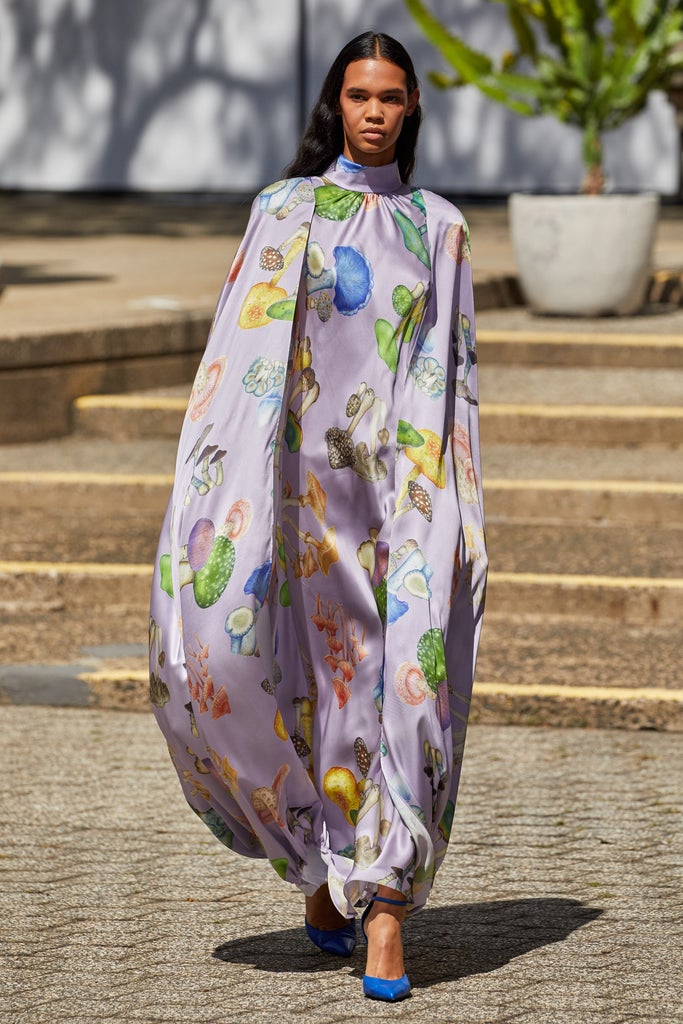
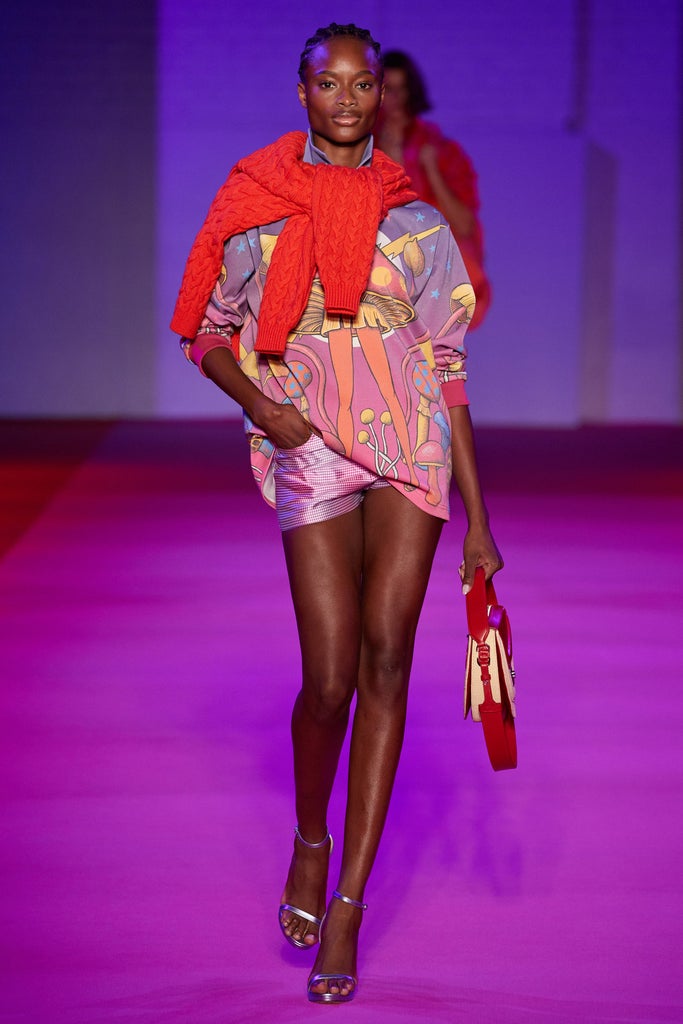
At Rodarte, mushrooms showed up on party-ready looks. The Mulleavy sisters presented two flowing dresses with balloon hemlines and flowing capes in pastel colors featuring hand-drawn multicolor fungi art created by their mother. Meanwhile, Brandon Maxwell’s collection took party-dressing to another level with mushroom shapes that featured women’s legs as stalks. For more casual users dressers, Maxwell showed sweaters and T-shirts with mushroom prints, paired with metallic, disco-ready skirts and jackets, as well as psychedelic ‘70s prints.

Mushrooms are just the latest from a deluge of fun, psychedelic prints that have been all over TikTok and Instagram. The prints themselves are  references to ’60s and ‘70s trends like cartoonish florals, cow prints, and undulating stripes, done in pastel and bright colors, and adorn many Y2K trends like low-rise bottoms, minidresses, and slinky, collared tops.

At Stella McCartney, the designer said that mushrooms were the main inspiration for her collection which was presented against a soundtrack containing the amplified sounds of fungi growing in the wild. The statement was a commentary on the role of mushrooms in the future of fashion (they’re great for making sustainable materials, by the way!), as well as the ways humans can look to fungi, which often grow in groups or form on other living organisms like trees, to learn how to live in community with one another. Of course, McCartney also presented vegan-leather pieces made of mycelium, derived from mushrooms, with a new version of the “Icon” bag. In a statement, the designer connected mushrooms to the industry, more generally: “What you see on the runway today is the conscious fashion industry of tomorrow.”

Like what you see? How about some more R29 goodness, right here?

Leave Mushrooms Alone!!

Spring’s Top Runway Trends Look To The Past

The Magical Symbol Beloved By Santa & Bella Hadid

Tuesday, October 5, 2021

When Did Abercrombie & Fitch Get So Good?

“This isn’t the Abercrombie of the past, that’s for sure,” Carey Krug, SVP, Head of Marketing at Abercrombie Brands, writes me in an email. “The brand used to be one focused on people ‘fitting in’ whereas now, it’s one focused on creating a space where everybody truly belongs — and that sentiment is woven throughout all we’ve done and what is still to come.”

Abercrombie & Fitch, the youth-oriented fashion retailer that infamously used overly sexualized, near-naked models to sell clothes has gone through a massive transformation since CEO Fran Horowitz took over in 2017. These days, A&F is focused on inclusivity, extended sizing, and releasing clothes “reflective of the world around us.” It’s time to revisit this formerly infamous brand because the clothes are, and I say this with all my 36-year-old heart, extremely good: there are knitted tops I’ve worn every day, a pair of ripped jeans that I’m actually down with, super cute dresses and jumpsuits that could give Reformation a run for their money, and more.

And, I’m not the only one who feels this way. The fashion TikTokkers have also spoken and the consensus is that Abercrombie & Fitch, quite simply, rules.

Abercrombie & Fitch Tailored Wide Leg Pants, $69

@eliiiserose

behold the BEST trouser for fall #fallfashion #abercrombiestyle #ootd #styleinspo #fashiontiktok #fyp

♬ Pop Star – Coco & Clair Clair

When I ask Krug what stands A&F apart from other fashion retailers, she tells me that they’re adamantly a customer-first brand with ongoing open communication with their shoppers. “A lot of brands are good at showing customers what they should purchase, but I don’t think a lot of brands take a second to listen to their customers — what do they really want?” writes Krug. With that, she explains how, with the brand’s recent Denim Your Way campaign, A&F created jeans that directly addressed customer woes. “We said, ‘You talked. We listened. Here are your dream jeans.’ And it’s the best denim collection we’ve ever launched, in my opinion. We see just as many shout-outs for our Curve Love denim from women of all sizes because they finally have a line that mitigates that dreaded waist gap so many people experience.”

@madelinelah

Okay run to Abercrombie!! #abercrombiejeans #abercrombie #abercrombiehaul #foryou

♬ original sound – Mads

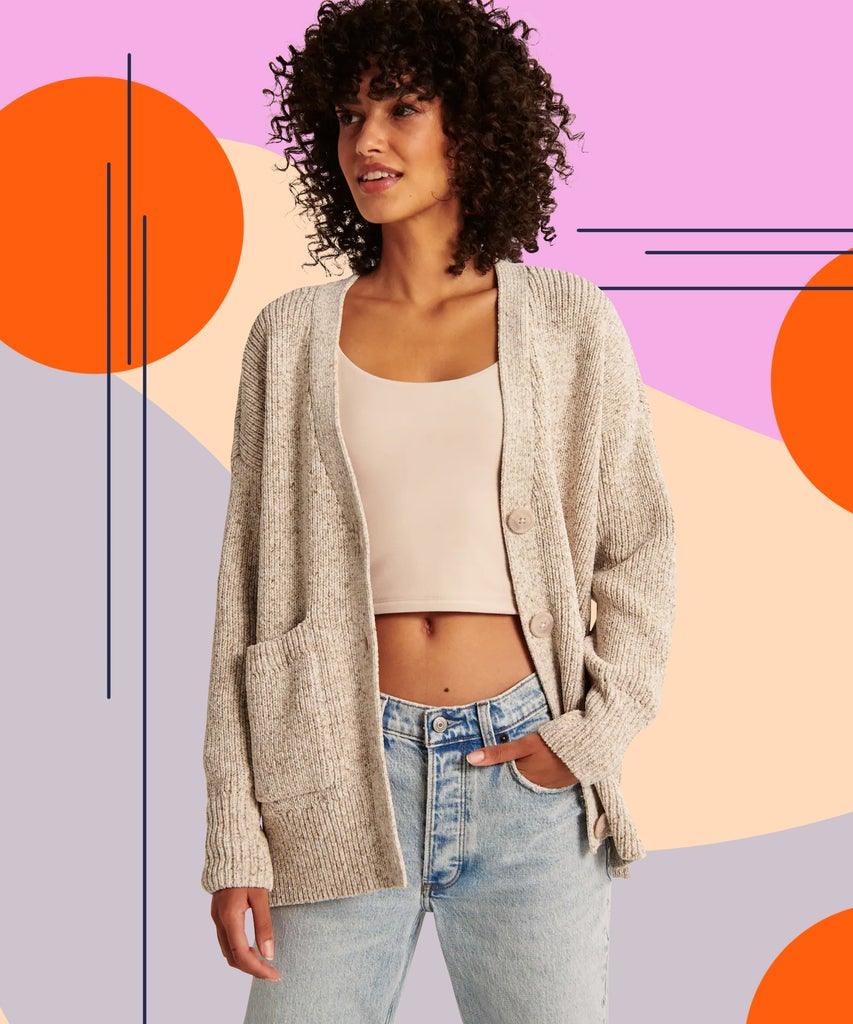
Abercrombie & Fitch Ribbed Tank and Cardigan Set, $59

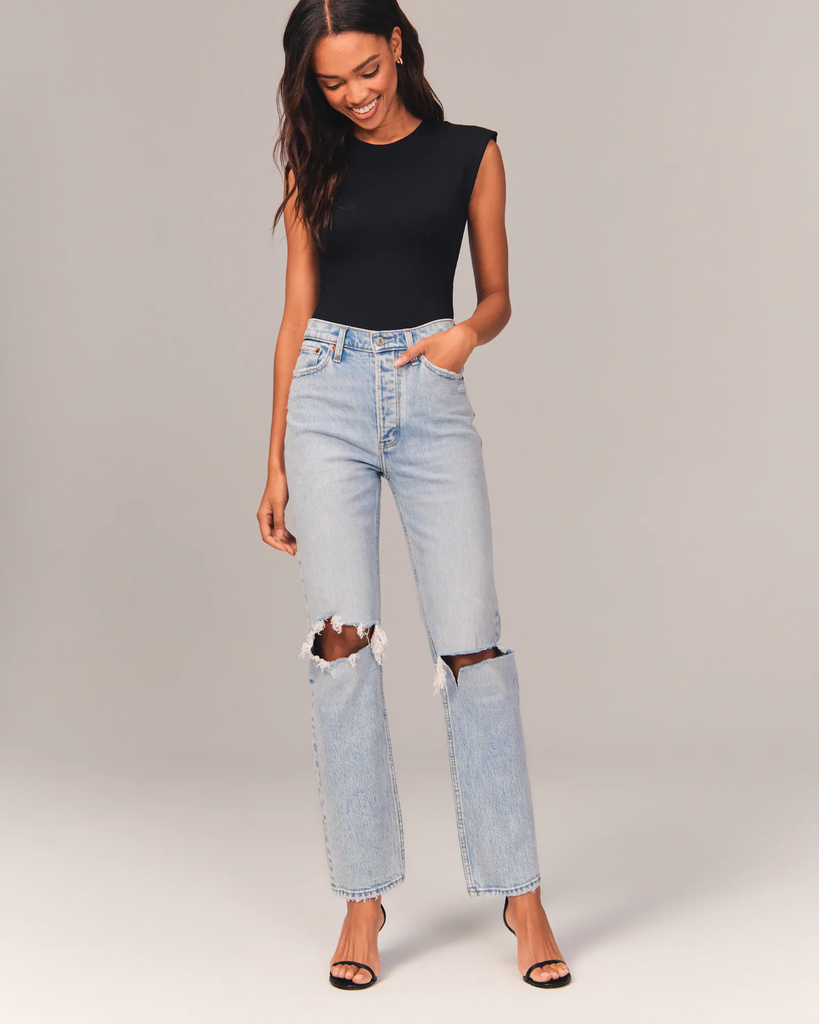
Abercrombie & Fitch High Rise Dad Jeans, $99

So, I’m not a fashion influencer, but I, too, approve of the A&F denim I tried on for this story. Though I’m normally a stiff-denim snob, I surprisingly loved the whisper of stretch that A&F weaved into these best-selling, pre-torn High Rise Dad Jeans. The ribbed tank and cardi set, made from the brand’s softAF fabrication, is perhaps my favorite piece from the current collection because it’s so versatile, either worn together or as separates, and the silky, lightweight ribbed material is somehow both cozy and cooling against my skin.

Abercrombie & Fitch Traveler Skort, $55 $44

Abercrombie & Fitch Mid-Length Cardigan, $69 $39.99

The Traveler Skort stood up to a rousing game of tennis and an at-home pilates session, and the brand’s mid-weight oversized cardigans draped exactly how you’d want an oversized sweater to.

Abercrombie & Fitch Duvet Mid Puffer, $180

And, you best know that I’ll be respectfully wearing the daylights (and nightlights) out of this generously hooded puffer jacket come wintertime.

In case you haven’t browsed the A&F site in a minute (or in over a decade), I’ve asked Krug to walk readers through five of the brand’s best-selling items — and why you, too, may fall in love with these runaway style hits.

Abercrombie & Fitch’s Top 5 Best Sellers:

Abercrombie & Fitch 90s Ultra High Rise Straight Jeans, $89–$99

“The ‘TikTok Famous’ 90s Ultra High-Rise Straight jeans are so comfy and flattering. They have the highest rise that sits at your natural waist and they look incredible paired with a seamless bodysuit or even a shirt, tucked or untucked. They look spectacular on everybody!” writes Krug.

Abercrombie & Fitch Seamless Bodysuits, $11–$55

“The seamless bodysuits pair perfectly with jeans or shorts and work so well alone or as a base in multi-layered looks. They are, quite literally, softAF.”

Abercrombie & Fitch Cardigans, $15–$89

“Our cardigans are made from our elevated LuxeLoft fabric and feature button-down fronts and ribbed trims. They’re so easy to wear open, closed, or partially closed for multiple looks. They are great for the ’90s prep and academia vibes.”

Abercrombie & Fitch Vegan Leather Puffers, $100–$200

“Our new vegan leather puffers are an easy fit and made from soft vegan leather fabric with the elevated diamond stitch detail. They’re that perfect fall puffer, but elevated, and able to be outfitted so many ways.”

Abercrombie & Fitch High Rise Dad Jeans, $89–$99

“The High Rise Dad Jeans have that flattering high rise waist with a more relaxed fit throughout the leg. The denim is soft, but with less stretch than your skinny jeans, so they’re like your perfect vintage relaxed jeans.”

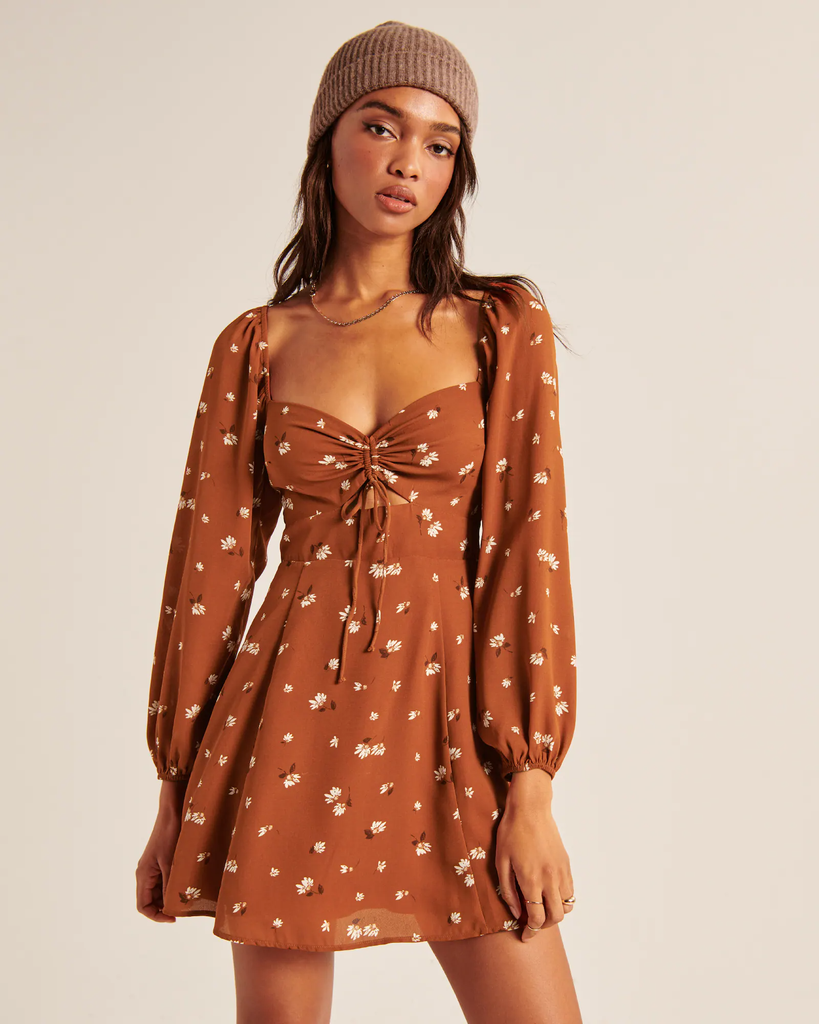
Abercrombie & Fitch Long-Sleeve Cinch-Front Cutout Mini Dress, $69

“With the flowy sleeves, the fun and flirty fit, and the peekaboo cutout, this dress is the epitome of fun and flattering. And the stretch in the back makes it able to work for multiple busts and body types.”

At Refinery29, we’re here to help you navigate this overwhelming world of stuff. All of our market picks are independently selected and curated by the editorial team. All product details reflect the price and availability at the time of publication. If you buy something we link to on our site, Refinery29 may earn commission.

Like what you see? How about some more R29 goodness, right here?

Here's An Exclusive 20% Off Code At Princess Polly

Y2K Fashion Is Going Viral On Amazon

H&M Brings Back Gorpcore With Its Fall Collection

Fashion Has Appropriated & Erased Black Culture For Too Long — Here’s How We Can Course-Correct

function vidFormatDur(d) { let m = parseInt(d / 60, 10); let s = Math.round(d % 60); let mp = ''; let sp = ''; if (m < 10) { mp = '0'; } if (s { vidDone(id); // Adjust controls }); } function vidSetup() { let o = document.getElementsByClassName("tmp-video"); let vm = document.getElementsByClassName("tmp-media-video"); let vp = document.getElementsByClassName("tmp-video-play"); let vps = document.getElementsByClassName("tmp-video-pause"); let vrp = document.getElementsByClassName("tmp-video-replay"); let vt = document.getElementsByClassName("tmp-video-time"); let vd = document.getElementsByClassName("tmp-video-duration"); let vb = document.getElementsByClassName("tmp-video-bar"); let vmu = document.getElementsByClassName("tmp-video-mute"); let vunmu = document.getElementsByClassName("tmp-video-unmute"); for (let i = 0; i < o.length; i++) { let ojs = ["vidToggle(" + i + ")"]; let vmid = ["tmp-media-video" + i]; vm[i].setAttribute("id", vmid); vm[i].setAttribute("onclick", ojs); let vpid = ["tmp-video-play" + i]; vp[i].setAttribute("id", vpid); vp[i].setAttribute("onclick", ojs); let vpsid = ["tmp-video-pause" + i]; vps[i].setAttribute("id", vpsid); vps[i].setAttribute("onclick", ojs); let vrpid = ["tmp-video-replay" + i]; vrp[i].setAttribute("id", vrpid); let vpjs = ["vidReplay(" + i + ")"]; vrp[i].setAttribute("onclick", vpjs); let vtid = ["tmp-video-time" + i]; vt[i].setAttribute("id", vtid); let vdid = ["tmp-video-duration" + i]; vd[i].setAttribute("id", vdid); let vbid = ["tmp-video-bar" + i]; vb[i].setAttribute("id", vbid); vb[i].style.width = "0.01%"; let vmuid = ["tmp-video-mute" + i]; vmu[i].setAttribute("id", vmuid); let vmujs = ["vidMute(" + i + ")"]; vmu[i].setAttribute("onclick", vmujs); let vunmuid = ["tmp-video-unmute" + i]; vunmu[i].setAttribute("id", vunmuid); let vunmujs = ["vidUnmute(" + i + ")"]; vunmu[i].setAttribute("onclick", vunmujs); vidTime(i); } o,vm,vp,vps,vrp,vt,vd,vb,vmu,vunmu=void 0; } // Show numbers on the images in page, set to false before publish to turn them off const toolsOn = false; // Should dots be onclick for all views? const clickOn = true; // Setup Annotation Content, the first spot is 0, second spot is 1 etc. let content = new Array ( "
WATCH
WATCH
WATCH
00:00
00:00
00:00
00:00
00:00
00:00
", "", "", "", "", "" ); // Tools function tagImages(){let e,t=document.querySelectorAll(".section-image .img-container");for(e=0;e<t.length;e++){if(t[e].setAttribute("id",["image"+e]),1==toolsOn){let n=document.createElement("DIV");t[e].appendChild(n),n.innerHTML="
"+e+"
"}let n=document.createElement("DIV");t[e].appendChild(n),8==e&&(n.innerHTML="
")}} function countDots() { let annos = document.querySelectorAll(".anno-dot"); let count = annos.length; let n = document.createElement("DIV"); n.setAttribute("class", "dotCount"); if (toolsOn == false) { n.style.display = "none"; } let w = document.getElementsByClassName("body"); w[0].appendChild(n); n.innerHTML = "
Setup CSS for " + count + " dots & pops
"; } // Setup Annotations, do not alter var grabnav, elem = new Array(), mobilebuy = new Array(), closebutton = new Array(), init = !1, previous = 100, mobile = !1, desktop = !0; function assembleArray(n, e) { return [document.getElementById("anno-tip" + n), document.getElementById("anno-dot" + n + "-hint"), e]; } function tipOn(n) { var e = n[0], i = n[1], t = n[2]; 0 == init && (initAnnotations(), (init = !0)), 1 == mobile ? (showPop(e, t, !0), window.innerWidth < 768 && hideGlobalNav()) : window.innerWidth < 768 ? (showPop(e, t, !0), hideGlobalNav()) : (showPop(e, t, !1), showHint(i)); } function tipOff(n) { var e = n[0], i = n[1], t = n[2]; 1 == mobile ? (hidePop(e, t, !0), window.innerWidth < 768 && showGlobalNav()) : window.innerWidth 540 && mobileExtraOn(n); vidTime(n); vidPlay(n); } function closeTip(n) { vidPause(n); tipOff(assembleArray(n, "0")), window.innerWidth > 540 && mobileExtraOff(n); } function showTip(n) { 1 == desktop && window.innerWidth > 720 && tipOn(assembleArray(n, "-15%")); } function hideTip(n) { 1 == desktop && window.innerWidth > 720 && tipOff(assembleArray(n, "0")); } function mobileExtraOn(n) { //(mobilebuy[n].style.display = "block"), (closebutton[n].style.display = "block"); } function mobileExtraOff(n) { //(mobilebuy[n].style.display = "none"), (closebutton[n].style.display = "none"); } function initAnnotations() { document.getElementsByClassName("global-header")[0].setAttribute("id", "tmp-global-header"), (grabnav = document.getElementById("tmp-global-header")), (mobilebuy = document.getElementsByClassName("anno-mobile-buy")), (closebutton = document.getElementsByClassName("anno-tip-close")); } function showGlobalNav() { grabnav.style.display = "block"; } function hideGlobalNav() { grabnav.style.display = "none"; } navigator.userAgent.match(/Android|BlackBerry|iPhone|iPad|iPod|Opera Mini|IEMobile/i) && ((mobile = !0), (desktop = !1)); function setupAnnotation(t, e) { let n = document.querySelectorAll(".section-image .img-container"), o = document.createElement("DIV"), l = ["an" + e]; n[t].classList.add("anno-layers"), n[t].setAttribute("id", l), n[t].appendChild(o), (o.innerHTML = content[e]), (content[e] = void 0), 0 == e && activateAnnotations(), setAnnoDelays(e); } function setAnnoDelays(t) { let e = ["#an" + t + " .anno-dot"], n = document.querySelectorAll(e); for (let e = 0; e < n.length; e++) { let n = ["#an" + t + " .anno-dot"], o = ["anno-dot-delay" + e]; document.querySelectorAll(n)[e].classList.add(o); } } function setClick(t, e) { let n = ["openTip(" + e + ")"]; t.setAttribute("onclick", n); } function setRollover(t, e) { let n = ["showTip(" + e + ")"], o = ["hideTip(" + e + ")"]; t.setAttribute("onmouseenter", n), t.setAttribute("onmouseleave", o); } function activateAnnotations() { let t = document.querySelectorAll(".anno-dot"); for (let e = 0; e 760 && 0 == clickOn ? setRollover(t[e], e) : setClick(t[e], e); } } function setupPopups() { let t = document.querySelectorAll(".anno-tip"); let tc = document.querySelectorAll(".anno-tip-close"); let ti = document.querySelectorAll(".anno-tip-image"); for (let e = 0; e < t.length; e++) { let tid = ["anno-tip" + e]; t[e].setAttribute("id", tid); let tcid = ["closeTip(" + e + ")"]; tc[e].setAttribute("onclick", tcid); let tiid = ["anno-tip" + e + "_img"]; ti[e].setAttribute("id", tiid); if (clickOn == true) { tc[e].style.display = "block"; } } } function setup() { // Annotations, set number based on image tag using the tag images function // first variable is image location // second variable is the content array position setupAnnotation(0,0); //setupAnnotation(1,1); // Setup the popups setupPopups(); // Setup videos vidSetup(); // Number the images, turn off for publish tagImages(); // How many dots to css countDots(); } /* Preload */ function ready(e){(document.attachEvent?"complete"===document.readyState:"loading"!==document.readyState)?e():document.addEventListener("DOMContentLoaded",e)}document.onmouseleave=function(){window.isReady=!1},window.addEventListener("resize",function(){window.isReady=!1}),window.isReady=void 0!==window.isReady&&window.isReady,ready(function(){var e=setInterval(function(){window.imagesLoaded&&(imagesLoaded("#tmp-load",{background:!0},function(){window.isReady=!1,clearInterval(e)}),clearInterval(e))},100);if(!1!==window.isReady)return;window.isReady=!0;const t=setTimeout(function(){clearTimeout(t),setup()},300)});

As a string of celebrities made their way down the red carpet at The 2021 MTV Video Music Awards, Twitter lit up with real-time commentary regarding the fashion on display. Among the varied 'ooh's and 'ahh's was a distinct voice of authority pointing out that the looks lacked a modern point of view: “No more references or homages please. Our eyes are starving for fresh perspective/dress. We won’t have any decade-defining style for the roaring ‘20s…if we keep rewearing ‘90s and Y2K things.” Behind the tweets was Shelby Ivey Christie, a fashion and costume historian who regularly shares her encyclopedic knowledge with her 43,000-plus followers, delving into the oft-overlooked contributions of Black creators while weighing in on modern-day cultural touchpoints with equal aplomb.

From intricately laid baby hairs and glittering acrylic nails to the overlooked designs of folks like Ann Lowe and Zelda Wynn Valdes, the systematic sidelining and appropriation of Black cultural contributions has been well-documented — a fact that makes Christie’s work all the more urgent and necessary. “You can be in a continual cycle of anger and agitation because every day, every week, there's somebody copying something that we’ve done,” she says. In partnership with Target, we talked to the fashion historian about her early forays into the industry, the challenges of her work, and why the method matters just as much as the message.

What are some of your formative fashion memories?

“Costume and film was my segue into loving fashion early on. I love stories and storytelling, but it was really the costume design that drew me to fashion. My mom has a really distinctive style, very androgynous — I have a love of structured pieces because of her. My grandma was a very well-dressed woman, dressed to the nines for church. My first job was working as an assistant to my hairstylist. Looking at magazines [catered to Black women] once the customers were done with them and seeing models that look like me wearing high-end looks and participating in fashion made a really early impression on me.”

How did you begin plotting your path toward a career in fashion?

“I got into college at North Carolina A&T State University as a fashion merchandising major because I was the fashion kid in my family. At the time, I had a boyfriend who went to North Carolina Central University and was a history major. He focused specifically on Black history and he would talk to me about what he was studying and it was so interesting to me. I changed my major to history, but then I missed my fashion — in history, they don't talk about costume or clothes as a historical form of documentation. So I said, ‘Okay, I'm going to leave school until I can figure out what I want to do.’ I ended up not going back until I was 21 to finish as a Race, Class, and Culture major under the history discipline.”

How did your magazine internships and work history inform your view of the fashion industry?

“Navigating the fashion industry as a Black woman was not always easy for me. It was easy to feel out of place or like my voice did not matter in certain spaces. At the time, editorial teams were downsizing because print was not the primary form of communicating fashion. These big budget editorials were going away and these legacy publishers were trying to adjust to that. I work in the business side of luxury fashion now, and that's what [that change in the industry] pushed me to do.”

How did you remain in touch with your love of fashion history while holding down various fashion-related 9-to-5s?

“I was in a capacity where brands are my clients. So you cannot go on Twitter and talk about a brand’s show or critique the runway because it's a conflict of interest. I would talk about these things amongst my friend group, but it wasn't until Ieft to go to [a beauty corporation] three years ago that I really started pumping out my content and being able to talk about it a lot.”

What are the difficulties of unearthing Black fashion history?

“It can be quite challenging and labor-intensive. And sometimes it can be emotional. Sometimes you have to do as much digging as you can, and then you get to a point where there's so much misattribution that even if you find a source, how do you verify that source? Art and history and academia didn't value [Black creativity] enough to treat it with the same kind of care and documentation.”

How do you balance the necessity of shining a spotlight on Black creativity with the frustration that comes along with Black creativity being appropriated for profit?

“Ownership is so important, but it's two-pronged. You have to focus on properly attributing what’s already out there and call people out when it's not done right, but we have to start thinking about what we can do in the present to make sure it doesn't happen [in the future]. ​​

“A lot of our knowledge is shared communally with each other — that is a Black thing — and then in an attempt to be generous with each other, now our methods are on the internet and our white counterparts can now profit off of them. What can we do today as a preventative measure? That's something that we're still trying to figure out.”

As you work on obtaining your master’s degree in costume history for NYU, how do you hope your work will evolve?

“As corny as it sounds, I just want to stay true to myself. Even in my approach to sharing content, my goal is always to make it accessible because I'm not a very academic person. If I have to read a text or a passage for school, I have to read it four or five times. The vernacular is just not accessible. I want to be able to filter that to my audience. If I want Black people and a wide range of audiences to know this information, I want it to be interesting to them. So I'm going to use my regular AAVE. I'm Southern, so you're going to hear my y'alls. I'm going to use my memes. I'm going to cut up. I wanna laugh. I want it to be fun. That's what I try to hold onto.”

Like what you see? How about some more R29 goodness, right here?