Friday, December 31, 2021

Transition Lenses: The Functional-Fashionable “Dad” Trend We Support

If you’re reading this, I’m assuming that you’re a person who, like me, experiences some level of vision impairment. Or maybe you see the world in 20/20 but you’re down to clown with the “dad” aesthetic and are curious about the style potential of a longtime boomer eyewear trend synonymous with ur-curmudgeon Larry David. Either way, you’ve come to the right place, because I’m about to spew some knowledge on transition lenses — also known as light-responsive, light-intelligent, or photochromic lenses — and how they have significantly improved my day-to-day viewing experience.  

I was introduced to these high-tech lenses via Transitions Optical — the company that first popularized plastic photochromic lenses in the 1990s — when they asked if I’d like to test-drive their latest release, the XTRActive lenses, which tint very quickly and are specially made for those with extremely sensitive eyes (c’est moi). I’ve had two invasive eye surgeries — one for lazy eyes, the other for extreme nearsightedness — so I knew I was an ideal candidate for this kind of light-responsive eyewear technology.

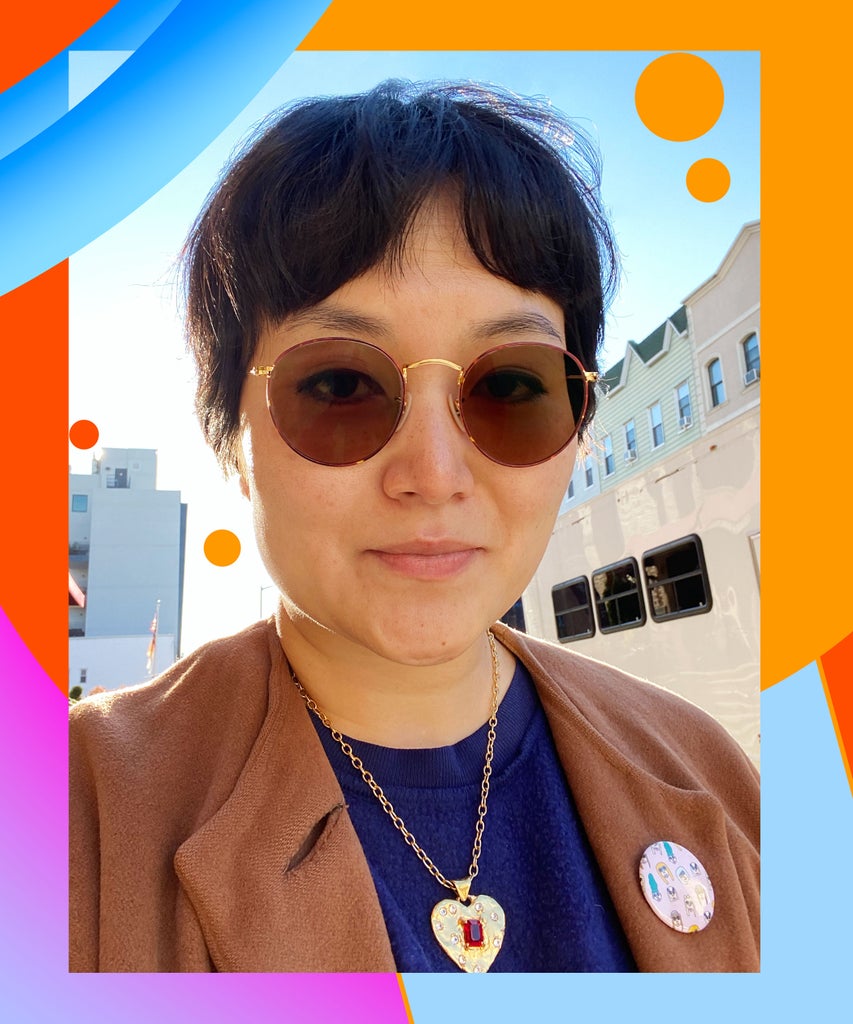
According to lens company Vision Ease, the first photochromic lens was developed in 1966 when silver halide crystals were embedded into a molten glass substrate, “[causing] the finished lenses to darken in reaction to UV in just a few minutes, and would achieve maximum darkness after about 15 minutes,” their research reported, “[but these] early photochromic lenses did not always perform ideally. If the prescription called for one lens to be thicker than the other, the thicker lens would darken more quickly and become darker than the thinner lens. The photochromic performance could be short-lived, and the lenses often appeared slightly dark indoors.” These days, however, transition lenses in their resting, indoor state look virtually clear (as you can see from my before-and-afters below).

Ray-Ban RX3447V Round Metal, $177 (Transitions XTRActive lenses, additional $129)

First, the pros: These lenses start adjusting to sunlight within seconds; they’re impressively nuanced (even on overcast days, they will tint to just a slight shade to protect your eyes); and wearing chameleon-like shades means I don’t have to keep switching back and forth between sunglasses and prescription eyewear every time I enter the outside world. As for the main benefits, a rep told me that all Transitions block 100% of UVA and UVB rays and blue light. On super bright sunny days, my XTRActive lenses will go from clear to their darkest shade in mere minutes. (Sorry to all the vintage dads whose lenses took forever to tint. Times have changed!)

As for the cons: Transition lenses don’t darken to sunglass level (which means you can’t get away with secretly staring at someone) and they add a decent fee on top of whatever frames and prescription costs you accrue. From the two sites I ordered transition lenses from, LensCrafters and EyeBuyDirect, I found that XTRActive lenses run about an additional $130. (Transitions Signature GEN 8 lenses, which is an older iteration of the lens technology, is an additional $80.) But, hot tip: You can absolutely use your eligible FSA or HSA dollars towards a pair of transition-lens glasses at any eligible eyewear retailer!

Ordering these light-intelligent lenses was also a breeze. All that was needed was an up-to-date prescription and the pupillary distance (use this handy tool from Warby Parker to find yours). Ultimately, the hardest part was deciding on the tint color and frames — for my XTRActive pair, I went with classic round-frame Ray-Bans with brown tinted lenses; for my Signature GEN 8 pair, I went with a pair of EyeBuyDirect RFLKT with grey tinted lenses. (While the majority of the fees were comped for testing purposes, my EyeBuyDirect total would have come to $220, which includes the frames, my prescription, and the transitional add-on).

And after testing the two pairs for several weeks now, I can honestly say that both lenses worked similarly for me — although if you’re a person who spends a lot of time outdoors, the XTRActive or XTRActive Polarized versions might be more beneficial. But if you’re a screen-bound, WFH type like me, the Signature GEN 8 lenses are the more cost-effective way to go. (Plus, you have more tint color options!)

RFLKT Antone, $80 (Transitions Signature GEN 8 lenses, additional $79)

And, lately, I’m not the only one singing the praises of these lenses. My friend Christian Joy also swears by her light-responsive lenses from Warby Parker. (Note: the brand’s light-responsive lenses are an additional $100 on top of the frames and prescription fees.) “I’d always known about transitional lenses but was not sure they were for me until I saw a friend rocking them pretty hard. Plus, my mom wore tinted aviators and I thought she always looked ultra-glam,” Christian told me. “Because I’m an artist and look for inspiration in colors, I decided to opt for transitional lenses [instead of permanently tinted lenses]. I was actually really surprised at how they change subtly from indoors to outdoors. They feel really comfortable on my eyes and I plan to get them for all my glasses from now on.”

Non-prescription glasses wearers can benefit from light-sensitive lenses as well. I asked Refinery29 affiliate strategist Kate Spencer for her thoughts on her non-prescription Transitions XTRActive lenses and she told me, “I was surprised how useful I find my glasses. I was looking for a pair of blue light glasses because I get headaches from staring at my laptop screen all day and I actually didn’t realize that all Transitions lenses, no matter prescription or not, help block blue light. My desk faces three windows and I get a pretty bright stream of light on my face in the afternoon, so the fact that my lenses tint automatically has been more useful than I expected! Honestly, I wear these in my house all the time.”

If you’re going to splurge on the extra fees associated with Transitions, you’re likely wondering about the longevity and upkeep. Luckily, it’s easy enough to take care of them. “Transitions lenses are designed to last the lifetime of your vision care prescription,” a Transitions Optical rep told me. “[They] can be cleaned like most lenses — with a lens cleaner, mild soap, or a microfiber lens cleaning cloth. Do not use window cleaner to clean your prescription eyeglasses, as it contains chemicals that could break down the coatings on your lenses. You should also be careful not to wipe your lenses with a surface that could potentially scratch your lenses, for instance, a facial tissue or paper towel. Keep your glasses in a case when not in use to prevent scratching the lenses.” 

My final takeaway is this: My vision feels transformed by light-sensitive lenses and I wholeheartedly recommend them to fellow specs-wearing folks. And, I also find these glasses to be a fitting accessory to round out any “ugly trend” or “dad fashion” vibe that Most Wanted editors and readers (you know who you are) can’t resist test-driving. Besides, if you’ve got soon-to-expire FSA dollars to spend anyway, you may as well get yourself an eyewear accessory that not only helps you look, but will help you serve a look, too.

At Refinery29, we’re here to help you navigate this overwhelming world of stuff. All of our market picks are independently selected and curated by the editorial team. All product details reflect the price and availability at the time of publication. If you buy something we link to on our site, Refinery29 may earn commission.

Like what you see? How about some more R29 goodness, right here?

29 Fashion Gifts We Actually Want This Holiday

When Did HOKAs Get So Popular?

We Snoozed On & Reviewed The Best Mattresses

Thursday, December 30, 2021

Are Skinny Jeans Actually Over?

I remember my first pair of skinny jeans tragically. Maybe because they were. At 12 years old, I convinced my mom to get me a pair from Wet Seal because I was tired of the bootcut and bell bottom styles she’d always buy me. But mainly, I wanted to look cool. Back then, cropped hemlines were not a thing. Instead, we wore ours a tad longer than needed, scrunching the hemlines to mask our ankles. With platforms on our feet, of course. But 15 years later, I have no skinny jeans in my closet. The last pair I bought (a comfy number from Everlane) I gifted to a friend in 2019, after I accepted to myself that I was over this trend. 

So when skinny jeans were banished by Zoomers earlier this year, I was surprised to see just how many millennials took it personally. By now, millennials know what it’s like to be blamed for the demise of mostly everything in society, from marriage and diamonds to beer and napkins. Certainly, skinny jeans couldn’t have been such a big deal to let go of. But mostly, I was eager to see if the Zoomers’ disapproval was actually enough to kill skinny jeans for good. 

Turns out, it wasn’t. Skinny jeans are still here — like it or not. 

Despite the fast growth of looser styles — be it baggy, slim-fit, or barrel jeans — consumer interest in skinny jeans hasn’t actually decreased in 2021. Skinny jeans were among Google’s top fashion searches of the year. While most of those searches might have come from people wondering if they were cool or not — queries like “side part skinny jeans” and “skinny jeans date you” were some of the most searched — it appears any press is good press. According to global fashion platform Lyst, searches for skinny jeans have increased 77% month-on-month since September. (That’s not to say shoppers aren’t looking for other styles: Data shows they’ve preferred wide-leg and baggy jeans for most of 2021, with searches for both styles jumping by 110% since January.) 

Skinny jeans have also been spotted on the runway, with designers defying TikTok’s memo. Take, for example, Saint Laurent’s pre-fall 2021 jean boots that made us all question what would happen if we wore them to a no-shoe party. Tom Ford also kept skinny jeans in his recent collections, with leather-looking low-rise numbers in his fall 2021 collection. And, most recently, Givenchy also approved of skinny jeans in the brand’s pre-fall 2022 collection including washed and ruched denim. What’s more, both luxury and retail brands are still *gasp* selling skinny jeans in both low-rise and high-waisted styles, from Balmain and Balenciaga to Levi’s, Good American, and Everlane. 

As for what will come in the new year, spring 2022 collections have already predicted that the 2010s — the era of skater skirts, thigh-high socks, cross T-shirts, and colorful jeans — are making a comeback, and with it high-low hemlines, gladiator sandals, fringe, and colorblocking. The recent spike in demand for skinny jeans may just be that: a dormant trend holding out until its companions come out to play for the upcoming spring season. So hold on to your skinny jeans, millennials. They might come in handy soon. 

If you’re missing a pair, the options below might be a good solution. 

At Refinery29, we’re here to help you navigate this overwhelming world of stuff. All of our market picks are independently selected and curated by the editorial team. If you buy something we link to on our site, Refinery29 may earn commission.

Like what you see? How about some more R29 goodness, right here?

Balloon Pants: The Trend Replacing Skinny Jeans

What Shoes Do You Wear With Non-Skinny Jeans?

Is It Time To Retire Skinny Jeans?

Wednesday, December 29, 2021

How TikTok Became 2021’s Biggest Fashion Influencer

This year, skinny jeans were declared over. So were side parts and laugh-cry emojis. Young content creators were invited to the Met Gala to sit side-by-side with some of fashion’s biggest names. Sorority hopefuls in Alabama made the Pants Store a nationally recognized brand. Y2K became fashion’s top trend. And all of this happened because of one app: TikTok. We’re used to thinking of Instagram and Pinterest as fashion’s premiere social media platforms, but, in 2021, TikTok revitalized the way we talk about fashion both online and IRL. 

While TikTok’s first boom happened in 2020 — think Amazon’s butt-lifting leggings craze — this year we looked to the app for more than laughs and viral hacks. Instead, the app’s one billion monthly users (yes, you read that right!) built and consumed relatable fashion-focused content far from the curated feeds we’ve gotten used to, discussing the emergence of subversive basics in one swipe up and sharing cottagecore inspiration in the next. It marks yet another wave of fashion democratization that’s birthed from the bedrooms of the fashion-obsessed to the streets and runways.

That relatability is part of TikTok’s appeal, according to Vanessa Craft, head of content partnerships at TikTok. “TikTok offers an unfiltered and authentic approach to fashion,” she says. “I view other platforms as places to share a highlight reel of your life, whereas TikTok is where people go to be themselves and to find a community of other people like them.”

This community — as well as the wide range of formats on the app, from challenges to sound trends — has allowed fashion creators and brands to rethink the old influencer model. Content creation is no longer about showing a cult of stylish personality — think: street style-based influencers who created a following on what they wore and promoted — but rather fostering a community for discourse, experimentation, and yes, criticism that not even a luxury brand like Chanel is safe from.

@thealgorythm The layering opportunities ✨ how would you style this? Top by @clarissa.larrazabal #fashiontrendpredictions #trendtok ♬ Caution – Kaytranada

It’s also about understanding that fashion really isn’t that serious. Take, for example, creators like Agustina Panzoni (@thealgorythm), Alexandra Hildredth (@guyfieri.superfan), Mandy Lee (@oldloserinbrooklyn), and Benji Park (@fashionboy) who’ve created a community of trend forecasters, critics, and fans that has little to do with showcasing their personal style, but rather what they have to say about fashion.

Much like Diet Prada and other Instagram-based fashion police-type accounts, their on-app discourse has influenced the fashion industry. Panzoni coined the term subversive basics, Lee predicted the comeback of the Indie Sleaze aesthetic, Hildredth has cemented her expertise in show reviews and industry criticism, and Park launched an education series called “Fashion School” to teach his followers about the industry without spending a dime on tuition.

Furthermore, this new wave of TikTok influencers is not afraid to call out brands, mainly because they’re not interested in following the traditional model of fawning influencer marketing. Hildredth, for example, has called out brands like Skims for its collaboration with Fendi and Tiffany for its Gen Z-focused campaign, while Park has strongly expressed his feelings against supporting Dolce & Gabbana because of past allegations of racism and sexism. Some are also using it as an online resume of sorts, using the app to promote their skills: “Influencer marketing is so saturated that at this point we are using this as a platform to push ourselves professionally,” says Panzoni, who landed a job as a category manager of womenswear at Depop since going viral on TikTok. 

Still, fashion brands have found a way to make TikTok work for them; it’s the latest marketing frontier for companies to bet on. Big name brands like Kendra Scott and small boutiques like Alabama’s Pants Store have found that one viral moment can become the organic campaign of their dreams. This past summer, both of these brands witnessed firsthand the IRL success of the #BamaRush phenomenon, in which sorority hopefuls at the University of Alabama started sharing their rush week outfits on the app. Kendra Scott saw a 15% increase in new website users from women between 18 and 24. The brand also smartly capitalized on the moment by creating its own content through a “Choose Your Own Sorority Character” video on TikTok and a personal video message from Kendra Scott herself. For Pants Store, the success was even bigger: Sales across its five boutiques and the online store surged by 400% during that week, according to owner Michael Gee. 

@barbarakristoffersen

fits

♬ Ski Mask The Slump God – Foot Fungus – Kiersten

Beyond #BamaRush, brands like Gap, Aerie, Skims, With Jéan, and Lirika Matoshi have also reaped the benefits of TikTok’s algorithm. After creators use their products — mostly bought on their own — on the app, their viral videos translate into IRL dollars. And sometimes, it requires brands to move fast. Take, for example, Gap’s logo hoodie, which was not even available when creator Barbara Kristoffersen posted a video wearing it. Not long after, Gap noticed such demand for the piece that it launched its Gap Hoodie Color Comeback, which has since sold out. Skims’ long slip dress also went viral on the app this year, prompting a wait list of over 40,000 people. And then there are Aerie’s crossover leggings, which became popular in November 2020 after creator Hannah Schlenker posted a video wearing them. Right after, the brand’s website saw an increase of 700,000 searches for the leggings, as well as a surge of 200,000% in Google searches, according to Insider.

Even the secondhand market is seeing a boom propelled by TikTok. The RealReal, for example, has seen an increased interest in Gucci and Louis Vuitton from Gen Z consumers, with the Gucci “Jackie” and the Louis Vuitton “Pochette” bags leading in sales. Meanwhile, a new set of luxury watch connoisseurs on TikTok has also prompted a surge in searches and sales of secondhand luxury watches. 

Notably, while brands respond to public interest, it’s the creators who are leading the trends, a departure from the previous top-to-bottom approach the industry once upheld. “The greatest value TikTok creators can provide for fashion and luxury brands is the ability to reinvent what fashion means to their audience through a more entertaining and authentic creative lens,” says Craft.

@arielleismynam3 #nyc #y2k ♬ competition. azealia banks – hannah e

As TikTok has positioned itself as the premiere Gen Z app, the content and trends that do well on the platform tend to align with this generation’s values and interests, especially when it comes to ’90s and early 2000s nostalgia, as well as thrifting and vintage shopping. Many Gen Z users have found themselves adoring low-rise jeans, Britney Spears’ Y2K style, and Tom Ford’s Gucci era, Juicy Couture tracksuits, and Ed Hardy trucker hats on TikTok. The #Y2K has generated 3.5 billion views and #Y2KAesthetic has more than 406 million views, with brands like I.am.Gia, JW Pei, Miaou, and Blumarine translating the Y2K nostalgia to the runway and retail. 

While fashion trends are of course cyclical, there’s also a deep cultural element that propels many of these comebacks. These time around, WGSN youth strategist Marian Park credits it to Gen Z’s “nostalgia for both the youth culture and youth fashion from the early 2000s,” as well as “current conversations around the metaverse and the impact of digital fashion” that she says are similar to the discussions around the Y2K scare and the unbounded promise of the internet in the early 2000s. With TikTok’s accelerated growth, it’s safe to say that everyone is looking at the precipice of a new age in tech, just like we were at the turn of the 21st century. 

It’s become clear that whatever fashion creators do on TikTok can quickly translate into real-life sales and impact. But, as writer Amy Odell noted in her newsletter Back Row, “fashion people are quickly migrating [to TikTok] because they have realized they can find a much bigger and more engaged audience.” In this digital tug of war, TikTok has emerged as 2021’s biggest fashion influencer. But will it hold on in 2022?

Like what you see? How about some more R29 goodness, right here?

How Does A Fashion Brand Go Viral On TikTok?

Archive Fashion Is Taking Over TikTok

Blumarine Owes Its Fashion Comeback To TikTok

Monday, December 27, 2021

Y2K Fashion Defined 2021 — 10 Brands That Led The Charge

If 2021’s trend cycle has proved anything, it’s that, in fashion, everything always eventually comes back in style. From the industry’s penchant for high-waisted jeans and biker shorts made popular in the ‘90s to the resurgence of wallpaper floral prints a lá the 1970s, nostalgia is currently all the rage. But when it comes to this year’s Y2K fashion resurgence, there is a definitive list of brands (both heritage and new) that were essential in heralding the return of early 2000s staples.

When you think of trends from the early aughts today, it’s likely that the somewhat obvious baby tees, velour tracksuits, and chainmail dresses from cult-favorite labels like I.Am.Gia and Poster Girl come to mind. But Instagram-beloved brands like Aya Muse and Subsurface TV reminded customers this year that the clothes and accessories that were trending 20 years ago weren’t always the flashy, rhinestone pieces seen worn by the likes of Paris Hilton and Nicole Richie. Sometimes it meant a timeless LBD by Calvin Klein or a slinky maxi skirt from Tom Ford’s time as creative director for Gucci. Translation: The ‘00s were just as much about effortlessly chic silhouettes as they were the more eye-catching designs. 

Ahead, a complete breakdown of the 10 brands that brought back 2000s fashion this year.

At Refinery29, we’re here to help you navigate this overwhelming world of stuff. All of our market picks are independently selected and curated by the editorial team. If you buy something we link to on our site, Refinery29 may earn commission.

Mirror Palais


You may know New York-based brand Mirror Palais for its sold-out fairy dress with a massive waiting list. The small-batch label, founded by Marcelo Gaia, spiked to popularity after Bella Hadid wore one of its underwired floral-print bikinis on Instagram. However, it’s the sparkly dress — reminiscent of the micro-mini style from early aughts Disney Channel movie My Date With the President’s Daughter — which fans went wild for, that put the brand on the map. Other famous fans include Dua Lipa and Kendall Jenner, both of who have become Y2K style darlings thanks to their nostalgic approach to street style.

Poster Girl


There’s a good chance that you’ve come across Poster Girl, founded by Francesca Capper and Natasha Somerville, while scrolling through Instagram. The candy-colored dresses have a distinct Y2K vibe that’s reminiscent of the famous chainmail dress (made by designer Julien Macdonald) that Paris Hilton wore on her 21st birthday back in 2002. 

Miaou


Of all the brands on the list, Miaou (which is French for “meow” — yes, the sound a cat makes) might take the cake as the one that’s most recognizable. Between the myriad of corsets and micro-mini skirts, you’d be hard-pressed to scroll through your timeline without coming across a member of the style set wearing something from the buzzy label. 

Subsurface TV


Visible thongs, also known as “whale tales” are just about as Y2K as it gets. The risqué silhouette was made popular again this year with the help of Subsurface TV, a buzzy, direct-to-consumer label with circularity at its focus. The Los Angeles-based brand’s take on the controversial trend manifests in a cozy pull-on pant with a high waist and subtle thong-shaped cutout along the back. Influencers like Emma Leger and Jen Ceballos of @endlesslyloveclub are just a few members of the style set embracing the comeback trend. 

Blumarine


Taking full advantage of the industry’s penchant for the early aughts, Blumarine’s newest creative director Nicola Brognano is giving the heritage Italian brand the comeback it deserves. Honing in all the key elements from the era, fashion lovers who missed the Y2K trends the first time around can now enjoy them at new heights thanks to the designer’s dreamy collections. From pleated micro-mini skirts and butterfly tops to gradient sunglasses, complete with a big “B” embellishment, and crystal logo belts, everything the brand has produced in its new era just proved that the nostalgic phenomenon is here to stay.

Naked Wolfe


Millenials on social media looking to live out their Bratz doll dreams in real time will love Naked Wolfe’s highly-coveted shoes. Fitted with its signature platform heels, all of the A-list-approved brand’s designs have a distinctly retro vibe that the likes of Kourtney Kardashian and singer Tinashe can’t get enough of. The London-based brand has more than a handful of styles on offer, including two-tone “skater” sneakers with a stacked flatform and a fan-favorite knee-high boot with a second-skin silhouette. 

Emma Brewin


Plush accessories were all the rage in the ‘00s so when Rihanna was photographed wearing a pistachio-colored (and, then a bubblegum pink) furry bucket hat from Emma Brewin while out on the town, it was only a matter of time before it became the latest Y2K trend to catch the attention of the style-set. Available in a slew of bold shades, the emerging hat designer from England has amassed more than 43K followers on Instagram, all hoping to get their hands on one of her playful headwear. Also on offer are bespoke options, like a snood and muffler-style hats.

Aya Muse


On the other end of the Y2K trend spectrum is a super-slinky approach to dressing (think: ‘90-era Tom Ford for Gucci) that cult brand Aya Muse has pretty much mastered. The West Coast brand created by designer Tina Rodiou is revered among its fanbase for its minimal silhouettes and sustainable efforts. Beloved by models like Kaia Gerber, Elsa Hosk, and Kendall Jenner, to name a few, the brand’s most quintessentially Y2K piece includes a dress with thong-like cutouts. 

I.Am.Gia


Everyone knows I.Am.Gia for its sexpot styles, most of which look as if they were pulled straight from the 2000s. Between the unabashedly bold prints and form-fitting silhouettes, each collection features a range of styles that are riddled with details that have an overwhelmingly nostalgic feel. Baby tees and low-rise pants are plentiful on the website of the cool-girl label, founded by Australian designer Alana Pallister, but you can also count on I.Am.Gia for (party) occasion dresses 

JW Pei


“It’s not a bag, it’s a baguette.” Famous words spoken by fictional style icon from Sex and the City, Carrie Bradshaw. During the show's peak in the early and mid-2000s, Fendi’s arm bag made several appearances, which cemented the compact silhouette’s spot in the fashion zeitgeist. As a result, we often associate the “baguette” style bag, (named for its ease of carrying under your underarm) with the era. So when JW Pei released its modern-day take on the trend for less than $100, it was no wonder that everyone from Hailey Biber to Emily Ratajkowski became just a few of its famous fans. Available in a slew of different colors and materials, the versatile style earned the title of one of the must-have bags of the year.

Like what you see? How about some more R29 goodness, right here?

Here's How To Wear Y2K Butterflies In 2021

Y2K Fashion Trends Live On TikTok. Here's Why.

So You're Thinking Of Wearing A Visible Thong