Wednesday, May 11, 2022

It’s About Making Us Feel Seen: How 3 Brand Founders Are Making Space For Black Women

In today’s world, launching and running your own business is no easy feat. That’s why we’ve partnered with The Workshop at Macy’s, an exclusive business development program designed to uplift women- and diverse-owned businesses and give them the tools for better success and sustained growth in the retail industry. Keep reading to get to know some of the program’s soon-to-be grads and shop a selection of their offerings at Macy’s Digital Pop-Up Event.

In the wake of social unrest in 2020, as the country reckoned head-to-head with its stance and role in racism, many companies released blanket statements professing their solidarity with Black people, most of which lacked emotion and felt more like a sink-or-swim tactic. Brands who declared to suddenly be woke were met with skepticism and the unanimous knowing that for years, their inaction reflected their failure to support the Black community both personally and professionally. History has shown that the system was never built to nurture Black-founded companies the way it has their white counterparts, making it nearly impossible for these brands to prosper and, in many cases, preventing them from ever getting off the ground.

But with more and more companies beginning to take inventory of their blind spots and part in systemic racism, this is starting to change. In fact, according to a 2021 survey by The Harvard Business Review and Global Entrepreneurship Monitor, 17% of Black women are in the process of starting or running new businesses, compared to the 10% of white women and 15% of white men. Indeed, Black women-owned businesses are on the rise, which may be because we’ve finally been given more access to the resources and capital to properly sustain them. 

The rise of brand incubators and mentorship programs has certainly helped pave the way. Working to meet the growing needs of entrepreneurs who weren’t traditionally given a seat at the table, they help equip small businesses owners with the tools and support they need for success. By passing the mic to Black women, they give us the space to build community, empower one another, and, in part, inspire the next set of young Black entrepreneurs-to-be.

Ahead, get to know the founders of three Black-women-owned businesses in The Workshop at Macy’s program and how they’re using their platforms to inspire Black women to be their most authentic selves and forge their own paths.

Malisa Parke of Swanky Designs

Founded by creative mother-daughter duo Malisa and Imani Parke, Swanky Designs is a handcrafted jewelry, apparel, and home goods brand, most known for its bold and colorful statement earrings. Sharing a deep love of art and fashion, the pair have channeled this passion into creating pieces of wearable art that speak to women’s individuality.

More so than anything, the Parkes believe in lifting women up and creating collections that complement that. “My goal is to empower other women to live their authentic lives, to not be afraid of standing out,” says Malisa. Rather than follow the ever-changing trend cycle, they aim to stay true to themselves, drawing inspiration from both the world around them and their roots. “We’re from New York, so we’re always in the city, looking at things like shapes and buildings,” Malisa explains. “We’re also very much into African-inspired jewelry, but with a twist, and we’d like to continue digging deeper into that.” 

Ahead, Refinery29 spoke with Malisa about her creative relationship with her daughter, how it’s shaped their brand journey, and why we all should be our own trendsetters. 

You run your brand with your daughter, Imani. What inspired you to go into business together?
“We both have the creative gene. Imani has always been a super creative person. She started designing clothing at 14, while I used to sell jewelry at different vendor shows. One day I said to myself, You know what? I can do this myself. I prefer my own creativity, and Imani told me she wanted to do the same. Our creative juices flowed so well together that I suggested we do it as a team, and that’s pretty much how it was born.”

What lessons have you taught each other throughout your brand journey? How has your business strengthened your mother-daughter relationship?
“Imani teaches me a lot. Because she’s younger, she keeps me very fresh, but she also allows me to make mistakes. She’s teaching me not to be so constrained and to be freer. At this point in her life, I’m guiding her through it and helping her learn to [navigate it]. Being in business together strengthens our relationship in some ways, but she’s my daughter, so we butt heads a lot. When you’re in business with anyone, you’re going to clash; it can be tough, but then I’m reminded of the importance of our relationship”

In what ways do you use your brand to uplift and empower Black women?
“I hope to influence Black women to know they can do this, too, and that there’s room for everyone in jewelry making, no matter what medium you’re using. Age shouldn’t stop you from doing anything, know you can do it whenever you want. I also don’t think we should be so concerned about following fashion trends; we should be our own trendsetters. You shouldn’t have to worry about buying or being the latest — just do you. It’s a constant learning experience — we ask ourselves: How can we get better? What’s going to be the best for us?”

What advice do you have for young Black entrepreneurs?
“Read, learn, and get a mentor. Don’t just jump into it and expect things to happen because you’ll be quickly disappointed that it doesn’t happen that way. If you’re an entrepreneur, what you do is your passion, and it comes naturally to you. But you also need to read about the business side of things. Understanding capital, loans, taxes, and manufacturing; these are things you have to know. Talk to people who are doing it and be open to accepting help.”

Dr. Anne Beal of AbsoluteJOI

For many Black consumers, the desire to take better care of our skin has been hindered by the fact that we’ve been long ignored by mainstream beauty brands. This makes it taxing to source products to effectively combat the most common concerns of melanated skin, like hyperpigmentation and dark spots. So was the case with physician Dr. Anne Beal, who launched AbsoluteJOI after struggling to find products that worked both for her and her daughters. Her research led her to discover that 70% of women of color believe the products currently available don’t work for them, so she developed her own, tailored to women over the age of 35 seeking to address signs of aging.

“There are so many products available that address aging, but people with melanin-rich skin don’t show aging with fine lines and wrinkles,” Dr. Beal says. “Instead, we start to show age with changes in skin tone and dark marks.” Fusing scientifically based active ingredients and soothing botanicals, AbsoluteJOI products focus on balancing and nourishing the complexion while reducing the damage caused by aging and hyperpigmentation. Rather than offer a dizzying array of products, Dr. Beal took a minimalist approach by launching a tight edit of cleanly formulated necessities, such as a tinted daily SPF moisturizer and a retinol-powered, tone-evening night oil.

Ahead, Refinery29 spoke with Dr. Beal about how she uses her brand and platform to make Black women feel more seen, plus the skin-care advice every woman of color should follow. 

When it comes to caring for skin of color, what are some of the most common misconceptions?
“Historically, there have been a lot of recommendations for products and home remedies, including everything from lemon juice and apple cider vinegar to using bleach — both medicinal like hydroquinone and actual commercial bleach. The reality is that skin of color is incredibly sensitive, so we need to take a very gentle approach. Secondly, the approach toward aging skin care for the general population is very much centered on fine lines and wrinkles, but many women of color first develop dark spots and changes in skin tone and, later, the lines. So when you’re thinking melanin-rich skin, the approach should be to address tone first.”

What is the most important skin-care advice you think every woman of color should follow?
“Sunscreen, sunscreen, sunscreen, all day, every day. Many women of color think they don’t need it because they have melanin, but we do. We age with dark marks, and those are signs of sun damage. It’s also important to look for a sunscreen with blue light protection. Recent studies have shown that the blue light emitted from our screens — like our phones and computers — causes hyperpigmentation in darker-toned skin. Retinol is also a fabulous ingredient [for evening skin tone].”

In what ways do you use your brand to uplift and empower Black women?
“First and foremost, to say I see you. I recently posted a video discussing the four features of melanated skin that make us unique, and so many commenters mentioned how they feel seen and heard. I’ve also posted reels where I share the behind-the-scenes of our photoshoots, and it’s just a melanin celebration. I’m also very deliberate in who I collaborate with and what businesses I work with, and I try to seek out other Black women as business partners. I have aspirations to, at some point, grow the company to where we can invest in and mentor other businesses.”

What advice do you have for young Black entrepreneurs?
“One, I would say read and be well-read. Two, don’t start a business — solve a problem, and the business will come. When you solve a problem, the implication is that you know who your customer is, what they want, and what their challenges are. If you solve their problems, then you have a business there. Take a customer-focused approach.”

Terese Brown of Terese Sydonna

Jamaican-born, New York-raised designer Terese Brown infuses her vibrant Jamaican culture and love of Japanese art and architecture into every collection she creates. A self-starter, she’s greatly focused on inspiring women to step into their authentic selves for their communities and, most importantly, themselves. “I personally understand the struggles women face navigating pressure to fit a particular image and standard of beauty,” she says. “I want to change this and empower them to confidently reveal their inner strength and untapped superpowers.” And so, she considers her sophisticated collection of dresses, robes, two-piece sets, and accessories as “modern armor.”

Many white or non-Black entrepreneurs start businesses with capital from generations of wealth in their families, but unfortunately, this is not a common thread in the Black community. Brown, who has experienced her own career pivots and understands the value of mentorships and incubator programs first-hand, is looking to change that with her work on several advisory boards centered around entrepreneurship. “As a minority business owner, being authentic, being unapologetic about my story of sacrifice, dreaming big, and overcoming the extra hardships to be where I am now are what matters most,” she says.

Ahead, Refinery29 spoke with Brown about what led her to start a brand of her own and the importance of uplifting other Black women.

You began your career in finance and then pivoted to working with some of the biggest names in fashion. What inspired you to make this transition and eventually start a brand of your own?
“As an immigrant and the oldest in my family, it was always my mother’s dream for me to be successful and get a “big” job, and for a while, I bought into that. I did my stint on Wall Street, but it just didn’t feel right or feel like me, so I made the transition to buying and merchandising. I started working as an assistant buyer at a major retailer right before the 2008 recession, and one day I went to work, and half of us were fired. I remember feeling so relieved; it was my opportunity to get out to do what I really wanted to do. The next week, I was enrolled in a one-year design program, and within a year’s time, I was working as a designer by day and on my own line, Terese Sydonna, by night.”

You proudly manufacture your collections in New York City’s Garment District. Why is it important to you to keep your brand locally made?
“I feel like I’m living my American dream. I’m proudly Jamaican, a New Yorker, and a Bronxite, and I feel like New York has given so much to me. I love working with the small businesses that make Terese Sydonna what it is. Every single person that I work with who helps us create the prints, that do our manufacturing, or handle our grading and marking is part of an individual family business of color and immigrants. It feels so good to know that, together, we’re creating something so beautiful. It means the world to me knowing that I’m helping out my community.”

In what ways do you use your brand to uplift and empower Black women?
“My brand is all about authenticity. I wasn’t able to truly tell my story until I started being authentic in owning the fact that I am a Black woman. How can I design something if I’m not empowering myself and empowering Black women, too? When I look back on my time on Wall Street and in buying and merchandising, there were so many spaces where I couldn’t be myself, where my hair was an issue, or where I was the only Black woman. Many of my clientele are Black women, and they face these same challenges every single day. I wanted to change that, so I sought out to create a community centered around celebrating each other and what makes us unique. I couldn’t do any of this without celebrating Black women because they truly built my business and helped me get to where I am today.”

What advice do you have for young Black entrepreneurs?
“Whatever your idea, always listen to that inner voice telling you to do it. No one is going to cheer for you as hard as yourself. You are your biggest cheerleader. I also think young entrepreneurs need to realize that the story behind your brand is what matters. People are more interested in ideas, feelings, and stories — they care less about the clothes, they buy them because it’s you, and that’s what makes you magic.”

Like what you see? How about some more R29 goodness, right here?

What Is A ‘Soft Black Girl Summer’? And Why I’m Vowing To Have One

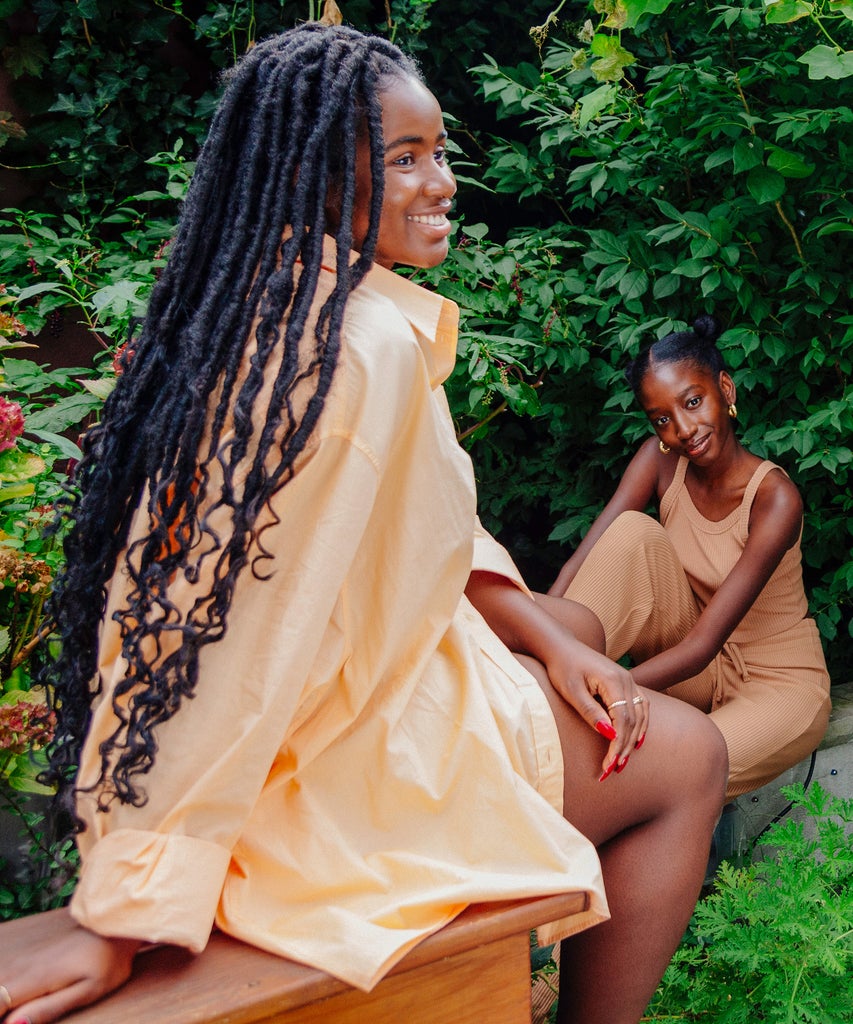
Follow the hashtag #SoftBlackGirl on Instagram and you will be inundated with tens of thousands of ethereal posts emulating something of a Bridgerton tea party. From picnics in a meadow and bonnet-adorned afros perusing country estates to books read beneath cherry blossom trees and pastel midi dresses billowing behind a basketed bicycle, it’s easy to lose yourself in this online fairy tale community. Seemingly worlds apart from the consistently depressing news cycles and the worries brought on by the cost of living crisis, I’m unashamed to admit that a Soft Black Girl Summer is something I crave. 

With  Cottagecore fashion trending worldwide, the vibe has shifted undoubtedly to pastels, pinks, countryside, corsets, florals and frills, and the likes of @allureriah, @hillhousevintage and @biancalonesse have modeled this new era to perfection. Emitting something out of a renaissance painting or a scene from Downton Abbey, Soft Black Girl influencers are taking up space in a landscape where whiteness has only been permitted to occupy our imagination. And, whilst this trend is undoubtedly a pallet cleanser for our timelines, these images, staged and purposeful, are not only pleasing for the eye. Over their TikTok videos, soundbites tell us, “Welcome to Black woman Bare Minimum, a safe space where you can do the least, and bet the most.”

Knowingly or not, this trend signifies an antithesis to the many stereotypical perceptions of misogynoir that define Black women by adjectives such as “strong” and “independent.” We’re emboldened in our suffering yet taught we’re less deserving of safety, peace, and love. We’re to be pitied and saved — but also feared.  More than just a soft aesthetic, this trend motivates us towards a soft lifestyle. One that focuses on relaxation, leisure pursuits, space to explore hobbies, unlocking our creativity and spending time in and around nature. 

More than just a soft aesthetic, this trend motivates us towards a soft lifestyle. One that focuses on relaxation, leisure pursuits, space to explore hobbies, unlocking our creativity and spending time in and around nature. 

Soft Black Girl Summer encapsulates the Black feminist ethos of Rest as Resistance. This tool of social justice and liberation supported by the likes of Audre Lorde and bell hooks, recognizes that we can’t look after others if we’re not looking after ourselves. It’s not healthy to consistently be in fight mode, doing the most to serve our communities, fight our oppressors and just barely keep our heads above water. As Black women we navigate all the battles and barriers of everyday life with generational racial trauma on our shoulders. Deep rest as a form of radical self care — not the kind of commodified self-care we find packaged into facemasks and spa days — is a direct rejection of a capitalism that tells us we always need to be productive, and a white supremacy that makes that productivity so much harder and more painful to attain and maintain. 

That’s why this year I’m embracing a Soft Black Girl Summer with arms wide open! As someone who’s wardrobe tends to imitate that of a dungaree cladded toddler, it’s less about the hyper-feminine aesthetic for me – although I am becoming inexplicably drawn to gingham of late – and more about embodying a movement.  Doing so feels integral to my slow and intentional burnout recovery. My Soft Black Girl Summer will include submitting myself to the breathtaking hills and reservoirs of the UK’s Peak District. In taking myself on solo trips in my van to write, I hope for introspection and comfort in being alone. Whilst sharing adventures with the core group of people I feel most at home with, I hope that after a day of double dares on rope swings and clinking pint glasses to celebrate a successful hike, I feel held and loved. 

It will include an intentional slowing down, one that means re-evaluating the ways I’d usually spend my summer. Aside from Carnival (which is in and of itself an exhibition of self-love) I will challenge myself to redefine ‘fun’ as something no longer associated with back-to-back festivals, traveling between cities and countries, and long days spent recovering from hangover after hangover. Traditionally my summers would be overflowing with plans. I’d work for a weekend spent distracting myself from the exhaustion and overthinking those moments of rest would bring. This year I will recognize that a summer of running away is not conducive with the healing I want to achieve. 

Alongside an abundance of joy and tranquillity, my Soft Black Girl Summer will likely involve a lot of crying, thinking and un-learning. And that’s okay.

And, as a domestic abuse survivor I recognize that my healing is a matter of necessity. A Soft Black Girl Summer feels like a reclamation of joy. It’s about creating a space of safety for myself. So often our healing is at the behest of the criminal justice system, one that tells us that only on the rare occasions when our perpetrators are convicted can we begin to move on with our lives. We’re expected to sit within our trauma, be consumed by it and regurgitate it in order to be believed. Leaning into nature therapy as a form of healing justice, is therefore a vulnerable and oftentimes uncomfortable taking back of control. 

A deep exhale as my toes dangle into a glistening stream, phone without signal, is all it takes for me to relinquish myself from the weight of existence and just be. I recognize that my wonky tripod capturing a poor-quality wild swimming shot is unlikely to initiate me into the Soft Black Girl Social Media alumni. The reality is that for most of us our lives simply can’t emulate the picture perfect image we double tap on our Instagram feeds, and it’s important that Soft Black Girl Summer doesn’t get lost in an unattainable social media movement but remains grounded in the Black Feminist roots it pays homage to. Alongside an abundance of joy and tranquillity, my Soft Black Girl Summer will likely involve a lot of crying, thinking and un-learning. And that’s okay.

Adopting this lifestyle into the nuance that is Black womanhood will allow it to translate into slow evenings, which permit us to pause at the end of a busy day, an awareness of our boundaries and feeling confident in upholding them, an exploration of activities that bring us joy, and a returning to community when we need to feel held. The feelings of freedom and contentment are all things we can explore this summer.  Hopefully, in doing so we will find coping mechanisms that stand the test of time. By embedding a Soft Girl Summer into our everyday outlook, we take a stand that says we are worthy of peace, of comfort, growth and joy — all year round.

Like what you see? How about some more R29 goodness, right here?

Black Women & The Cultural Pivot To Softness

Reclaiming Audre Lorde’s Radical Self-Care

Do Black Women Need The 1A-4C Natural Hair Scale?

Tuesday, May 10, 2022

Traveling Light This Summer? How To Style One Dress 5 Ways

Nothing beats finding a flight that’s cheaper than a night out but sometimes that means compromising by way of luggage. On the other hand, some of us only ever pack a carry-on travel bag in order to bypass that slogging wait at the baggage carousel. Whether you’re strapped for cabin space or generally want to keep your wardrobe to a minimum, one way to stretch a garment’s lifespan is through various styling methods.

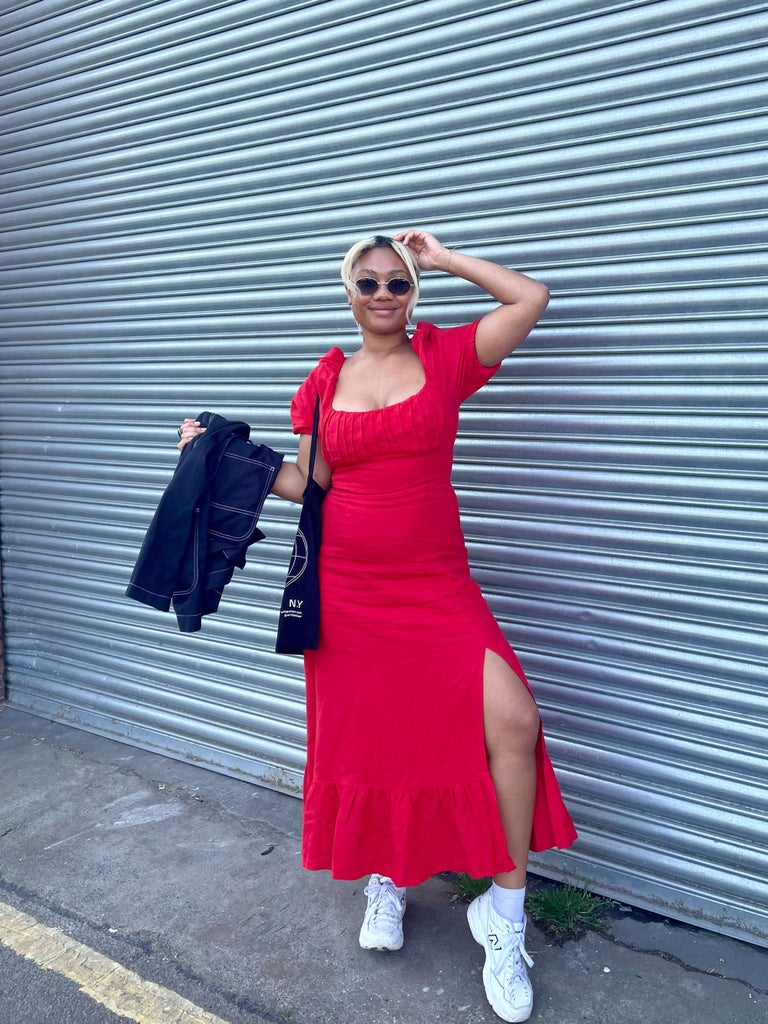
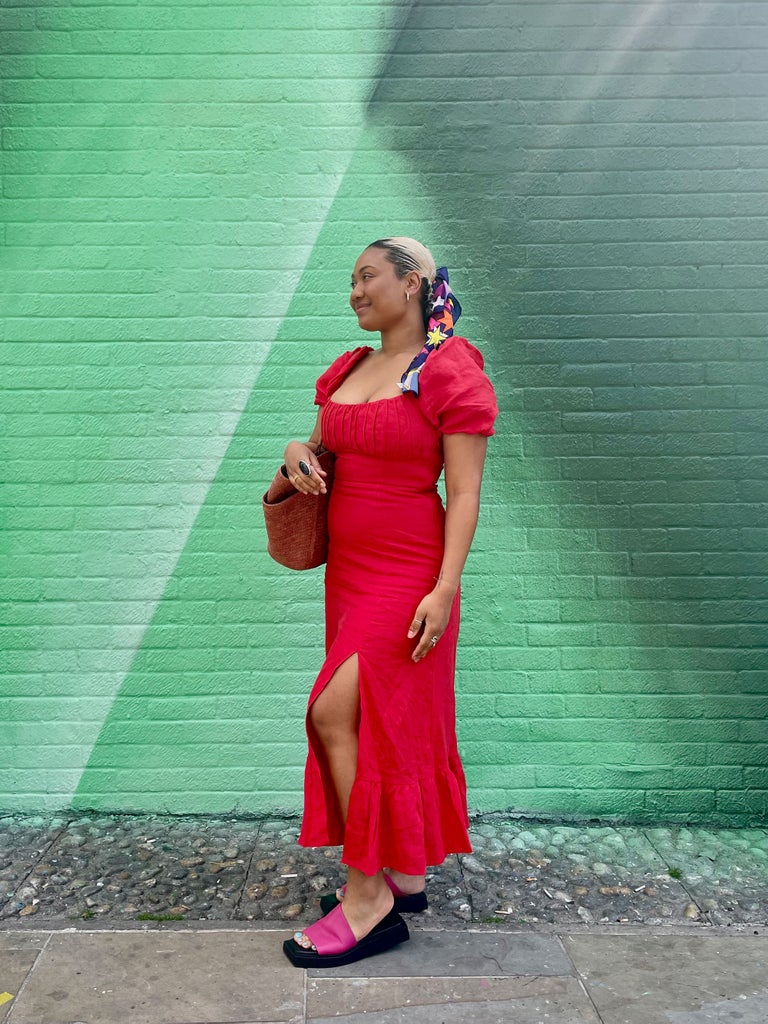
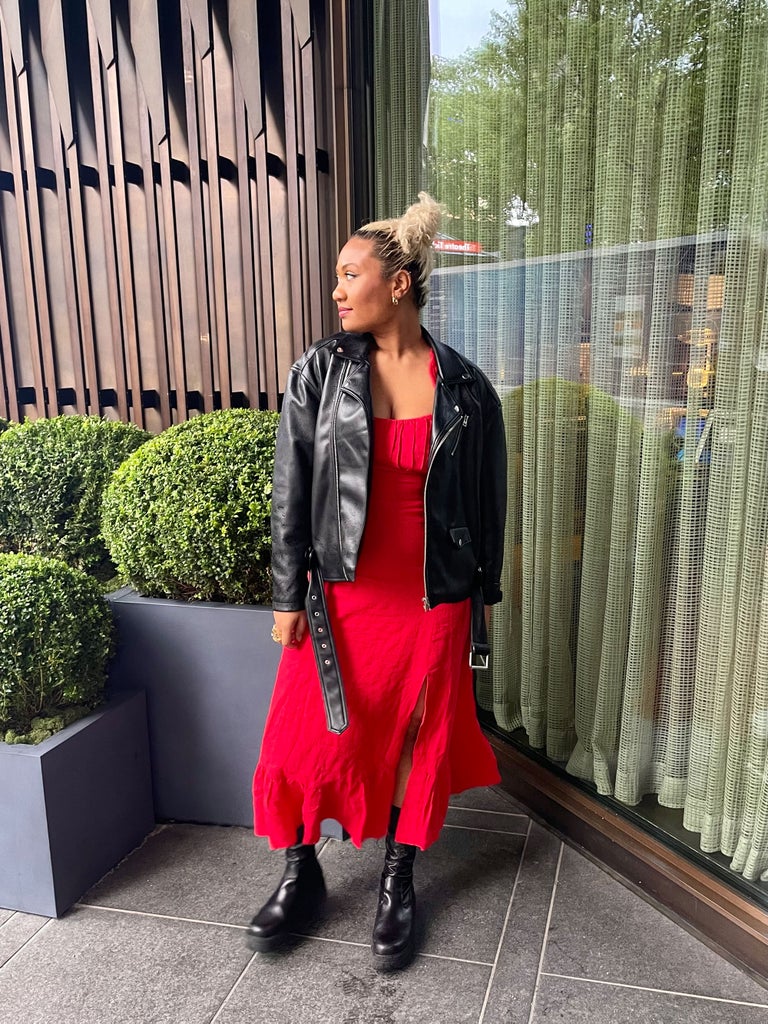
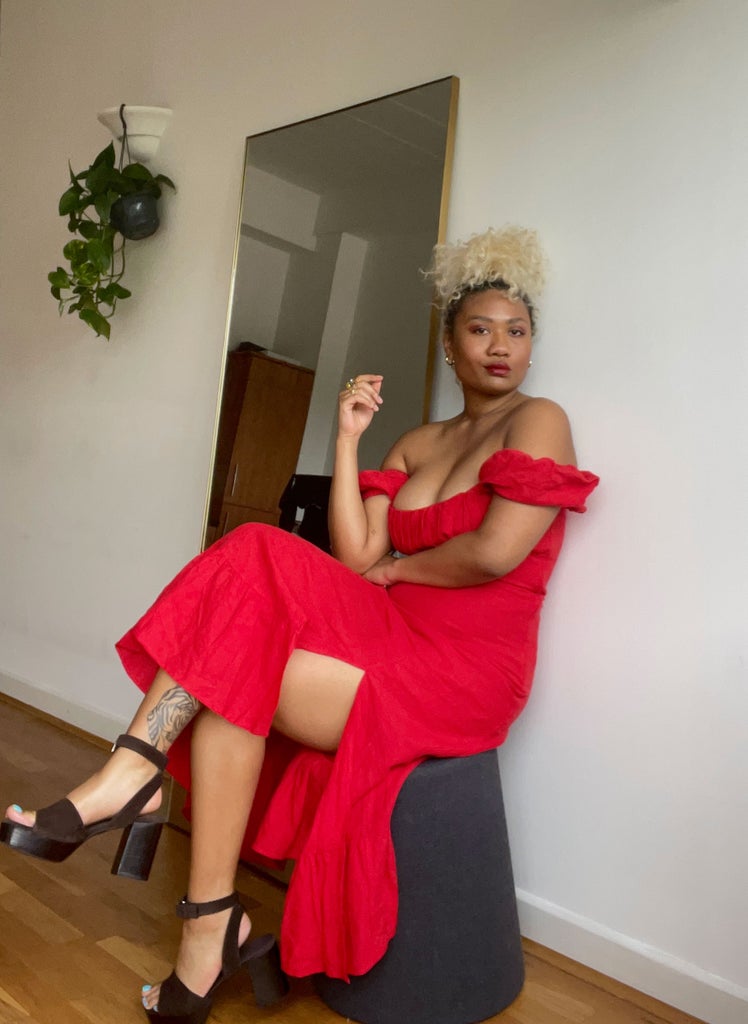
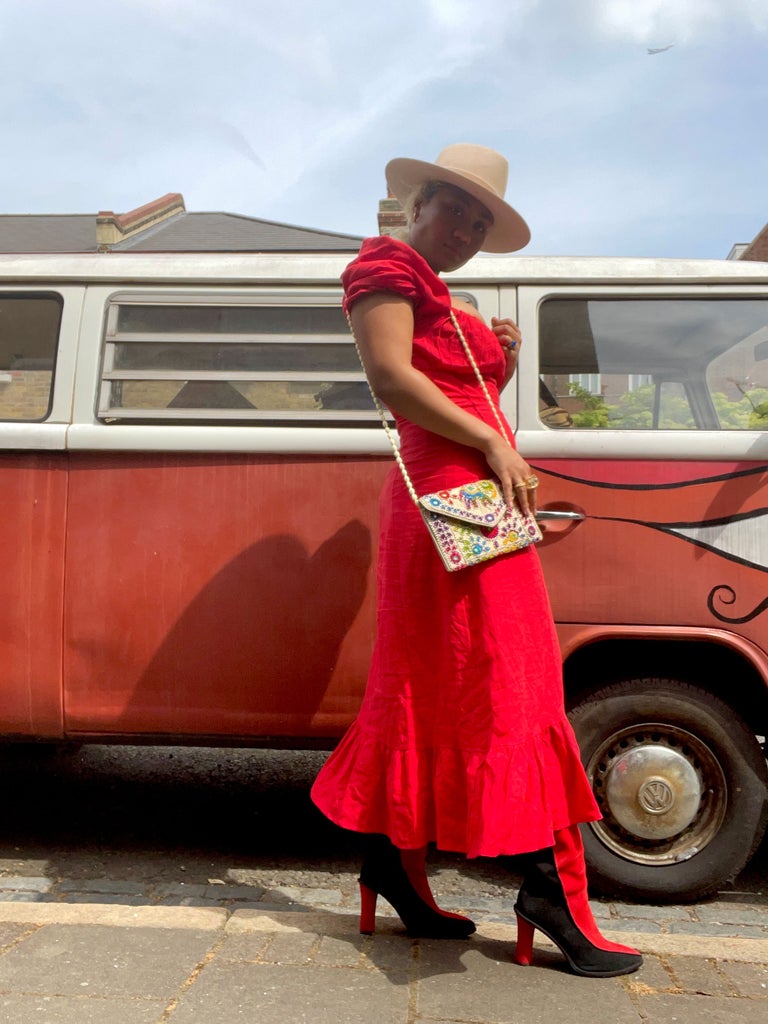
That’s where we come in. This past week I styled one dress (& Other Stories’ Puff Sleeve Linen Midi) for five different occasions, from casual beach day out to glam night look. If you’re planning some well-deserved time away or simply looking to invest in versatile garbs that will ultimately curb your fashion consumption, here are some tips for making the most of the dresses in your wardrobe.

At Refinery29, we’re here to help you navigate this overwhelming world of stuff. All of our market picks are independently selected and curated by the editorial team. If you buy something we link to on our site, Refinery29 may earn commission.

City Casual

This puff-sleeve dress is the perfect piece to take from day to night. While the slit provides that bit of glam, the linen material is totally adaptable to dressing up and down. Pair your midi dress with white sneakers and a tote bag for a sightseeing walk, traveling to or from your destination, or for running weekend errands at home.

Beach-Ready

Nothing says “ready for a swim” like a pair of slides. Worn here with my Vagabond slip-ons as well as a basket bag and headscarf, this look is perfectly suited — in my imagination — to that pre-beach walk or a sun-drenched wine tour. Anyone want to plan a holiday for me?

Moto Chic

I actually styled a similar midi dress with these boots and faux leather jacket in a recent TikTok and have been obsessed with the look ever since. The timeless pairing always adds some edge to a traditionally feminine silhouette and is super practical for cooler summer mornings and nights.

Dinner Glam

As mentioned above, a midi dress with a slit can be worn casually just as easily as it can be dressed up. For a night on the town, pair your dress with some platform heels and a bold lip — you essentially want to embody the salsa-dancing emoji. I pushed the sleeves off my shoulders for a sultry touch.

Festival Western

Finally, no styling roundup is complete in 2022 without the appearance of Western boots. While it’s a go-to for festivals, truthfully you can wear this look for any occasion. I like to think cowboy boots work best when you bring the attitude — so go forth and be a badass, girlies.

At Refinery29, we’re here to help you navigate this overwhelming world of stuff. All of our market picks are independently selected and curated by the editorial team. All product details reflect the price and availability at the time of publication. If you buy something we link to on our site, Refinery29 may earn commission.

Like what you see? How about some more R29 goodness, right here?
Outfit Inspo To Help You Style A Vest This Season

4 Ways To Tackle Summer Workwear

Dear Linen, My Toxic Summer Boyfriend

Fashion Brands Are Launching In-House Secondhand Programs. Here’s Why

In fashion, there has been no faster-growing sector than resale. Online platforms like The RealReal, Depop, and Rebag have surged in popularity as customers seek to make purchases secondhand — both for price and environmental reasons. But, it’s not just about major platforms anymore. Increasingly, brands ranging from COS to Lululemon and Cuyana are launching their own resale programs, housed on their websites, to offer customers a chance to pick up pre-loved items at the same time that they’re seeking out something new. 

Recurate, which was founded in 2020, works with brands to integrate in-house secondhand platforms. According to Karin Dillie, VP of partnerships for the company, fashion labels — aware of the larger resale ecosystem that has even gotten luxury brands to participate — want to be able to have a more direct connection to their customers: “They keep seeing more third-party marketplaces pop up, and they’re like, ‘How do we make sure that is a very branded experience? How do we keep them in the ecosystem and make them feel like they’re really part of our brand?’” 

Vanessa Barboni Hallik, founder and CEO of sustainable apparel brand Another Tomorrow, compares brand resale programs to authorized car dealerships: “[In focus groups] the example that would come up over and over again was BMW pre-owned certified cars. Wherein, the same place you could buy a brand-new car or a used car but you have that authenticity and service of the brand regardless of what point you’re coming in at.” She explains that the brand’s ability to authenticate and assess the quality of its own product helps to establish customer trust and encourages them to participate and close the loop when they may have never before. 

According to Dillie, the biggest reason brands come to Recurate to launch their own resale platforms though has to do with sustainability: “They are putting a stand behind their product, that it doesn’t just last through one person, it can last through multiple lives.”

Sustainability

“I believe that the popularity of brands launching resale is due to the rising, industry-wide recognition that sustainability spans far beyond how a product is made,” echoes Shilpa Shah, co-founder and Chief Experience Officer of Cuyana that, in April, launched its Revive resale platform. “This means investing in high-quality, responsibly made materials that extend the product lifecycle and platforms that ensure each piece has a home, whether it is through repairs or a second-life program.”

But, to Dillie, resale shouldn’t be about simply moving consumption from new to pre-loved products, but about producing less overall.

Reducing Overproduction

One large issue within the fashion industry that contributes to excess waste, is the difficulty in predicting demand. Oftentimes, brands will overproduce products, not wanting to risk the potential of underproducing and not being able to reach selling potential. “As a brand that creates limited production runs, [Mara Hoffman’s resale platform] Full Circle gives us the opportunity to meet the demand from customers looking for past favorites that are no longer sold on our site, whilst also providing a more inclusive price point,” says leading sustainable fashion designer Mara Hoffman, who first introduced resale with third-party vendors in 2017 before launching the brand’s own in-house program in 2021. 

“If you underproduce, you can actually supplement that [demand] with resale,” says Dillie. “You don’t have to overproduce.” She adds that this process can actually have an economic benefit for the brands participating as they are able to maintain close-to-full prices, and not have to majorly discount items due to excess stock at the end of the season. 

“The overall profitability of this program is really quite strong,” confirms Barboni Hallik. “It serves as a nice complement and counterpart to producing new products.” 

Access To Sold-Out Items

Another benefit that brands have found in launching their resale platforms has been the influx of data now available to them. Having access to information on what products are performing well through their resale services may not only drive customer participation but, over time, can also lead to helpful insights that can impact future production choices.

“We have noticed some instances of specific retired styles and colors selling quickly,” explains Shah. “We will have to keep learning over time in order to be able to pull out dependable trends that could influence our own product development. So far, having some very in-demand retired items that are only available on Revive in our secondhand market is part of what makes this platform special!”

Ownership Of Brand Identity & Price

When customers are reselling items in partnership with multi-brand platforms, there can be a lack of transparency around pricing, something that brands aim to address both to better satisfy their customer base but to also help establish a baseline value of their own products.

“I’ve had things I was about to consign, and I’d ask, ‘Where do you think this is going to sell [price-wise]” and I’d be like, ‘Whoa, whoa, whoa, never mind.’ I would rather hold on to it if it’s going to be a fire sale,” says  Barboni Hallik. “Giving the seller that transparency, so they know what they’re agreeing to upfront is super important. And it’s important for the brand, too, because you don’t want your items out on fire sale either.” 

This has been a pain point for luxury brands, many of which have been slow to enter the space for fear of devaluing their products and, according to  Dillie, the difficult logistics around authenticating which technology is just catching up to. Dillie nods to Another Tomorrow’s creation of digital IDs, a unique identifier that offers information on how the piece was made via QR code, as a way she sees more luxury brands entering the space. “Resale becomes much less reliant on the nuances of the stitching inside the third pocket and more about what is the serial number and how does that match the digital ID,” she says. “It gives brands a lot more control over the product they’re producing and tracking where that product goes.” 

So, as players at every range of price points continue to enter the market, does motivation matter? “Over the past seven years, there has been a huge shift with brands wanting to participate in more sustainable practices,” Hoffman notes. “This is exciting, however, the interest in sustainability varies, one being circularity but another being new revenue streams.” Dillie agrees that monetization is one of the other top reasons behind brands launching resale programs: ”How can we keep the value we generated by creating a long-lasting product within our brands?” she says of the mindset.

That said, if, as Dillie suggests, resale is able to not just shift consumption but actually reduce production overall, it does seem possible that brands and consumers can equally benefit from the movement: “Resale is one of your tools to make more money off of producing less items.”

Like what you see? How about some more R29 goodness, right here?